 By admin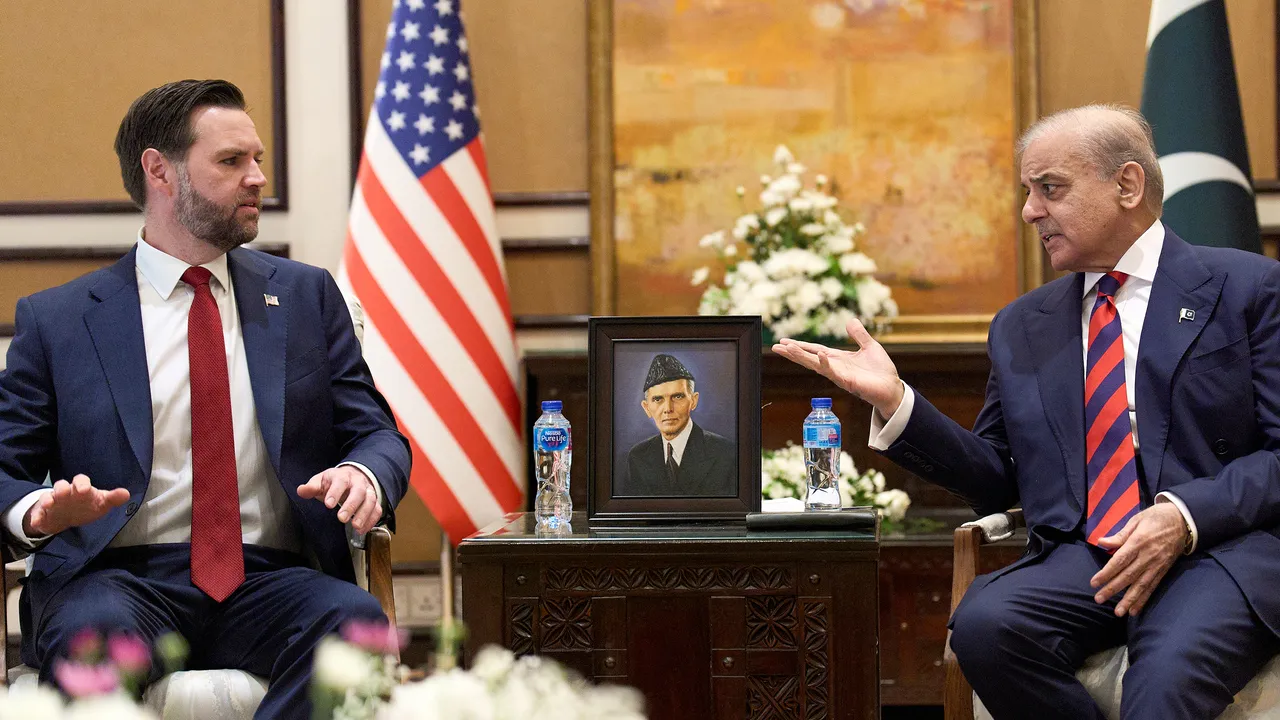
On New Year’s Day of 2018, Donald Trump, like previous American Presidents, was fed up with Pakistan. “The United States has foolishly given Pakistan more than 33 billion dollars in aid over the last 15 years,” Trump tweeted, “and they have given us nothing but lies & deceit, thinking of our leaders as fools. They give safe haven to the terrorists we hunt in Afghanistan, with little help. No more!” Three days later, the U.S. cut off hundreds of millions of dollars in military aid to Islamabad.
Read more Emotional-Labor Laws
In Trump’s second term, the relationship between the U.S. and Pakistan has shifted once again: today, Islamabad is helping Trump find a way out of a self-made crisis with Iran—a war that has convulsed the global economy and weakened the Republican Party going into the midterm elections. As the primary mediator between Washington and Tehran, Pakistan has earned newfound credibility as a peace broker and a security partner, accomplishing what no other country or international body has been able to do: hosting the first high-level, face-to-face meetings between Iran and the U.S. in more than a decade.
Pakistan was in desperate need of a reputational rehabilitation. The country, which is largely run by its military, is wrestling with political and economic instability, marked by increasing government repression, terrorism, domestic insurgencies, and huge debts. The same military steering the diplomatic efforts between the U.S. and Iran led the campaign for the imprisonment of the nation’s former Prime Minister Imran Khan—a move that has been widely condemned by the United Nations and international human-rights bodies. Pakistan is also in the middle of its own war with the Taliban in Afghanistan—a group that Islamabad once cultivated and supported—while tensions with India, its main regional enemy, remain high. “Even if the talks were to collapse, and there was not a deal, Pakistan will still be a winner,” Michael Kugelman, a senior fellow for South Asia at the Atlantic Council, told me. “It’s a remarkable turnaround, because it does appear to have evolved from something close to a pariah to a peacemaker.”
Pakistan’s emergence as a mediator of the U.S.-Iran war illustrates how diplomacy has become more personal and transactional under Trump. By catering to his ego, international leaders can persuade Washington to forget—or at least to ignore—past tensions. Orchestrating this new détente for Pakistan is Field Marshal Asim Munir, the country’s Army chief and its most powerful figure, who has forged close ties with Trump. “The Pakistanis, like others, have figured out how the game is played with Trump, and they have played it extremely well,” Ryan Crocker, a former U.S. Ambassador to Pakistan, told me. “Do things he likes, flatter him shamelessly, present an image he likes. It helps if you’re a strongman wearing a uniform. Pakistan had the cards, and they just played them very well in terms of timing and substance.”
For decades, Pakistan and the U.S. had a highly strained, yet symbiotic, relationship. Islamabad has long been wary of U.S. goals and promises, especially since America abandoned Pakistan after the Soviet withdrawal from Afghanistan, in 1989. Having achieved its geopolitical objectives, Washington reduced the military and economic aid it had provided in exchange for Pakistan’s support of the anti-Soviet Afghan mujahideen. Pakistan was left to deal with the fallout from the Afghan civil war that followed, which included accepting nearly four million Afghan refugees. To stabilize its neighbor and establish a Pakistan-friendly government, Pakistan’s powerful intelligence agency, the I.S.I., helped create and nurture the Taliban, which seized control of Afghanistan for the first time in 1996.
After the September 11th attacks and the subsequent overthrow of the Taliban, Islamabad became a vital counterterrorism partner. But U.S. military and intelligence officials soon accused Pakistan of playing a double game: even as it received billions in U.S. military aid, Islamabad maintained covert ties with the Taliban, the Haqqani network, and other militants fighting U.S. troops, providing them with bases and sanctuaries inside Pakistan, a claim that Islamabad has long denied. The policy was driven largely by a desire to hedge against India’s growing influence over the government in Kabul. Pakistan, for its part, accused Washington of its own duplicity, relying on Pakistan as a partner to fight terrorism, yet never fully backing the country in its conflicts with India.
In 2011, during Barack Obama’s Presidency, U.S.-Pakistani relations hit a new low. That year, U.S. Special Forces found and killed Osama bin Laden at his hideout in Abbottabad, Pakistan—an operation that the American government staged without informing Islamabad, which was accused of knowingly harboring bin Laden. John Brennan, Obama’s chief counterterrorism adviser, said at a press conference that it was “inconceivable” that bin Laden did not benefit from a “support system” in Pakistan. Pakistani leaders denied the allegations, but two months later the Obama Administration suspended eight hundred million dollars in military aid, one-third of its yearly assistance to Pakistan.
Despite these periods of hostility and mutual suspicion, however, the relationship between the U.S. and Pakistan has endured out of strategic necessity. Even after bin Laden’s death, Pakistan remained a key gateway for U.S. and NATO troops and supplies to enter Afghanistan. Islamabad and Washington shared intelligence that led to the capture of Al Qaeda leaders and militants, especially those who threatened the Pakistani state. Pakistan also played a behind-the-scenes role in facilitating peace talks between the U.S. and the Taliban. “This is a relationship which has had ups and downs throughout its history,” Maleeha Lodhi, a former Pakistani Ambassador to the United States, told me. “The downs haven’t lasted long; the ups have lasted fairly long.” After Trump’s tweet in 2018, Pakistan’s National Security Committee wrote that the post “negated the decades of sacrifices made by the Pakistani nation,” including tens of thousands of civilians and soldiers who died as a result of the U.S.-Pakistani alliance. Lodhi, who was then Pakistan’s Ambassador to the U.N., told me that she and other top leaders in the country met with Trump and forged “a rapprochement.” But the relationship didn’t return to normal. Most of the U.S. military aid was not restored; when Joe Biden took office, his Administration treated the country “with a kind of strategic indifference, as if Pakistan mattered only when there was a crisis to be managed,” Rabia Akhtar, a South Asia security expert and dean of social sciences at the University of Lahore, in Pakistan, told me. After the U.S. withdrawal from Afghanistan, in 2021, Pakistan became less geopolitically important, as Washington courted India as a bulwark against China’s ambitions. That year, only eighty-seven million dollars in U.S. aid was allocated to Pakistan, the lowest sum in twenty years. By then, Islamabad had pivoted toward Beijing for military and economic support, though it remained wary of totally relying on China.
When Trump returned to office last year, Pakistan took the opportunity to reset relations with Washington. Working with the U.S., Pakistani forces captured Mohammad Sharifullah, an alleged mastermind of the bombing at Kabul Airport, in August, 2021, which killed more than a hundred and seventy people—including thirteen American troops—as the U.S. military was evacuating Afghans following the Taliban takeover. Sharifullah was extradited to the U.S. to face charges, giving Trump an immediate victory at the start of his second term. In his address to Congress last year, Trump thanked Islamabad “for helping arrest this monster.”
Early in his Presidential term, Trump approved nearly four hundred million dollars in military assistance to Pakistan, despite a broad freeze on foreign aid. Then, in May, India and Pakistan, nuclear-armed neighbors, engaged in tit-for-tat strikes for four days. When the conflict ended in a ceasefire, Trump took credit and later said he had prevented “a nuclear war.” New Delhi rejected Trump’s assertion and said that it had hashed out the truce directly with Islamabad. Pakistan’s Prime Minister, Shehbaz Sharif, however, declared that Trump had played “a pivotal and paramount role.” A few weeks later, Pakistan formally nominated Trump for the Nobel Peace Prize, declaring that the U.S. President had shown “great strategic foresight and stellar statesmanship” in preventing a larger conflict between two “nuclear states.” “Pakistan understood that this was something that they could seize as an opportunity,” Farzana Shaikh, a Pakistan expert at the London-based think tank Chatham House, told me. The India-Pakistan tensions, along with Sharifullah’s capture, were part of “a fortunate convergence of factors that played into where we find ourselves today,” she said. “It is a dazzling reinvention but one not crafted entirely of its own making.”
Read more A World Cup Final and a Teen’s Quest for Belonging in “Amarela”
But how exactly did Pakistan become the mediator for the U.S.-Iran war? The answer may lie in a meeting between Trump and Field Marshal Munir, which took place almost a year ago. After the ceasefire between Pakistan and India, Trump invited Munir to a private lunch at the White House. It was the first time a U.S. President had hosted a Pakistani Army chief without the presence of the nation’s top civilian leaders, as well. The Twelve-Day War between Israel and Iran was ongoing, and Islamabad had recently denounced Israel’s strikes in Iran as a violation of international law. Munir was expected to push Trump not to enter the conflict and to seek a ceasefire.
At the meeting, which lasted around two hours, Trump and Munir discussed the tensions between Israel and Iran, economic development, mines and minerals, energy, and cryptocurrency, according to the Pakistani military. After the meeting, Trump told reporters that the Pakistanis “know Iran very well, better than most.” He has also repeatedly called Munir “my favorite field marshal.” The next month—after U.S. warplanes had bombed three Iranian nuclear facilities—the U.S. Secretary of State, Marco Rubio, in a meeting with top Pakistani officials, praised Islamabad’s willingness to serve as a mediator with Iran. “Even back then, the Pakistanis had positioned themselves to be seen as a potential mediator,” Kugelman, of the Atlantic Council, said. “It’s a tough job, for sure, but they wanted to do it.” Islamabad, he added, wanted to “push back against India, try to push back against Pakistan’s negative global image. They’re very much about trying to get the world to see Pakistan in a more positive light.”
Pakistan hopes its new stature will bring economic dividends. Munir has expanded his portfolio to include overseeing the country’s trade and foreign investments, and the deals have followed. In September, U.S. Strategic Metals signed a five-hundred-million-dollar investment deal with Pakistan’s military to mine minerals such as gold and copper and antimony. A few days later, Munir was invited back to the White House, this time with Prime Minister Sharif, to discuss Pakistan’s critical-minerals ambitions further. That same month, Pakistan signed a defense pact with Saudi Arabia, committing thousands of Pakistani troops and warplanes to defend the kingdom. This January, Munir also oversaw the signing of a cryptocurrency partnership between Pakistan and an affiliate of World Liberty Financial, a company co-founded by Trump. “President Trump is someone who appreciates strong leaders like Putin, Erdoğan, and el-Sisi,” Shaikh said, referring to the autocrats in Russia, Turkey, and Egypt. “Munir fit that mold.” Pakistan’s offer to mediate, she added, “wasn’t purely altruistic. Pakistan, like other nation-states, calculated there were gains to be had from playing this role.”
Pakistan certainly has much to gain if the Iran war ends. It relies heavily on oil and fertilizers that flow through the Strait of Hormuz, which has been effectively closed by rival U.S. and Iranian blockades. The war also threatens remittances from millions of Pakistani workers in the Persian Gulf, an inflow of roughly thirty-eight billion dollars per year, which makes up about ten per cent of Pakistan’s G.D.P. Pakistan shares a border with Iran and is home to the largest Shiite Muslim population outside of that country, a minority that follows Iran’s Ayatollahs and whose religious loyalties have long been a source of tension between the two governments. Both countries have claimed that militants and separatists have sheltered in the other country, and in 2024 they briefly struck each other’s territories. Still, Pakistan’s Embassy in Washington has long represented Iran’s interests, since Tehran itself has no diplomatic ties with the United States. This has helped Islamabad’s credibility as a mediator in Iran’s eyes, along with the fact that, unlike most of Iran’s neighbors, Pakistan does not host any U.S. military bases, Kugelman told me. Beijing, Iran’s largest trading partner and the main buyer of Iranian oil, has backed Pakistan, too, bolstering the country’s credibility even further. “That was critical because China has a lot more leverage over Iran than Pakistan,” Kugelman explained.
In some ways, Pakistan was the only realistic option, after traditional mediators—such as Qatar and Oman, both of whom have a U.S. military presence—were targeted by retaliatory Iranian missiles and drones, rendering them no longer neutral. Still, most Middle East experts were surprised when Pakistan emerged as the mediator. “If you had asked me to name the fifty most likely countries to mediate between the U.S. and Iran, Pakistan would not make my list, but there they are,” Crocker, the former U.S. Ambassador to Pakistan, who also served as the top American diplomat in Iraq, Afghanistan, Syria, Kuwait, and Lebanon, said.
Pakistan now faces a delicate balancing act. It must navigate the demands of the U.S., Iran, the Persian Gulf states, and even Israel—albeit indirectly, through Washington—who all want to end the war, but on different terms. And it must do so without appearing to take a side. If Pakistan is perceived as too close to Washington or Riyadh, it could face blowback from Iran both militarily and politically, in addition to backlash from Pakistan’s restive Shiite minority. If it appears to favor Tehran, the Gulf states could squeeze the millions of Pakistani workers whose remittances prop up the economy. The country’s blossoming relationship with Trump could also lead to domestic unrest. In late May, Trump tried to pressure several Muslim-majority nations, including Pakistan, to sign the Abraham Accords, normalizing relations with Israel. “Any move that appears to abandon the Palestinian cause would be politically explosive inside Pakistan,” Akhtar, at the University of Lahore, told me. Islamabad’s attempts to toe the line have already prompted harsh criticism from hawkish Republicans. “It has been apparent to me for quite a while that Pakistan as a mediator is more than problematic,” Senator Lindsey Graham wrote in a post on X last week. “Their animosity towards Israel is long standing.” One of Pakistan’s biggest risks is “that it becomes the fall guy when things go wrong,” Kugelman said, “or even when things go downhill.”
When it comes to its rivalry with India, Pakistan has already benefitted. Indian Prime Minister Narendra Modi’s snub of Trump for the Nobel Peace Prize led Washington to impose high tariffs on India, according to a report last year in the Times. The U.S.-India relationship frayed further after the Trump Administration imposed a hundred-thousand-dollar fee and other restrictions on H1-B visas, a policy that disproportionately affected skilled workers from India. Pakistan’s renewed access to Trump has deepened concerns in India that it is no longer Washington’s indispensable partner in Asia. “It’s always a zero-sum game between India and Pakistan,” Shaikh said. “In Pakistan, what is Pakistan’s gain is always seen as India’s loss.” On the Indian side, she continued, “There has been a bit of sullenness, a bit of disappointment. Like, look at those guys, how did they manage to pull it off? And look at us, we’re sitting here as losers.” That doesn’t mean the U.S. will abandon India, which remains central to American strategy on China and technology. Last week, Rubio visited New Delhi, in a seeming attempt to repair the relationship. “A moment of U.S.-Pakistan warmth will not erase the structural depth of U.S.-India ties,” Akhtar said. “What it can do is create more balance in Washington’s imagination of South Asia.”
As Pakistan receives praise from Trump and other leaders in the region for its mediation efforts, the Pakistani military is using this global prominence as cover to tighten its grip on power within the country. Political repression has reached levels not seen in years, Kugelman said, and, given Pakistan’s newfound relevance, the military knows that “the international community will not be on its back, won’t be pressuring it, and it won’t be scrutinizing Pakistan for these policies playing out at home.” Critics of the government and military, he added, fear that Pakistan will see the worldwide praise of its mediation role “as a carte blanche to crack down even more.” Lodhi, the former Pakistani Ambassador to the U.S., said that “it has further reinforced the imbalance between the civilians and the military,” and will strengthen “the authoritarian trend already under way in Pakistan.” And, as Munir cements his power, his friendship with Trump “is a clear signal to everybody in Pakistan that they can expect no moderating pressure on him from the U.S. whatsoever,” Crocker said.
If a deal is struck, Pakistan hopes for more U.S. military and economic aid, investment deals, trade partnerships, Gulf money, and Trump’s continued support. But it shouldn’t necessarily expect too much. As Shaikh explained, the last time Pakistan played a significant mediator role—facilitating the U.S.-China rapprochement in 1971—it expected Washington to prevent the secession of East Pakistan, in return. The U.S. sent naval forces as a gesture, but did little else. East Pakistan became Bangladesh. “There’s a deeply ingrained skepticism of the United States in the Pakistani establishment,” Crocker said. “East Pakistan, our walkout after the Soviet defeat in Afghanistan, and our pullout from Afghanistan, in 2021—there’s just a litany of reasons in the Pakistani narrative not to trust the United States, and they’ve got to be aware of that history and how mercurial Trump is.” ♦