 By admin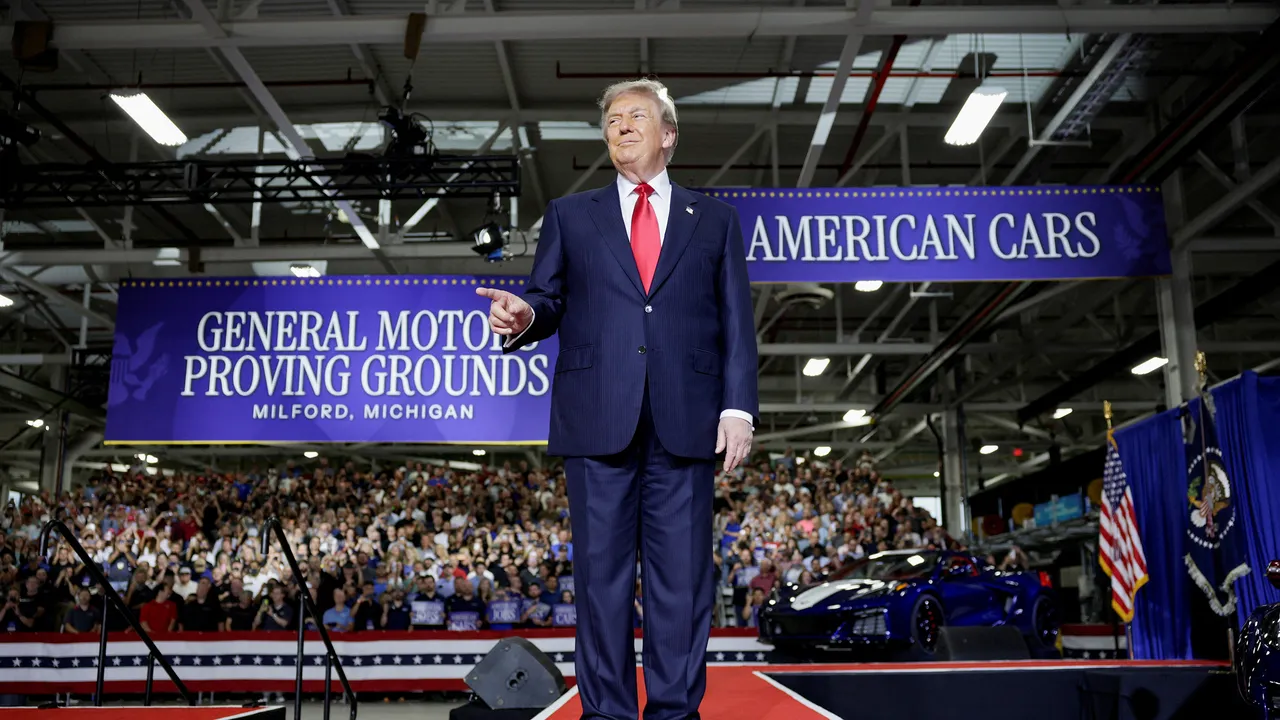
Australia plays a number of interesting roles in the world, and one of them is as part of what scientists call a “natural experiment,” in which significant forces can be observed at work outside a laboratory. The nation occupies its own prosperous if smallish continent, linked to Asia by geography and to Europe and the West by history and language, and over time it has shown a certain amount of ideological flexibility. That flexibility is not always wholly admirable: even as Australia has converted so much of its energy system to solar energy that, beginning this month, it has offered free electricity to vast parts of the country for a few hours each day, it has also expanded an already huge climate-wrecking trade in coal and gas to Asia. But it does provide a kind of barometer of commercial and political sentiment, which at the moment indicates how far askew American policy may have gone.
Read more A Woman Lost Two Partners to Guns—Then the N.R.A. Came to Collect
This spring, as the Australian Broadcasting Corporation recently reported, a shipment of electric vehicles from the Chinese manufacturing giant BYD arrived in Melbourne, aboard a giant purpose-built carrier ship, the BYD Zhengzhou. It carried some five thousand E.V.s, the largest such shipment yet to arrive in the country. Australia once had a thriving car industry, with Holden, a General Motors brand, and Ford Australia battling for supremacy throughout much of the twentieth century. Along the way, they built a spirited rivalry—see the 2023 documentary “Ford v Holden” for both background and great racing scenes—and developed the utility vehicle, after a letter writer asked Ford Australia in 1932 why it didn’t have a model capable of transporting both a family to church on Sunday and “our pigs to market on Monday.”
But, earlier in this century, Australia’s politicians decided that it was no longer possible to subsidize an industry that was too small to be competitive, especially against its (relatively nearby) Japanese counterpart. Toyota came to dominate car sales in Australia, although perhaps not for long. Chinese E.V.s sold well last month; in fact, according to ABC, BYD is on the cusp of surpassing Toyota as the most popular make in the country. Japan never quite committed to E.V.s; in 2020, Toyota’s legendary leader, Akio Toyoda, called them overhyped and said that regulations pushing E.V.s could make cars unaffordable to average people, and continued to concentrate on building hybrids, the Prius being the best-known example. It now appears that they may have missed the boat, as it were, leaving BYD in the driver’s seat, as it were. “I’m driving one right now,” Riz Akhtar, the founder of the Australian auto-data group Carloop, told ABC. “It costs around $40,000. It’s quiet, it’s comfortable, drives well, and is loaded with technology.” Akhtar also said that his E.V. costs around a quarter less than comparable makes coming to Australia from other countries.
The story is playing out in a similar way across much of the world. E.V.s account for about half the cars sold in China, but the country’s automakers are producing so many of them that they need to sell them abroad, too. Even before the Iran war began, and gas prices jumped, exports of Chinese E.V.s soared in Southeast Asia and across Africa.
But not in the United States. This nation could, of course, have been a big player in electric vehicles—Tesla was among the first to really mass-produce them, and the big Detroit companies invested large sums to convert assembly lines. But Tesla’s C.E.O., Elon Musk, apparently became more interested in extreme politics than in climate science. He helped bankroll the reëlection of Donald Trump, who in turn ended the fuel-economy standards and E.V. incentives that the Biden Administration had proffered, leading Detroit executives to lose heart and write off many of their E.V. investments. Last year, Trump, with a group of those executives standing behind him in the Oval Office, explained his decision to do away with the Biden-era efficiency standards this way:
The greatest scam in American history, the Green New Scam, and it’s a quest to end the gasoline-powered car. This is what they wanted to do even though we have more gasoline than any other country by far.
Read more How Bots Took Over Our Lives
In Michigan on Monday, he said that the auto industry was “back,” and told autoworkers that “I’ve done more for you than your parents.” Perhaps, but, to the extent that one can discern any strategy in the Trump Administration, it seems to be betting that we can use our vast supplies of oil and our tariff power to pressure other nations into staying with fossil fuel. Indeed, many countries negotiated reductions in their tariff rates by agreeing to buy huge quantities of American liquefied natural gas. But the advent of cheap electricity from the sun and wind threatens that plan; last year, China sold half again as much green-energy tech as the U.S. sold hydrocarbons. Meanwhile, Canada and Mexico have begun to allow the sale of Chinese E.V.s, and they are showing up on the streets of San Diego, as cross-border commuters buy models from some brands for as little as twenty thousand dollars in Tijuana, and drive them to work.
The U.S. response has been a kind of panic; in this case, a bipartisan one. Representative Debbie Dingell, Democrat of Michigan—whose late husband, Representative John Dingell, made protecting the U.S. auto industry his life’s work—last month co-sponsored legislation with her G.O.P. colleagues to ban all Chinese vehicles in the U.S., to prevent Beijing from both “undercutting our workers through massive government subsidies, unfair trade practices, and slave labor” and obtaining Americans’ personal data from the communication technology in the cars. Maybe such actions can work in the short term, but a recent survey showed that almost forty per cent of Americans are interested in buying a Chinese E.V., which have become staples of YouTube videos, with wide-eyed Americans travelling to Beijing to test out their wild features—the ability to float for half an hour in a flash flood, or to launch a drone from a nest on the roof to scan for traffic jams.
If the Administration’s strategy “works,” the U.S. will become something of an autarky, producing most of what it needs, as it once did. And, unlike Australia, the U.S. is an enormous country population-wise, so that’s not impossible. Yet that self-sufficiency would come at great cost—environmentally, obviously, but also in a basic openness to the world and to the idea that we’re somewhere near the cutting edge.
If we do choose to make ourselves into a theme park of internal combustion even as the rest of the world moves on to cleaner, cheaper technologies, it will come with some consolations. After Trump’s announcement of the revised fuel-economy standards, the Transportation Secretary, Sean Duffy, mused in an interview on CNBC that it would “actually allow you to bring back the nineteen-seventies station wagon. Maybe a little wood panelling on the side.” And for some perhaps that’s sufficient compensation for abandoning our role in the world. But history offers some caution, in the form of another story about Chinese ships. In the fifteenth century, Admiral Zheng He assembled the largest flotilla the world had ever seen, of more than three hundred “treasure ships,” some of them four hundred feet long, which explored the world, building trade ties and expanding imperial power with legations journeying to and fro. They sailed from Kerala, on India’s Malabar Coast, to, as it happens, the Strait of Hormuz, and up and down the coast of Africa. But, within a few decades, opponents of this opening to the outside world took power and not only ceased the great voyages but demolished the ships that had made them, abolished the offices of the officials who had overseen them, and urged foreign delegations to leave China.
It was about some six hundred years later that the giant BYD ship reached Australia. ♦
Read more Exit Memo