 By admin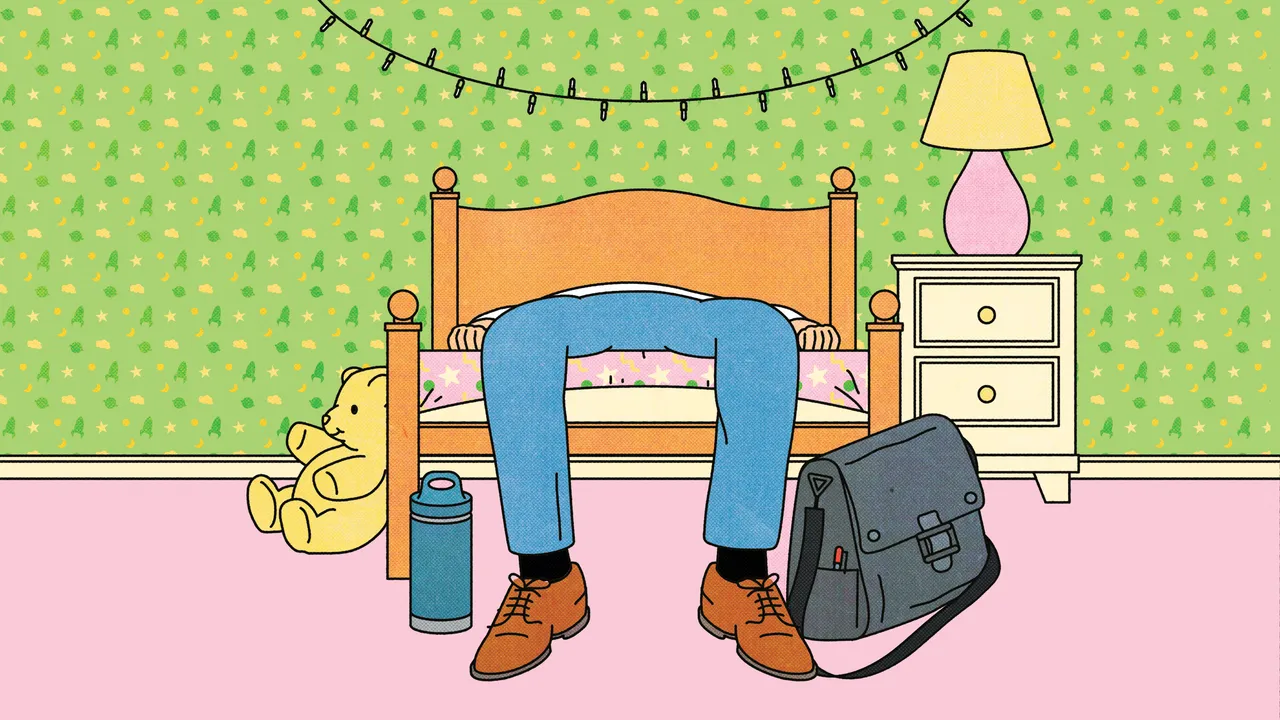
Earlier this year, I wrote a series of columns asking a simple question: When my nine-year-old daughter eventually graduates from high school, what will higher education look like in America? For the next few weeks, I will pick up that thread and explore what might happen to her after college, when a fresh, likely debt-laden, generation enters the workforce. If the conceit of that series was “Is my daughter actually going to go to college?,” this one will be: “When she gets a certificate from Sam Altman University, where she will have learned under the supervision of a friendly A.G.I. tutor, will there be a job for her on the other end? Will she see homeownership as the benchmark of adulthood, as I did? Will she be happily living with roommates in a big city full of possibility, or will she be living with me while applying to remote jobs that she can do from the bedroom she’s slept in since she was five years old?”
Read more Trump’s Isolationism Is Losing the Great E.V. Race
This week, I want to dig into that final question, and to try to figure out whether I should plan on making my daughter breakfast every morning until she finds herself a good job, at twenty-two or at thirty-five. Recently, a lot of ink has been spilled worrying about kids who stubbornly refuse to leave the nest. In May, the Wall Street Journal described this anxiety with an article titled “The Thorniest Question for Parents of New Grads: Is Your Wallet Still Open?” And earlier this month Fortune warned that “49% of young adults live at home, up 12 points since 2019. An economist says the fallout will reshape marriage, kids, and home-buying.”
Much of this most recent uptick in “failure to launch” discourse can be traced to the Federal Reserve’s annual Survey of Household Economics and Decisionmaking () report, which was released in May, and contained a startling finding: “In 2025, 49 percent of adults under age 30 lived with a parent. This share was up by 6 percentage points since 2022, and up 12 percentage points since 2019, just before the pandemic.” The spike over the past seven years certainly sounds alarming enough, and the media’s attention, I imagine, was piqued by one of our favorite things: a mini-trend. A few months earlier, the Census Bureau had similarly found that, in 2025, fifty-eight per cent of young people between the ages of eighteen and twenty-four were living with their parents. But all of these numbers require quite a bit of context. The census figures have been mostly trending upward for the past forty years, outside of a bump during the height of the pandemic. And, crucially, the census counts students who live in dormitories during the school year as “living in their parents’ home.”
My point is, it’s difficult to come to any strong conclusions from these various reports. The SHED study shows a significant post-pandemic increase in “adults under age thirty” who live with their parents, but the census numbers don’t quite show the same spike, especially when it comes to twenty-five-to-thirty-four-year-olds, who, let’s be honest, should be the young people we’re most concerned about getting out of the house. (In 2019, 20.4 per cent of men and 13.1 per cent of women between the ages of twenty-five and thirty-four lived with a parent. In 2025, those numbers were 19.2 per cent and 13.6 per cent, respectively.) While there is a way to squint and make the numbers I’ve mentioned look like a narrative about arrested development, in reality, the only conclusion we can draw is that there has been a steady increase in young people living at home over the past twenty-five years, but it is likely not so drastic that we all have to start saving up for A.D.U.s to house our adult kids because the rent is too damn high or their college degrees are too worthless or because A.I. has taken everyone’s jobs.
So, what about the economy? Isn’t this shift just a product of high rents, low wages, and the unaffordable cost of living in the cities where young, enterprising people flock to start their careers? The data there is similarly hard to parse. Some expensive metropolitan areas, such as Los Angeles and Miami, have relatively high rates of young people living at home, but others, such as San Jose, Seattle, Austin, and Denver, do not. Instead, much of the longer-term shift toward staying at home likely comes from baked-in cultural and demographic trends. A Pew analysis of the census data found that there wasn’t necessarily a link between the price of rent and the percentage of young people who lived at home; other studies, from the Urban Institute and the Treasury Department, have shown some correlation between rising rents and more young adults staying at home, but their stated effect is ultimately mild when compared to racial and ethnic demographics. According to the Pew report, three of the country’s metro areas with the highest percentage of twenty-five-to-thirty-four-year-olds living at home were in California (Vallejo, Oxnard-Thousand Oaks-Ventura, and El Centro), while the fourth was Brownsville-Harlingen, in Texas. One characteristic these four places have in common is that they are highly diverse. Places with large Latino, Asian, and Black populations have markedly higher rates of intergenerational living than places that are mostly white. As the country has slowly become less white over the past sixty years, and as immigrants routinely have more kids and grandkids than native-born Americans, their preferred living arrangements seem to have had some effect on what others might see as the nation’s dilettante index.
The decline in leaving the nest is also often attributed to lower rates of marriage and cohabitation, an argument which, accurately enough, points out that young people used to leave the house because they fell in love, got married, and started their own family. Now that people start that whole process later in life, if at all, some of them are, understandably, just sticking around at their parents’ house until they find somebody.
Read more A Woman Lost Two Partners to Guns—Then the N.R.A. Came to Collect
Still, there doesn’t really seem to be some fresh crisis about young people never leaving home. Yes, people are getting married later in life, and that does lead to more young adults staying with their parents. Yes, there are more Asian and Latino families in America than there were in 1980. But we kind of knew that already, didn’t we?
I mention all this because so many comments about young adults seem to suffer from the same melodrama. When it comes to living at home after college, what seems to have happened, at least when it comes to the breathless media coverage, is that pundits saw a rising number and assumed the margin must stem from some sort of societal decline. In reality, most young people are likely doing O.K., even if some of them are still living at home. But it’s also likely that they’re not doing quite as well as they had hoped, especially when it comes to the cultural markers of financial independence and asset accumulation—these things, in America, revolve around buying a home. Or, in the case of an increasing number of people who graduate from college, they might be making a decent wage, but in a job that wasn’t exactly what they thought they’d be doing after graduation, like a barista or an S.A.T. tutor.
The narrative of the downwardly mobile young person, which has shown up in elections across the country and, in New York City, helped push Zohran Mamdani into the mayor’s office, seems mostly fuelled by a mismatch of cultural expectation and financial reality, creating a messy, yet powerful bubble in the political discourse. These conversations have picked up a familiar rhythm: Young people say they’re not making enough money and can’t afford rent and certainly cannot buy a home. Economists and the commentariat, playing the role of the annoyed parent, point out that over-all employment has been strong for a while. There are jobs if young people want them. (If these analysts are being honest or are in a charitable mood, they will admit that housing costs and child care are far more expensive than they used to be.) The two sides of this dialogue almost never find common ground or even an agreed-upon set of numbers to argue over.
This incommensurable divide has far more to do with ideas than margins in an actuarial table. The American Dream was built on a myth of endless growth, and it was sold to the middle class with an ironclad promise that a college education would lead to upward class mobility and to a job that will have you “doing something you love.” I am part of the 2008 generation. I lost my job in my late twenties, spent a year on unemployment, and moved back in with my parents for months. Homeownership was laughably out of reach. In many ways, I was in a worse economic environment than most young people today. But I still had an enduring belief that things would get better and that the economy would eventually find me and set me on the path my fancy degrees demanded. Today’s young people haven’t experienced a financial trauma like that of the 2008 financial crash. Most of the college-educated young people I come across today actually have it better than I did after the Great Recession, and yet none of them believe things will just magically get better for them or that their dream job will appear once their luck changes. It shouldn’t come as any surprise, then, that the insurgent, populist left has so many people who have college and post-graduate degrees who make relatively low salaries among its ranks. And it might be true that they would earn more as a Starbucks manager than they would as, say, a production assistant in Hollywood, or on whatever creative path they had dreamed of following as children, but that’s not really the point they’re making. We—the Gen X-ers and boomers who might feel compelled to mention that the numbers about young people living at home are probably less dire than they seem, or that we had it worse after 2008—might be able to respond to the financial part of their complaint, but can we really uphold the formative promises about how to get ahead in life? Do we actually believe everything will eventually get back on track, along the traditional pathway of school, job, family, and homeownership?
When there’s no longer a convincing way to explain why things will get better, an alternative must be provided. It still feels a bit too strong to say that there is a mass revolt against capitalism in this country, but it does seem like young people, in particular, are starting to question whether capitalism is providing much of a future for them. Next week, we will be looking at how all this discontent has formed an increasingly powerful political bloc. ♦
Read more How Bots Took Over Our Lives