 By admin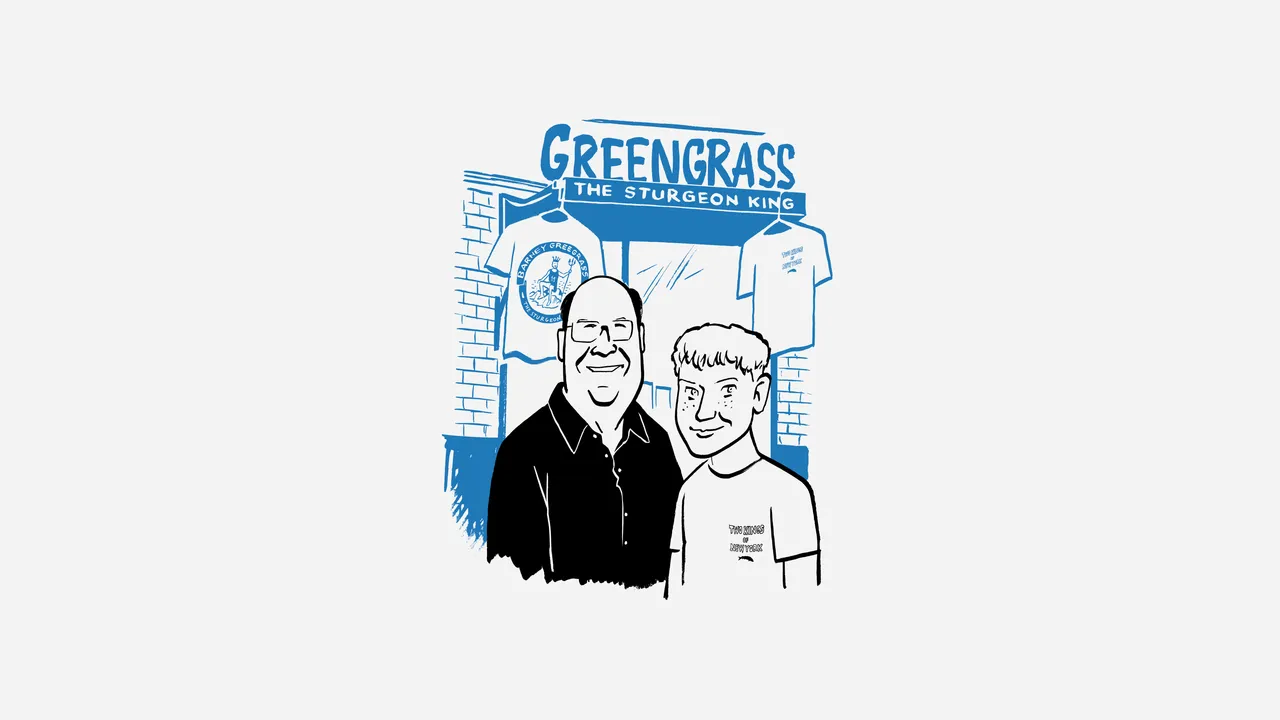
Moe Greengrass is an entrepreneurial young man of nineteen and the heir to what is arguably the finest appetizing establishment in the city. One day, he will inherit the throne at Barney Greengrass, a smoked-fish emporium on Eighty-sixth and Amsterdam, just across the street from the Belnord, a limestone pile where the late Isaac Bashevis Singer wrote his last short stories in Yiddish and rent-controlled splendor. For lunch, Singer liked the smoked lake sturgeon.
Read more The Twice-Widowed Khala Helai
Groucho Marx, Alfred Hitchcock, Jascha Heifetz, Marilyn Monroe—they all knew from Barney Greengrass. Irving Berlin ordered four quarts of borscht there every week. In Philip Roth’s novel “Operation Shylock,” the narrator, a stand-in for Roth, requests “the chopped-herring salad on a lightly toasted onion bagel”—a credible order. James J. Frawley, a Tammany Hall pol and loyal customer in the nineteen-thirties, gave Barney Greengrass its royalist imprimatur: “The Sturgeon King.”
Moe, the sturgeon dauphin, is an impassive fellow with a fantastic shock of red hair. What he doesn’t already know about whitefish is not worth knowing. A student at N.Y.U., he can be seen in the store on weekends helping his dad, an irrepressible kibbitzer named Gary, at the register. Father and son are surrounded by clear plastic boxes of halvah, rugelach, and babka. The perfume of smoked fish—nova and sturgeon, the humble herring, the aristocratic sable—permeates the air. “Even the wallpaper smells like fish and onions,” Moe says. The beloved Greengrass wallpaper, with its incongruous scenes of old New Orleans, has been absorbing the smell for many decades. During the pandemic, Gary called in a team of decorative artists to repair the damage of time. They worked on the wallpaper as if they were reviving a faded Caravaggio.
Moe’s grandfather and namesake was both a master slicer and an amateur magician. When Moe the Elder died, in 2002, the comedian and loyal customer Paul Reiser sent the family a condolence letter in which he tenderly remarked, in Gary’s recollection, “Moe was the only man who could pull a three of clubs out of a herring’s ass.”
Barney Greengrass lands in the Times Top One Hundred restaurants as reliably as Atomix and Le Bernardin. Thanks to the quality of the fish, word of mouth, foreign guidebooks, and now Moe’s exertions on Instagram, there are long lines at the door, especially on weekends. Gary took a stab at expanding years ago; he had an outlet in the now-shuttered Barneys department store, in Beverly Hills. Moe entertains far grander dreams. “I want to grow the brand,” he said, in the parlance of his studies in hospitality.
Read more Stories
But give him time. He is just getting started and has yet to persuade his dad to expand downtown, much less to Kentucky and Kuala Lumpur. In the short term, he is all about marketing. An avid Knicks fan, he has kept tabs on the excitement all over town—storekeepers putting televisions in their windows so people can watch on the sidewalk, fans on the subway complimenting one another on vintage jerseys. On the crosstown bus, Knicks people exchange glances, not of annoyance or seduction but of fandom, of common cause: “Wait’ll we get the Spurs to the Garden!” Strangers fall into hushed conversation about the state of Jalen Brunson’s knee and Mitchell Robinson’s pinkie. Predictions are offered, shy fist bumps exchanged.
Moe tuned in to the vibe and decided, “We’ve got to get in on the fun. I mean, people love us and they love the Knicks. So . . .” With Gary’s say-so, he went into action, ordering up batches of black-and-white cookies that would now be colored blue and orange. (The sugar content, along with a cup of Gary’s rocket-fuel coffee, will keep you up through the playoffs and into next season.) More imaginatively, Moe designed a T-shirt that combines the imagery of Neptune, the god of the sea, with Brunson, the lord of the Garden. They have been selling like, well, hot latkes.
“It was an honor to name Moe for Moe,” Gary said the morning after the Knicks’ big win on the road in Game 1. “My father would have kvelled about the T-shirts. He might have teased him and said, ‘What are you doing fooling around with T-shirts!’ But he would have been proud.”
As it happens, the Greengrass dynasty has a historical link to the Knicks. Irving Mitchell Felt, a developer who was instrumental in building the “new” Garden, used to come around the store and give out tickets for prime seats. Gary remembers going to the first Knicks game at the arena, in February, 1968. “I even remember the price,” he said. “Two sturgeon sandwiches and fifteen bucks. A pretty good deal.” ♦
Read more Firstborn Immigrant Daughter