 By admin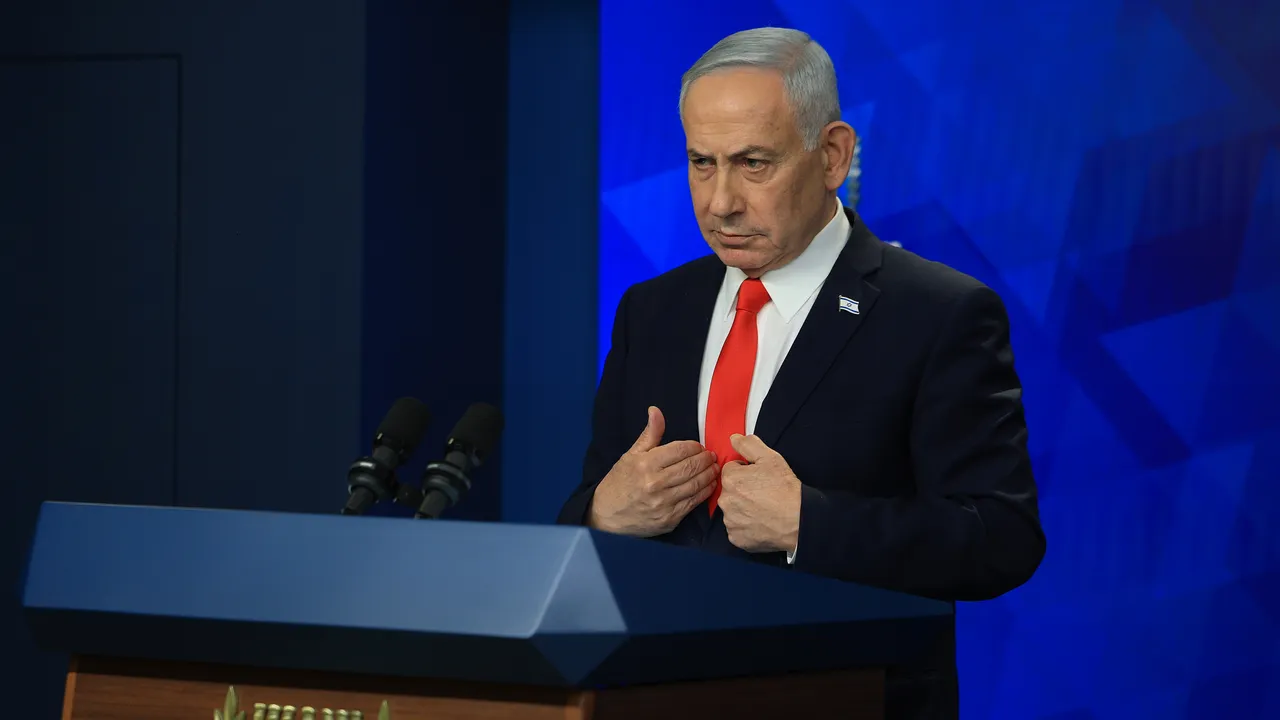
After Israel struck a Hezbollah stronghold in Beirut on Sunday, Israelis went to bed expecting to be roused by incoming missiles from Iran. Instead, they awoke to news of a ceasefire. Even for a country versed in turmoil, this was an extraordinary turn of events.
Read more When Did White-Collar Work Start to Look So Bleak?
But rather than feeling a sense of relief that the hostilities were over—or, at the least, suspended—most Israelis responded with alarm. “Good for Iran, Bad for Israel,” Yediot Ahronot, a popular newspaper, declared in a front-page headline on Thursday, when it became clear that the memorandum of understanding between the U.S. and Iran did not address Israel’s top concerns, namely Iran’s stockpile of highly enriched uranium and its arsenal of ballistic missiles.
That concern cut across political lines. Less than a third of Israeli Jews—from right, left, and center—thought that ending the war under the current conditions was in the country’s security interests, according to an Israel Democracy Institute poll released days before the deal was announced. (Sixty per cent of Arabs in the country thought ending the war was compatible with security interests.) And only forty-one per cent of Israeli Jews said that the country’s security was a central consideration for President Donald Trump—representing the lowest share since the I.D.I. first started tracking responses in November, 2024. This puts Prime Minister Benjamin Netanyahu in a real bind: Israelis are now sending the message that he may have to choose between remaining aligned with the U.S. President and retaining his already winnowed base of supporters. On Monday, Israel’s far-right finance minister, Bezalel Smotrich, called the agreement with Iran a “bad deal for Israel and the entire free world.”
On Wednesday night, Trump signed a copy of the agreement at the Palace of Versailles. The fourteen-point document was then co-signed by the Iranian President, Masoud Pezeshkian. “This agreement is a catastrophe for Israel,” Danny Citrinowicz, a former head of the Iran branch for Israel’s military intelligence, told me. Citrinowicz, who is currently a researcher at Israel’s Institute for National Security Studies, was among the few Israelis who vocally opposed the war at the start, arguing that the mass protests that galvanized Iranians over the winter should have been met with intensified economic pressure on the Iranian regime, not with missiles. Now he warned against the ceasefire deal, citing the issues that it sidesteps, including genuine curbs on Iran’s nuclear program and the threat posed by the country’s ballistic missiles. (“They have to have some,” Trump pontificated about Iran’s missiles on Wednesday.)
The deal will also unfreeze tens of billions of dollars in Iranian funds held in international banks as part of the final agreement. Such lifting of sanctions all but guarantees that the Iranian regime will be bolstered mere months after protests brought it to the brink of collapse. Citrinowicz said, “Not only does it illustrate the failure of trying to overthrow a regime and instead only strengthening it, but, even worse in the Israeli context, is what U.S. Administration would ever attempt this kind of adventure again?” Israel, he added, is “decidedly worse off today” than it was on February 28th, when the war began.
Iran’s new leader, Mojtaba Khamenei, is regarded as even more of a hard-liner than his father, Ali Khamenei, who was assassinated, at eighty-six, by Israeli Air Force strikes. “It’s not a change of regime but a change in regime,” Citrinowicz said. Amos Harel, a military analyst for Haaretz, labelled the Iran ceasefire deal among Netanyahu’s biggest failures, second only to the Hamas-led attacks of October 7, 2023. “An ending like this to the Iranian saga—with no regime change, no end to Iran’s nuclear and missile programs, and clear damage to the Israeli-American special relationship—reveals the extent of the destruction Netanyahu has wreaked on Israel’s global standing since 2023,” Harel wrote.
When the U.S. signed the nuclear deal with Iran, under Barack Obama, in 2015, Israel still had a wealth of international allies that it could draw on to insure its security interests. After its conduct in the Gaza war—which involved the deaths of tens of thousands, the withholding of aid, and the near-total destruction of the Gaza Strip—it is now more isolated than at any time in the past. Virtually all other countries welcomed the Iran ceasefire deal and raised no concerns about Israel’s security. “Netanyahu is alone. He doesn’t have the Europeans, he doesn’t have the Democrats, he no longer has the Republicans, and now he’s losing Trump,” Ehud Olmert, a former Prime Minister and vocal critic of Netanyahu, told me on Wednesday. On Thursday, Vice-President J. D. Vance said as much, and issued a warning: “If I was in the Cabinet of the Israeli government, I might not be attacking the only powerful ally that I have anywhere left in the entire world.”
For months, Trump defended his decision to attack Iran, even as the war threatened to tear apart his MAGA coalition. He seemed to be particularly sensitive about a Times report in April detailing how Netanyahu had persuaded him to open the conflict. “Israel never talked me into the war with Iran,” Trump posted on Truth Social a couple of weeks later, saying that October 7th and his own convictions led to the decision. “I watch and read the FAKE NEWS Pundits and Polls in total disbelief.” But, as the war failed to yield the quick results that Trump had counted on, he reversed course, at times trying to sound indifferent to its outcome. “I don’t care” if peace talks were over, he told CNBC earlier this month. At the G-7 summit in France on Tuesday, Trump said that he hoped to put the war in the “rearview mirror.” He also lobbed criticism at Netanyahu, who, he said, “has to be more responsible” about his conflict with Hezbollah, in which more than thirty-eight hundred people in Lebanon and thirty people in Israel have been killed since March. Trump declared, “Without me, there would be no Israel.”
After the ceasefire deal was announced, Netanyahu gave a rare press conference. He vowed that “with an agreement or without an agreement, Iran will not have nuclear weapons—not today and not tomorrow.” But he looked physically spent. The issue he acknowledged to be his “life’s mission”—preventing Iran from obtaining the weapons—was slipping away from him, under a U.S. President whom he once called “the greatest friend Israel has ever had in the White House.” Trump and Netanyahu’s disagreements over Israel’s occupation of Lebanon may prove particularly difficult to resolve. Netanyahu announced at his press conference that Israeli forces will remain in Lebanon for “as long as required.” Trump responded by expanding on what he called his “little dispute” over Lebanon with Netanyahu. “You don’t have to knock down a building every time somebody walks into it that’s from Hezbollah,” Trump said during his G-7 news conference.
“Where did you go wrong?” an Israeli reporter asked Netanyahu. His supporters were beginning to wonder the same. Amit Segal, a senior political correspondent for Israel’s Channel 12 with close access to Netanyahu, acknowledged in a recent column that Israel had made a mistake in prioritizing regime change in Iran over eliminating its nuclear capabilities. Segal said that, though the ceasefire deal did not surprise Netanyahu, the way in which it happened came “as a shock.” Trump had shut Israel out of the peace talks. He spent the past two weeks hurling insults at Netanyahu, calling him “fucking crazy” in one phone call, as Axios first reported and Trump later confirmed. But the deal itself “looked like a total surrender wrapped in an anti-Bibi, almost anti-Israel sentiment,” Segal told me. He said of Netanyahu, “It’s something he used to preach against for many years—paying the Iranians in cash and hoping to get something in credit. It’s very similar to the Obama deal but even more dangerous because it’s temporary and because Iran isn’t really obliged to do much at all in return.”
For Netanyahu’s mouthpieces in the media, news of the ceasefire deal appeared to represent a genuine crisis. Would they publicly break with Netanyahu? Or would they turn on Trump, a leader they once lavished with near-mystic praise, comparing him to Cyrus the Great and to the Messiah? Segal told me, “It’s like when your parents divorce and you have to pick sides.”
By Tuesday, the pro-Netanyahu camp appeared to settle on an answer. Trump “came out a loser,” Yinon Magal, who hosts a popular talk show on Channel 14, a pro-Netanyahu outlet, wrote on X. Magal blamed the ceasefire on “Vice President Vance, the lowlife,” and denigrated Steve Witkoff and Jared Kushner, the President’s envoys for peace missions, calling them “two yehudonim,” or “Jewboys.” (When Vance was asked for his response to Magal and other Israeli commentators, he visibly scoffed. “They’re proposing an endless conflict,” he said.) On his radio show, Magal doubled down on the strategy of distancing Netanyahu from Trump. “Why are you blaming Netanyahu?” he said. “Netanyahu has always insisted on victory, total victory. The fact that Trump turned on him halfway there is not his fault.”
Such anti-Trump rhetoric is new in Israel, and it appears to be seeping into broader public opinion. Up until three weeks ago, fifty-eight per cent of Israelis viewed Trump favorably—rendering him the most popular politician in the country. However, in a snap poll published by Israel Hayom after the ceasefire deal was reached, Trump’s favorability rating had plummeted from plus twenty-three to negative sixteen. “I’ve never seen a shift on that scale before,” Segal told me. Among Netanyahu’s supporters, Trump’s popularity had declined by fifty points. Segal attributed the change to the “bad deal” but also, perhaps even especially, to Trump’s insults of Netanyahu.
The ceasefire went into effect as Israeli political parties ratcheted up their campaigns ahead of a fall election. (A date has not yet been determined.) According to a new poll released on Tuesday, Netanyahu’s Likud Party is projected to remain the largest, but the center-left Yashar Party, headed by Gadi Eisenkot, a former head of the military, has narrowed the gap substantially, gaining four seats in a single week. The anti-Netanyahu bloc is expected to secure a majority in parliament, according to recent polls, as Netanyahu’s coalition partners trail far behind. Segal said that he can imagine a scenario in which Netanyahu, seeing his diminished support and recognizing a “window of opportunity” in Trump’s falling approval rating in Israel, more openly breaks from him.
Citrinowicz, the Iran expert, sounded more skeptical. He used an old Israeli trope about the Army to describe the power imbalance between Netanyahu and Trump and the unlikelihood that Netanyahu will publicly defy him. “When you piss on him, he gets wet,” Citrinowicz said. “But when he pisses on you, you drown.” ♦
Read more Things I Am Worried Will Happen While I Drink Coffee from My “Super Dad” Mug