 By admin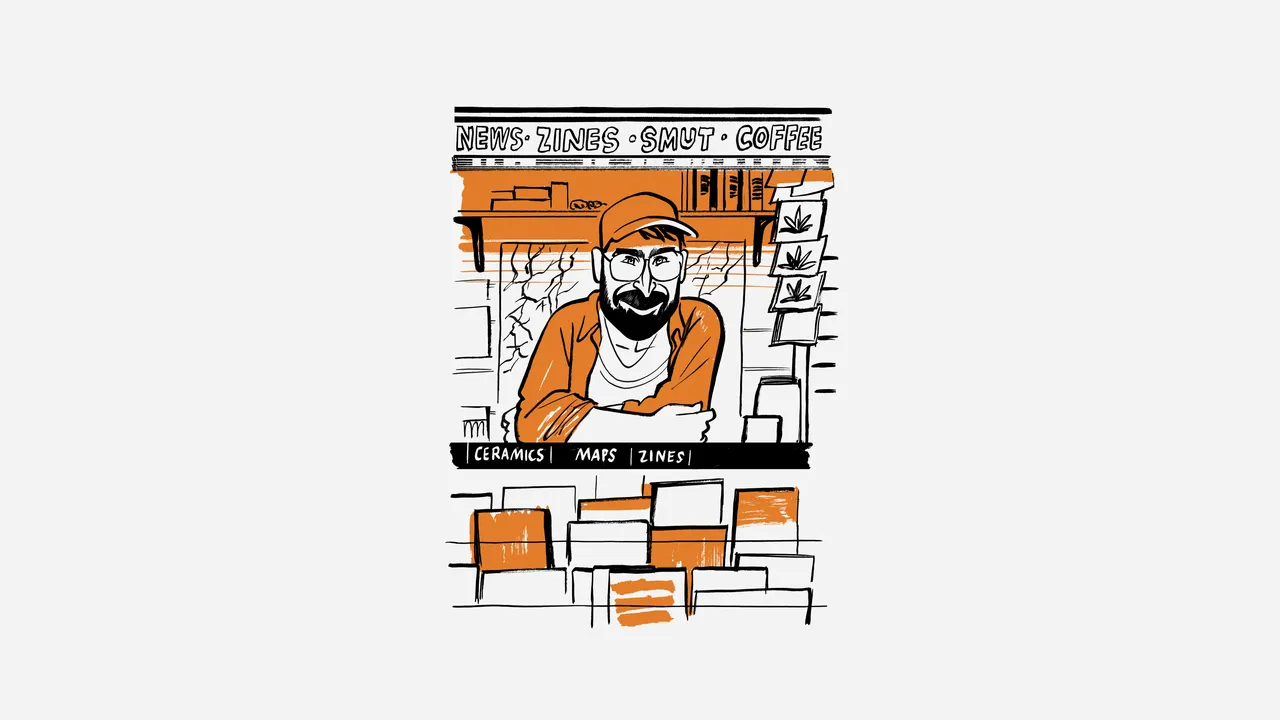
The Times has published sixty thousand nine hundred and sixty-some issues, so what are the odds that today’s paper is the one you really want to read? “The news doesn’t change that much,” Aaron Reiss, an aspiring entrepreneur, said one recent morning. “A newspaper costs around four dollars, and it’s the quickest-expiring product in the world. Even milk lasts longer. So I was, like, What if I sell old news? That’s free for me, and it’s still good.”
Read more What Does It Even Mean to Be a Moderate?
Reiss was on the corner of Thirty-fourth and Ninth, outside B&H Photo, where he’d just opened a kiosk called the Old News Newsstand. “I came up with this catchphrase I’m very proud of. ‘Old News: Still bad, but cheaper and more predictable,’ ” he said. His price for an old issue of the Times was three dollars—about twenty-five per cent off. It was a Friday morning (“Iran and U.S. Escalate Strikes Despite Countries’ Emphasizing Peace”), and Reiss rolled up a metal grate and laid out the news for the day, which wasn’t that day’s news but could’ve been. He had a bunch of June Timeses, salvaged from the trash. June 13th: “In Gray Area of Not Peace And Not War.” June 18th: “Trump Lashes Out At Critics of Deal.” June 21st: “Strait Is Closed.” “It’s the exact same shit,” Reiss said.
Reiss, who wore a button-down, unbuttoned, over a wifebeater, has the job history of the highly educated itinerant class. He’s been a researcher at a design agency, a lecturer at Yale (Urban Studies 3307: Telling Stories with Maps), a journalist, a ceramist, and a hot-chocolate salesman. “I sold out of a pushcart near Seward Park, out of my ceramic cups,” he said. “I sold it for two dollars, very cheap, and I’d say, ‘If you like the cup, keep it for twenty.’ ”
The newsstand idea was meant to expand his ceramics business. Initially, old news was partially a regulatory work-around: all sidewalk newsstands in the city must sell periodicals. But eventually it became an organizing principle. “Now we sell weird stuff that’s newsstand-related,” Reiss said. There are ceramics and art, plus zines (Several Chairs I Briefly Loved, Vol. 3; Americans Draw America) and unusual snack items—Jordanian chewing gum, Iraqi Cokes, Taiwanese canned cappuccino. There’s a rotating exhibition of photos from the New York Public Library’s Picture Collection. Reiss’s five-year-old son, Milo, contributed art, on which he’d written “Free 0¢.” “Wrong,” Reiss said. “I charge a dollar.” He has old magazines, too. “I really wanted to have porn,” he said. “So we have old Playboys.” Most customers want cigarettes or lottery tickets, but he’s not selling those. “Those things ruin people’s lives,” he said. “Plus, I would smoke all the cigarettes.” Instead, a friend is developing a scratch-off zine concept, and another friend is writing “loosie” poems, rolled up like cigarettes. He splits the revenue with the artists.
Reiss opened for business. Sales were slow. It was his thirty-ninth birthday, and most of the early foot traffic was friends. His wife, Lizzie Fulton, arrived at the same time as an artist friend named Max Glaser, who’d brought a box full of old nudie mags. “Check this out,” Reiss said. “A huge crate of smut!” He did a little dance. He and his business partner, Sylvea Wong, had been cutting pictures from books of erotica and bundling them as “vintage mini smut,” for five dollars. “The way somebody takes a pickaxe to a mountain to turn a big rock into small diamonds, we’re doing the same thing with the smut,” Reiss said. The previous day had seen his best sales so far. “I need about seventy dollars to break even,” he said. “I think we’ll do it today.”
Glaser looked skeptical.
“You think my accounting is all fucked up,” Reiss said.
“It’s really bad,” Glaser said.
Reiss opened a ledger, which was just a notebook page listing items beside tally marks. “He won’t tell anyone how much he paid for the stand,” Fulton said. “And I was, like, ‘This actually affects me.’ ”
Read more Battle of the Dans
Business picked up. Reiss called out, “We got weird shit for weird people!”
A man heading to B&H asked, “Do you have Zyns?”
“We have zines,” Reiss said. The man bought a painted ceramic toadstool for ten dollars. “That’s how you fucking sell a fucking thing,” Reiss said.
The old papers went fast. Tourists love them. “They’re on their way out of the city and want an object,” Reiss said.
Reiss has his regulars. He stocks kosher snacks for B&H employees. One news vender on Sixth Avenue offered mentoring. “I told him I was selling water for a dollar,” Reiss said. “He was, like, ‘You’re an idiot.’ But he sold me some cases at cost.”
At the end of the day, Reiss had made a hundred and eighty-two dollars. “I’m in the green!” he said. His friends think that his newsstand is performance art. “This is a literal store,” he said. “It’s a capitalist endeavor.”
At home that evening, Reiss reran the numbers and discovered an error: he’d forgotten about paying the artists. “My current cash position is negative twenty-six dollars and sixteen cents,” he reported. “Accounting is an emotional practice.” ♦
Read more Kevin Warsh Is Facing More Than a Communication Problem