 By admin
Four very thin trees stand above their own reflections and hesitate, as cold girls do. She thinks of rhymes for girls do. Whirls through. Pearls anew. Use it in a sonnet? Eddy’s mother lives by a lake. It is a gray and glassy evening. Supper was all reminiscences, Eddy recalling slow white mists drifting over the schoolyard each day at five, when the chemical plant incinerated its Styrofoam, and how he broke his collarbone and no one believed him for three days, his mother at the head of the table smiling and continuing with her fruit cup, his brother sitting opposite with his head down, a man tall and thin as a door, closed like a door. He ate as if expecting more. Four, chore, whore, underscore ran through her mind perkily. She mumbled something, got up from the table, and left. Now, at the lake, no one swimming, she watches the water slide from slate to black.
Read more Anne Carson’s Ecstatic Minimalism
What does your brother do? she asks Eddy on the way home, and Eddy says he has three paper routes. Paper routes? A grown man? Isn’t he twenty? Says he doesn’t need much to live on. And we both got something when the old man died. He lives on that? No, he bought a Bugatti. Shit, where’s he keep a Bugatti? Oh, he crashed it or gave it away, I forget. So he stays with your mom? Trailer out back. Where I saw the chickens? Mom would rather he didn’t keep chickens. Did you all eat supper together all the time growing up? Yes, he says. She likes the idea of her and Eddy learning about each other’s childhood. She starts to tell him about her mother’s voice crackling from the intercom every night at six, the meal laid out on plates on the kitchen counter, all of them shuffling off to their rooms with their plates to eat alone. He glances at her vaguely and speeds up to take the ramp onto the highway. They are driving through early-spring croplands. She stares out. The fields look shaved. We had chewing and long silences, he says. It’s not much better.
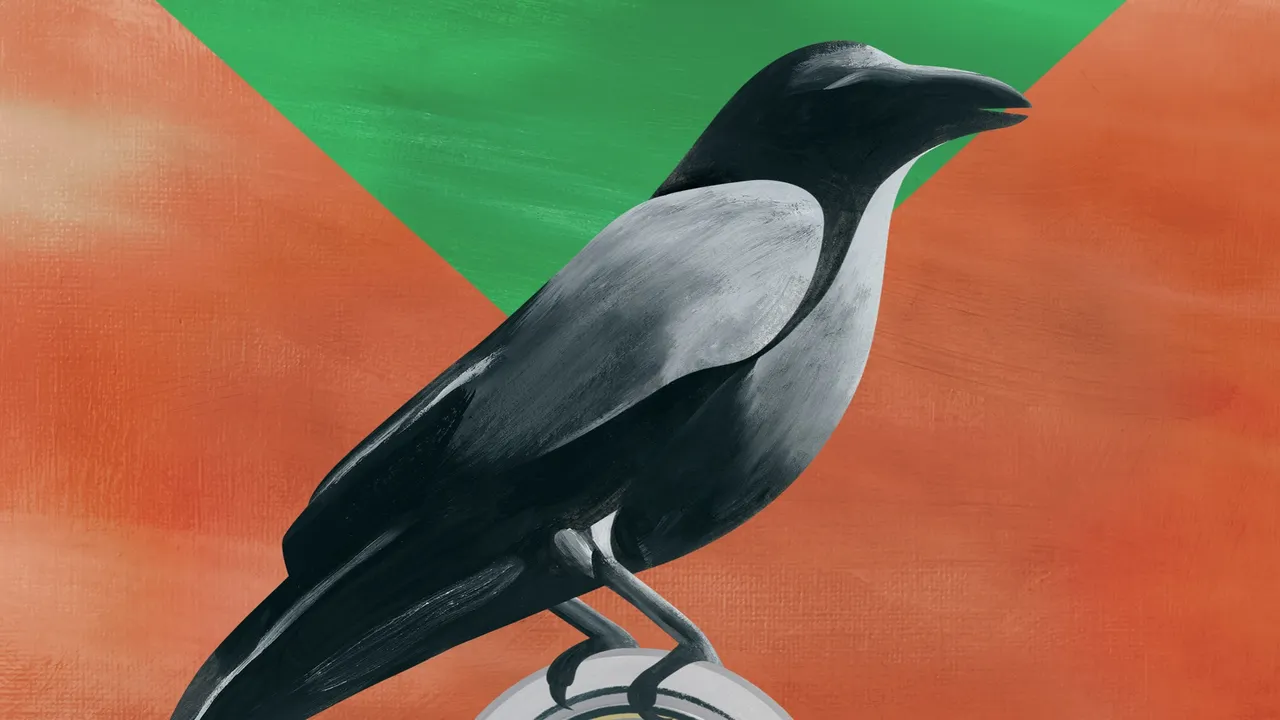
A sentence. Any sentence. Even a single word. She needs to be writing, not writing anything special, just writing. Her mind is a lead patio gleaming from end to end. Thoughts skitter across it like dry leaves, disappear. Ticktock smell of clock. She can’t sleep, she can’t swallow. She is not, as we say, herself. The crow watches from the yew tree. He knows she knows he knows. Off to your next rot pile, crow! she yells, standing in the kitchen doorway. When Eddy asked her to house-sit, he gave instructions about laying out toast on the back-porch railing every evening. She feels bad that she hasn’t done it. The crow is regarding her tightly. Suddenly it drops backward off its branch, turns one full somersault in air and strikes, right side up, on a nearby branch. She stares. The crow does it again. Vaulting to a closer branch. She holds her breath. Crow does it a third time and lands on the porch railing, drilling her with a yellow eye. Dirty business, crows! the crow cries. A laugh breaks from her, which the crow immediately mimics, then they both stop, contemplating this new, complex mood. A long moment passes. Two branches on the yew tree quiver and are still. The crow hops a little way down the railing and back. Hops farther down the railing and back. Few more hops. Does the crow want her to go somewhere? She steps out. Crow clatters off around the corner of the house.
The sunset is a red-gold rumpus on the western sky. It has rained. The crow tosses itself from branch to branch, pole to pole, glistening on its pace, and she follows. They are soon far from where they began, streets unfamiliar to her, an older part of town, crossed by alleys where forms flit. There is the stillness after rain. Rank risings rise. Trees drip. Street lamps loom. Night takes on a polish, a pure power. She glances into windows as she goes. Blaze of an empty kitchen. A man reading. Old Christmas tree in a corner. It feels secret. The sky is clearing overhead. She feels secret, too. She feels tremendous.
Afterward, talking of that night, she can’t remember how she found her way, with the darkness complete and the crow no longer visible in upper branches. There was a kind of buzzing at the back of things, she tells Eddy. How she found the woman, how she knew which alley to go down, how she lifted her and carried her out, she couldn’t say. Sometimes it happens with these older buildings that a balcony just collapses, she tells him. In the ambulance, she held the woman’s hand. Once, the woman opened her eyes and said, They’ll give me ginger ale? Yes, she answered. The woman closed her eyes. Opened them again. And ice cream? Yes, surely.
Eddy has a back porch, but he never sits out there. Eddy is a guy you live with? No, just a friend. I worked for him awhile, doing research. Not anymore. Ah. I like him a lot—no, well, I like him sometimes, I don’t know. Few weeks ago, I met his brother. And? And I liked his brother, too. I like them both, together, different parts of them, you know? Better than separately—too bad you can’t do that, stack up different parts of people and make one good one. Oh, I don’t know, it’s nice to stay between them—there’s a slot for me. Am I being weird? Probably.
They are sitting on the balcony. It has been rebuilt. The day is large and sharp, like the edges of tin cans. It’s hot for May, like being at the beach. They lounge back in shady chairs. The woman’s name is Vern. Who’s Antonioni? she asks Vern. Why do you ask? Eddy mentioned him. Vern says she doesn’t like Antonioni, or women in men’s movies generally, those taut blondes so bored and terrified, not sure if they’re coming or going. Soon she is telling Vern about how she resolved not to go over to Eddy’s place anymore unless invited and then went anyway, the stupidity of this, the stupidity of extreme states of being female. Stupidity of tiptoeing around what you want. I don’t know what I want. I spill things, she says. Vern says, Want to go get tacos?
On the way to the taco place, she calls Eddy. He likes tacos. They sit outside. Eddy, this is Vern. Vern, this is Eddy. How was your day? O.K., how was yours? The wind is running its fingers over the trees. Shivering, she watches them. She is curious how this will work, Vern and Eddy. Will he do his tough-guy act? Things tilt when two become three. Vern is opaque. Eddy tells them he found an arm bone today. Eddy is a forensics guy. He was investigating a house. Adult female. Where? Kitchen cupboard. How? What do you mean how? How did it look? Dry, old, polished. Maybe an archeologist lived there, she says. Sharp laugh from Eddy. Yes, maybe so, he says in a funny tone. She wipes salsa from her chin. They talk of porches and tacos and then of writing, because Vern is writing a book, and Eddy asks did she tell Vern about the sonnets, get some advice? She is shocked, dumb. What is he up to? Does he think he’s helping? No, I don’t show things to people, she says, people I don’t know. She blushes. Don’t know well. Vern gives her a clear look. Now there is no step she can take in any direction. She weeps suddenly, stops suddenly, laughs. Sorry! I’m empty. I mean, tired. Today. Inside her chest everything is ablaze.
At the pool, she swims a mile then rests at the wall, watching the rest of the pool doing what Eddy calls “the arm ballet.” Arms and hands are idiosyncratic in swimming. An arm can smash or scoop or scythe. A hand can cut the water as a blade or a paddle or a frying pan. Some strokes have a little curled-wrist action at the top, perhaps only on the left. Underwater is a different world. All bodies are beautiful there. They balance like big blue toys outlined in silver bubbles. She glances over at the family pool that lies alongside the lap pool, with shallow water and some steps down to a sort of basin at one end. There, underwater jets create a circling current. She wonders how strong the jets are, what it feels like. Just now she sees five people caught in the current and circling helplessly, looking at one another, as surprised as if they’d burst into flame. Loose evening light falls from high windows, and, as the jets carry them around and around, they seem to be gazing down at their own arms and legs, saying, Look at us, look, we turned out perfect after all!
Later that evening, she tries to re-create this for Vern, but it loses voltage in the telling. They end up talking of Eddy, as usual. Then she walks home. Goes past her house. The sky is huge and raw. What do you want from Eddy, really? Vern had asked, and she said, I want him to look me in the face and ask me something. Ask you what? Doesn’t matter. That could be disappointing, Vern said. My dad saw Houdini once—did I ever tell you this? He said it was much like you’d expect. They tied him up this way and that way, ropes, cables, locked him in a jail cell, then before you knew it came the sound of bolts dropping to the ground and locks flying off, and the great Houdini emerged. He just came walking out three paces behind the sheriff—and it was nothing! Anticlimax! Where was this? Manistique, Michigan, the county jail. Poor Houdini, she said. You should write a poor Houdini sonnet, Vern said. I hate it when people tell me what I should write, she said. I bet, Vern said. But still.
Some months later, she shows it to Vern, being rather pleased with the line “none of us knew how to wrap a shroud,” and Vern says she likes it, so she shows it to Eddy, who says he’ll have to read it again, which means, well, she doesn’t know what it means. She waits a week. She makes another copy and forgets it in his car, in case he does want to read it again. Another week goes by, nothing. Finally, she asks him. Had a chance to look at my sonnet? Well, he says. Well. The thing is, the swimming part, that part’s good, the rest is crap. Epiphanies! You want epiphanies? Five guys got beheaded downtown last night. Don’t ask me why—they’re imitating ISIS now, who the crazyfuck knows? They’re fifteen years old, no one’s been to school for years, dictators are everywhere, dictators are us, and us grabbing everything, the grabbing is the whole story, everyone’s story, everyone who survives. All that bright-light-coming-down-and-all-God’s-creatures-are-one-stressed-and-unstressed-fancypants stuff of yours notwithstanding. Put your rubber mask on, girl, and slap down some real sound! Nobody’s dancing so far! And the thing is—you want to talk epiphanies—the thing is, they called me too early. I get there and one of the dead guys isn’t dead yet. Beheading’s not so simple—you don’t master the mechanics off a ten-minute YouTube video. You need a fucking scimitar and the arm strength of an Olympic boxer, you know what I’m saying? I’m saying the neck is a tough old tube of bone and gristle. I’m saying it was a long night.
Read more The Dumocrats Are Coming for Trump, and All He Can Do Is Call Them Names
While he talks, she looks out the window. The crow is on a branch of the yew tree, cocking its head and holding something on one side of its beak, as if to peer at it with the left eye. You used not to let it get to you, she thinks. What happened? Eddy hands her back the page. He turns away. Her head is full of blood and thundering. She goes out to the back porch. Since it is in her hand, she reads the sonnet to the crow. No direct response. The crow is teaching itself how to slice a forked twig from the yew tree into a three-pronged tool for digging grubs out of a tree trunk. If I were you, she says, oh, boy. What a life I’d have. The crow confers on her its sky-filled eye.
Around this time, it seems to her, Eddy gets sadder. No more rants. He gradually vacates himself. When she starts sleeping with his brother, there is no more chitchatting with either of them about the other. The brother’s name is James. She calls him James Taylor because his phone message is five seconds from “Up on the Roof.” I thought of using that once, she says. Then I didn’t.
How much younger is he? asks Vern. I don’t know, she answers. And I don’t want to know. She tells Vern some of the things he’s said: I have to see you again!—whispered to her in the driveway that first time they went for supper at his mother’s. More hilariously, watching her walk to the bathroom naked one night, Great, no cellulite! They form a corner to study him, she and Vern, two girls versus the enemy. Hard to dial that back, she knows, but she needs this friend, this Vern. With James Taylor, she merely needs to keep things in motion. When she falters, he falters, and faltering is uglier for the older one. They have tender ways together (viewing the moon while holding hands) and awkward ways (sex), but best is just lying side by side all night, sleeping and waking, like fishes, he says, moved this way and that by the stream.
Calling Eddy while his brother is in the shower is less exciting than she expects. Eddy had left messages. His sadness foams in her ear. She pats at it. Everyone is aware of what is going on—of course they are. James Taylor comes out of the shower. He is extra tense. They order Chinese. It arrives with three fortune cookies. Is that unlucky? he says in an ashy voice. No, no, she says, no, no.
Eddy’s sadness has a hold on her, no question, but this other thing, the brother, his passion is a scent coming along the ground. She is a hound, nose down, starving for it, trampling herbs and grasses on the track. When he acts young and chaotic, she gets scared, her own reprimands sound to her like those of a faded aunt. They have fights on the phone that leave them gasping. Other times, he quotes the Tao Te Ching at her. I am a patient person, he says, and she says, You are not! They brace and glare, then dissolve laughing—this happens early on. Later, there are hard rocks under the surface.
She fails him in serious ways, he makes clear. You’re good at being cold, he says. She has to allow that this is true. You’re always thinking up bits for some sonnet, aren’t you? You’re only half here. Also true. His voice is high and soft with suffering. To feel she has to have pity on him enrages her. She looks at this rage, it feels stony, she cannot move it. The higher and softer his voice, the more she wants to simply be gone from the room. Then comes the night he sees her track and swat a mosquito, initiating a Taoist crisis. His mouth twists aside like a smeared rose. She tries to recall his mouth when he was saying, I have to see you again. A small horror knob settles between them.
She doesn’t so much think about Eddy as have a constant Eddy-atmosphere in her mind. He’s jealous is why he’s calling all the time, Vern says. Jealous, airless, scare us. No, I don’t think so, she says, but there is a feeling deep down like a detonation. Then Eddy begins asking her friends to intercede. She’ll have no good of the guy! he cries at Vern. Vern hangs up on him. The men are reliably startling, aren’t they? Vern says to her.
She decides to end it with James Taylor. This proves harder than she thought. She dreams of a sweat-soaked bird working its wings against a hot black night and wakes exhausted. They have several final conversations. Her room smells like adolescence. Sometimes he is calm and noble, giving her bits of Tao. Other times he slopes in her armchair, sobbing. Apologizes for being boring, curses her, sends wild small poems, sends seven-paragraph denunciations, back and forth it goes. She counts the paragraphs to tell Vern. Her wings hang down on either side. She finds a scrap of paper he put in her fridge, in the egg carton. It shows the international distress signal for “DON’T UNDERSTAND.” This scrap she doesn’t show to Vern. She keeps it for years.
Winter. She gets new headache pills, little red ones, and tries to reconnect with her routine at the university before her research grant runs out. She borrows a lot of movies from the library and watches them with half attention. She goes to a daylong conference on the concept of “panic” and hears how the ancient Greeks dumped the whole hot mess into a god named Pan, saturator of noon and demon of mad space. Late that night, she starts a movie without noticing what it is. Hot dry Sicily washes over her eyes. The characters are dusty and taciturn. Sicily has too much noon. Then it is New Year’s Eve, a dance. There is a furiously energetic band, but their sound has been turned off. The dancers, masked, drift around an ugly basement dance hall, out of synch, with some other (wrong) music laid on top, bumping into one another, all covered in a shiny stuff like stardust. The whole thing looks rough, deformed. It is the most beautiful movie she has ever seen. A seated man looks up at a woman swirling past him and opens his mouth in a soundless bark. His eyes tear her open. He is powerless. She swirls on. How do they become people entrusted to one another, entrusted with one another, how does anybody? She can smell damp church basement, wool, sweat, Vol de Nuit, cigarette butts, the priest at the back of the room thinking of sin, his greasy winter cassock. Because I trust you I press my body upon yours and we dance, buoyant and scarcely ourselves in clouds of whatever this is, this brightness of Aphrodite’s needle as it flashes in and out of living skulls. She deletes the last line. Precious. Who calls love “Aphrodite” nowadays? A sonnet needs a far eye and a close eye at the same time, but gods? No. Anyway, “no results are found” in the online rhyming dictionary. The movie ends. She sits a long while. Turns the TV off. Closes her notebook. Outside a dog cries against the dark. She rises, stiff now, puts on a coat, and goes out. Deep-blue dawn. A whitish gold light is just beginning. Frozen grass underfoot has the soft bristle of walking on a sandwich with lettuce. ♦
Read more How Test Engineers Decide What Counts as Good Enough