 By admin
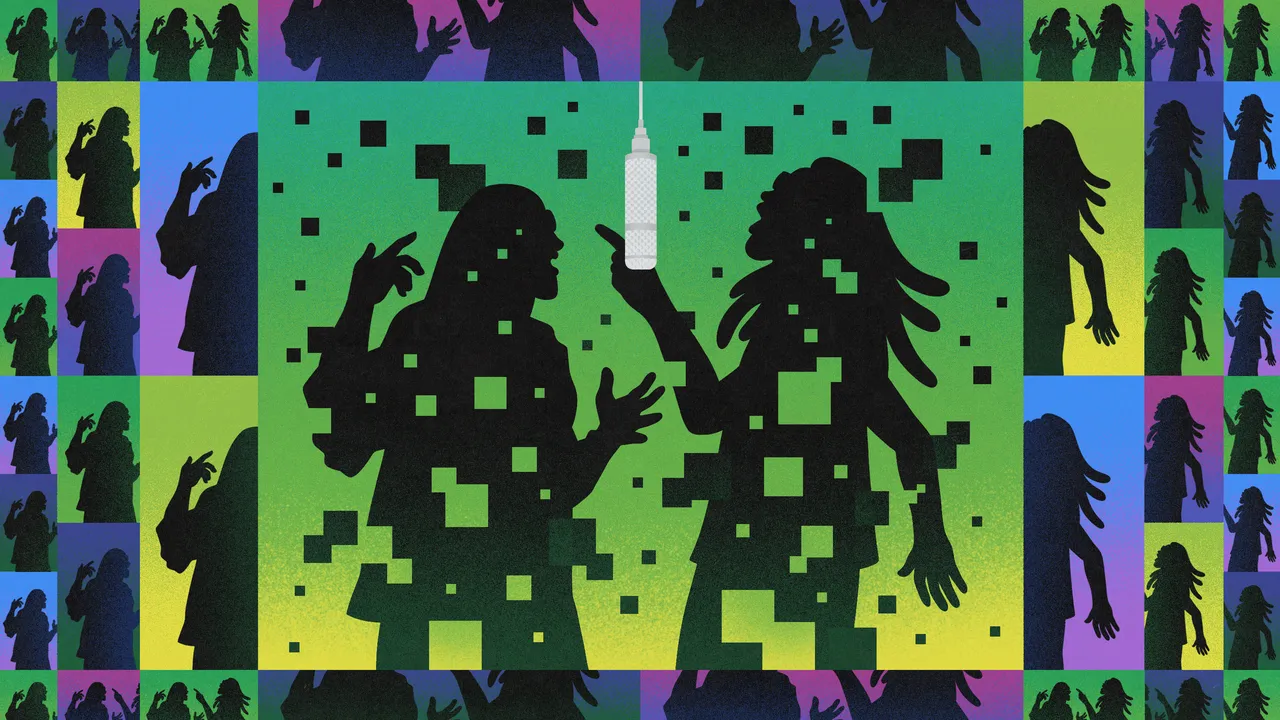
When I first heard “Versace,” the 2013 breakout single by the Atlanta trio Migos, it was like seeing a rainbow for the first time. The hook is just Quavo saying the word “Versace” over and over, saccadic and uninterrupted: “Versace, Versace, Versace, Versace!” It’s not the repetition of the designer name itself that gives the song gravitas but how Quavo and his bandmates, Offset and Takeoff, accent and manipulate the word into eighth-note triplets. They didn’t invent this style of vocal performance, but they did revolutionize its use in hip-hop and popular music, with everyone from Taylor Swift to Ariana Grande adopting iterations of what came to be known simply as the “Migos flow.” In the years following “Versace,” the group notched two No. 1 albums, tied a Beatles chart record, and set off multiple online trends. They popularized the Dab, a dance that became so culturally inescapable that Hillary Clinton, when campaigning for the Presidency, in 2016, did it during a guest appearance on “Ellen”—effectively killing the craze on the spot. Their hit “Bad and Boujee,” from the same year, became one of the defining songs of the decade. As the critic Meaghan Garvey wrote for Pitchfork, in 2018, Migos had “officially infiltrated the mainstream without going pop; instead, pop had gone Migos.” Even after years of creative stagnation, a hiatus, and, tragically, the death of Takeoff, in 2022, Migos had already cemented themselves as cultural icons perennially synonymous with everything cool. Others could imitate but never replicate; their coolness was predicated on their originality.
Read more Behind the Settler Attack on Palestinians and a Washington Post Journalist
Imitation, of course, once precluded becoming—a distinction that has dissolved in the age of A.I.-generated deepfakes. In the not-so-distant past, people could dress like Quavo, do the Dab like Offset, or mimic Takeoff’s ad-libs (“Mama!”), but they could not inhabit their movements or voices, could not imagine themselves into their bodies. Now, with the help of A.I., people are doing far more than imagining: in a recent viral trend, users have begun to digitally transplant themselves—and their favorite television characters, celebrities, athletes, politicians, and pets—onto Quavo and Takeoff in a studio performance of their 2022 song “Hotel Lobby.” The original video, which aired on the YouTube series “A Colors Show,” features the duo standing before a bright-orange backdrop, positioned on either side of a dangling microphone. They perform a series of nonchalant dance moves while rapping about diamonds and drugs and experiencing the world in technicolor clarity. But, as it turns out, if you replace Quavo and Takeoff with literally anyone, or anything, the stand-ins manage to channel the same powerful aura as their originators, even if, in real life, they could never dream of achieving such coolness. The tech C.E.O.s Sam Altman and Dario Amodei, two of the more physically awkward and swagless people in public life, suddenly seem loose and inspired when superimposed into the “Hotel Lobby” video; Donald Trump and Elon Musk, hardly known for their fluidity of movement, also assume an effortless cool when becoming Quavo and Takeoff. Deepfakes are controversial, sinister even, given their ability to be used for misinformation or sexual exploitation. But these rapping deepfakes are openly satirical and seemingly inane—is there really any harm in chuckling along with their absurdity?
And people do seem to be chuckling along. After the popularity of the “Hotel Lobby” meme, the deepfakers have turned their attention to the music video for Drake’s “Burning Bridges,” which shows the Canadian rapper and his friends in the back room of a dimly lit restaurant, grinning and staggering around, pointing at the camera and clinking their freshly topped-off shot glasses. Dressed in a black leather headband and jacket, Drake playfully mimes his lyrics: covering his face with his hands, grabbing his chain, swaying about with his arms around his pals. Unlike Migos, Drake has often been accused of trend-hopping, rather than trend-setting, a “culture vulture” who adapts regional sounds and styles for personal gain. (This critique, aggressively weaponized by Kendrick Lamar in diss songs such as “Not Like Us,” tends to be a bit overstated—much of pop music now sounds the way it does because of Drake’s curatorial trailblazing.) But the video’s unmistakable radiance—its delectable sense of place and community, its humor and bluster—has become fodder for a seemingly endless trove of memes that present, for example, the cast of “The Sopranos,” the New York Knicks’ starting five, or any ordinary group of friends as Drake and his buddies: turned up in a restaurant, mean-mugging the camera, slicker and more confident than anyone has any right to be. How novel, and exciting, it must be for the random internet user to consign familiar characters to a rap video, a venue that, until very recently, had a fairly obvious barrier of entry: you had to be the one doing the performance, whether as karaoke or as an original routine. The deepfake meme has removed that barrier. Anyone can now become Drake or Quavo or Kanye West. (A.I.-generated spoofs of West with his Sunday Service choir are the latest rap videos to go viral.) Are you laughing yet?
The initial concern with deepfakes, which emerged during Donald Trump’s first term as President, was that they would mirror reality so closely as to render fact and fiction indistinguishable. Adam Schiff, at a 2019 U.S. congressional hearing, warned that deepfakes would perpetuate “nightmarish scenarios that would leave the government, the media, and the public struggling to discern what is real.” But, as Daniel Immerwahr wrote for The New Yorker in 2023, this wellspring of panic was probably misplaced. “Doctored videos online delight, taunt, jolt, menace, arouse, and amuse, but they rarely deceive,” he argued. Written misinformation and conspiracy theories, for instance, proved more challenging to dispel and dismiss than deepfakes; narratives are interpretive frameworks that messily collage anecdotes and data and ideology together, whereas a manipulated video can often be snuffed out. This is perhaps why, at least so far, deepfake technology has mostly been wielded as an elevated form of shitposting.
But, even when deployed as satire, there remains a revealing tether between deepfake technology and the tech world’s obsession with transhumanism—the belief that humans can evolve with technology to transform into beings no longer dependent on biological bodies. The A.I. scientist Ray Kurzweil told the Guardian, in 2024, that he intended to use mind-uploading technology to “create a replicant of myself, which is an option I think we’ll all have in the late 2020s.” He planned to live forever, he said, even as his body aged and he approached death. Beyond keeping his consciousness alive, he also sought to defy death in other ways, namely by resurrecting deceased loved ones, like his father, as A.I. avatars. “The capability to bring back departed humans digitally will bring up some interesting societal and legal questions,” he said, as if the outcome were inevitable. Altman, writing on his personal blog in 2017, described the “merge” between humans and machines as already starting, though a “gradual process.” He argued that “brain-machine interfaces are going to happen” and that only “arrogance” allowed dissenters “to assume that we will never build things smarter than ourselves.” With this logic, the deepfake meme operates as a soft launch to more odious uses of the technology. In Altman’s and Kurzweil’s visions of the singularity, existence transpires in a simulated reality; if we want to be Quavo in this space, then surely we can be Quavo. The limitations of our earthly world no longer bound us—“we could live forever in computers,” according to another Altman blog post.
Read more “An Unprecedented Case of Child Abuse”
Simulated reality, as enlightened as the tech executive may make it sound, is not immune to the baseness of racial and cultural appropriation. It’s revealing that some of the most popular A.I.-generated deepfake memes position Black performers as vehicles for comedic and parasocial fetishization. When I first started seeing the “Hotel Lobby” meme pop up on social media, my immediate thought was that it was a new form of blackface minstrelsy. And there was something, too, about how the internet hive mind selected rap-music videos as its preferred meme-able objects—the creator of the deepfake could inhabit, or imagine others to inhabit, the aesthetics of the Black rapper without having any of the historical or cultural experience of being Black. The long-standing desire to appropriate Black art, according to the critic Wesley Morris, connects to a deeply rooted urge to embody the freedom and authenticity endemic to its most popularized forms. Writing for the Times, in 2019, Morris noted that “particular to black American music is the architecture to create a means by which singers and musicians can be completely free, free in the only way that would have been possible on a plantation: through art, through music.” Even when deepfake memes project other Black people onto Black rappers—such as Zendaya’s character Rue, from the television show “Euphoria,” as Drake, or Barack Obama as Takeoff—an uneasy tension persists. The Black performer remains the template of the parody, a canvas to characterize and deform in whatever way the meme-maker sees fit.
Perhaps the clearest precursor to the complicated racial dynamics of deepfake memes is what happened on TikTok at the turn of the decade. The social-media platform became a beacon of youth culture in large part owing to dance, particularly dances created by Black people, set to music by Black artists. White teen-agers performed moves like the Whoa and the Renegade, and twerked to Jersey club and Chicago drill, not in homage to the cultures that created them but as breezy, frictionless paths to virality. Of course, users of all races engaged with these TikTok trends, but the most visible accounts tended to be those of white influencers. As Jon Caramanica wrote for the Times, in 2019, “TikTok all but eradicates traditional norms about cultural ownership.” Once a trend or a song blew up on the app, it divorced itself from history or lineage and instead became the possession of the platform, a context-free artifact that any user could assert a claim of. Deepfake memes grant a similar carte blanche to their creators, while introducing even pricklier questions about race and authenticity. It was easy to criticize the white teen for booty-shaking and hip-thrusting to regional rap music, but the overtly manufactured nature of face-swapping videos affords many of its makers anonymity, or at least plausible deniability. (They aren’t the ones pretending to be Quavo; it is their A.I. avatars.) Appropriation can almost feel beside the point, though, not because it doesn’t matter but because A.I. has made it the default. This is the technology’s operating principle—human expression reduced to raw data for machine manipulation; peoples’ likenesses rendered nonconsensually and frivolously; creativity concentrated into prompts and preëxisting templates, with little social incentive to make anything new or risk vulnerability—and the harms extend to everyone.
Last week, the Atlantic Coast Conference posted a video to social media showing college-basketball players from its member schools performing an in-person rendition of the “Hotel Lobby” meme. It’s joyfully clumsy; nervous and stilted, the athletes stand before a white backdrop, dressed in their uniforms, tepidly rapping along to Takeoff’s verse and haphazardly mimicking Quavo’s dancing. They do not look as cool and put together as the rappers they imitate, and they sound nowhere near as good. They are confined to their bodies, rife with their many flaws and inadequacies. But the earnestness of their performances, the texture of their hesitation, makes the video far more compelling than any of its deepfake counterparts. When a trio of players from Virginia Tech get their turn on the camera, their exuberance is palpable—they shimmy and stampede around the set, shouting along to the lyrics as if they were at a concert. They are not pretending to be Quavo and Takeoff, because why would they? They, as themselves, are interesting characters in their own right. ♦
Read more Computer Chips Are the Most Magnificent Things Humanity Has Ever Made