 By admin
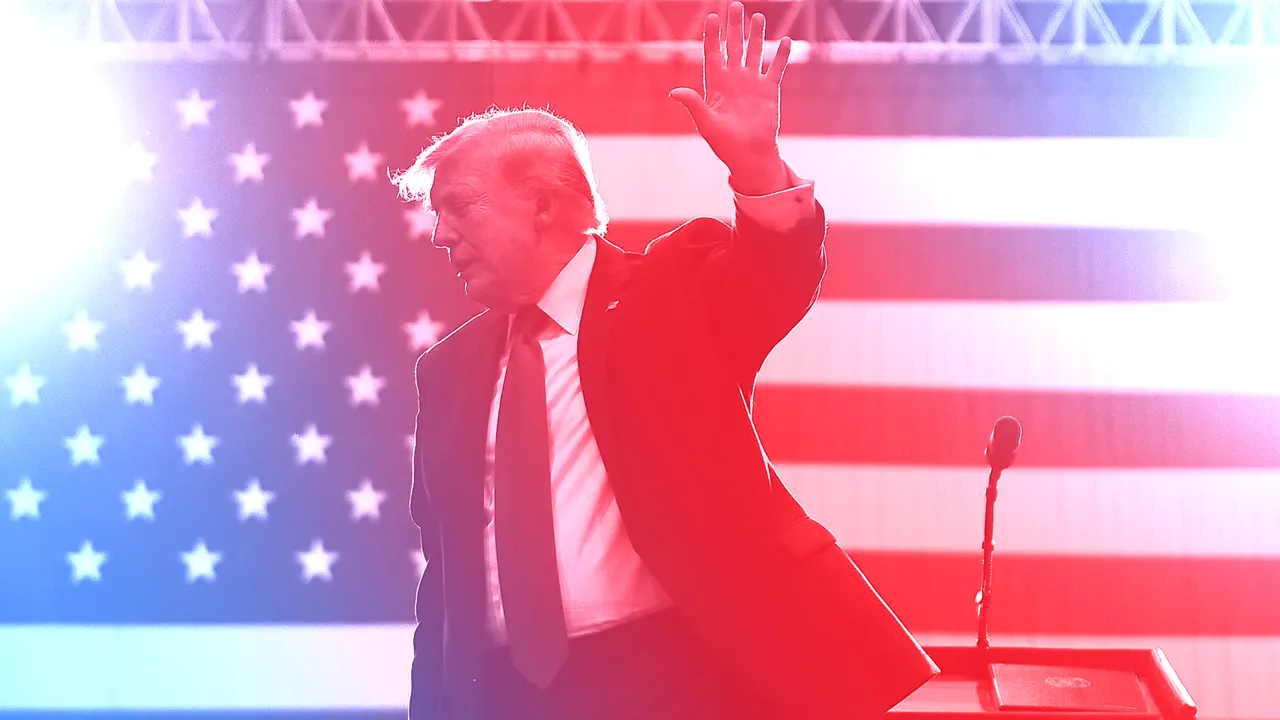
Is this, finally, the repudiation of Donald Trump? In decades of covering American politics, I cannot think of a midterm election which has more directly posed that question about a President—never mind one where all indicators point, ever more starkly, to a straightforward answer: Yes.
Read more Kimi Antonelli Has Always Been (Really) Fast
As Trump has barnstormed around the country this fall, he has reverted to the playbook he tried in his first midterm campaign. “Pretend, please,” he says wherever he goes, “that I’m on the ballot.” As always, he wants this to be the Trump, Trump, Trump election. The problem for the President is that that’s precisely what it is shaping up to be—and, with only days left before his November 3rd reckoning, Americans overwhelmingly do not like him, his policies, or his party.
By just about any metric except the obscene, record-setting amounts of cash that Trump and a small circle of billionaires are spending to save the Republicans’ Senate majority, this fall’s contest looks like the wipeout that so many have predicted (and so often been embarrassingly wrong about) since Trump first entered politics 4,146 days ago: historically low approval ratings, an unpopular war with Iran that has led to high prices and surging inflation, corruption so flagrant that two-thirds of Americans now believe he is profiting off the Presidency. Most notably, Trump’s sagging popularity is not just with Democrats and independents but with many Republicans in red states whose unwavering backing has, time and again, saved him during this insane past decade in American politics.
In the final Times poll of the election cycle, Democrats had an eleven-point advantage in the generic ballot, which is four points higher than in 2018, when the Party picked up forty-one seats and regained the House. As for the issues driving voters, the Democratic pollster John Anzalone summed up the current state of the race. “Democrats lead on everything,” he wrote on X after the Times poll was released. “Like Literally Everything!”
The result has been an entirely unexpected series of tossups in the American heartland, where control of the Senate—once seen as unattainable by Democrats given this year’s map—may be decided in states such as Iowa, Kansas, Nebraska, and Texas, none of which have elected a Democrat to that chamber in decades. (Ninety-four years, in the case of Kansas.) Democrats also have a strong chance to win a majority of state governorships for the first time since 2010. In the race for the House, where Democrats need to pick up only three seats, the Party is seen as a virtual lock to win.
This is not just a matter of Democratic hopium. Republicans began panicking weeks ago, spending hundreds of millions of dollars on ads in states they once reckoned on winning comfortably and all but withdrawing from previously competitive Senate seats in places, such as North Carolina and Georgia, where Trump won decisively just two years ago. On Monday, Trump will campaign in Mississippi—staunchly Republican Mississippi—where the Senate seat is now officially “in play.” As for the House, “exceedingly grim” G.O.P. insiders have been telling reporters for weeks that they are braced for a midterm blowout.
“The economic center of the American electorate is collapsing on Republicans,” Greg Strimple, a Republican pollster, declared on Tuesday. His new joint survey with a Democratic colleague for the Cook Political Report found Democratic Senate candidates narrowly leading in Iowa, Ohio, and Texas—all states which voted three times for Trump. According to Strimple, “Voters are so upset with the lack of leadership on reducing their cost of living, they appear willing to propel Democrats to upset victories in reliably Republican states despite the fact that Democrats are less popular than either President Trump or Republicans. The level of voter discontent is truly unprecedented.”
So why, then, are so many Democrats no more than what Rahm Emanuel called, in an interview for The New Yorker’s Political Scene podcast the other day, “small ‘c,’ small ‘o,’ cautiously optimistic” about their prospects for dealing Trump a decisive blow by winning the Senate?
Read more Does the D.S.A. Have a Vision for Public Schools in New York?
History suggests one obvious reason. Trump may never have been President at all if not for the Party’s fatal overconfidence about him, in 2016. In the final two weeks before that election, with some national polls giving Hillary Clinton a seemingly insurmountable double-digit lead, her doomed campaign did not even bother to send the Democratic nominee to the decisive battleground state of Wisconsin, instead looking to expand the map to traditionally red states such as Arizona and Utah. Even in 2018, when Democrats did come back from Clinton’s defeat with a strong performance, the split decision—with Republicans keeping the Senate even as Democrats won the House—meant that Trump was unlikely to face real accountability or meaningful constraints from Congress. It was seen as a rebuke, not a Presidency-ending repudiation.
The point here is that winning in American elections is about expectations as much as who claims more seats. At the start of 2026, Democrats taking back the House and running competitively for the Senate across a daunting map might have been seen as a rousing recovery from the Party’s poor state two years ago. Now, even though polls show that control of the Senate remains up for grabs, with key races all within the margin of error, the baseline has shifted. As a Democratic friend said to me the other day, “I’ll be disappointed if we don’t win the Senate that I did not expect to win a month ago.”
There is also the question of what lesson the parties take from the election. In 2022, Democrats bought their own spin about how successfully they’d held off a red wave, convincing themselves that losing the House by only five seats and holding on to a bare fifty-one-seat majority in the Senate was a great victory. The better-than-expected performance helped spur Joe Biden to announce that he planned to run for another term, and we all know how that worked out. After Trump’s 2024 win, Republicans believed a political realignment of such importance had taken place that they undertook an unprecedented mid-decade redistricting designed to blunt the Democrats’ advantage going into this year’s midterms. At the start of this year, that redistricting looked like it could help them gain as many as a dozen seats; now, with many 2024 Trump voters turning against the President in places such as South Texas and Florida, the net effect might be as little as one seat.
But, as the election that might spell the beginning of the end of Trump’s long, strange hold on the American electorate finally looms, it’s not the hubris of the victors or the inevitable flood of bad punditry that has me most concerned. It is, as always, the President himself.
Ever since he returned to office, Trump has been hedging against the possibility of a midterm embarrassment by preëmptively attacking the results, questioning the legality of mail-in voting, pretending there is an epidemic of illegal noncitizen voting, and threatening to mobilize the considerable federal resources at his disposal on Election Day and beyond. The Times found that he has publicly cast doubt on the elections on more than seventy per cent of the days since his second Inauguration took place, with recent comments focussing on “rigged polls,” which he said, “have ALWAYS underestimated MAGA.” In the post-2020 world, is there anyone among us who thinks we should not take these threats seriously?
In private, many Democrats (and I’m sure plenty of Republicans, too) self-soothe with talk of a blue wave that will be too big to rig. No less a stolid figure than the former Treasury Secretary Robert Rubin is so alarmed about this complacency that he warned the public this week of the “meaningful risk” that Trump might seek to interfere with or outright “usurp” the election results. I have no doubt that, if the President who was willing to unleash a mob on America’s Capitol rather than concede defeat sees a way to try, he will.
Most of all, I am sure of this: Trump remains who he has always been. He has never publicly accepted blame for anything, and he will not start now. There will be no course correction, no pivot to the center. He will not, as George W. Bush and Barack Obama both did after their midterm shellackings, acknowledge the voters’ anger and vow to do better by working across party lines. The worse Trump and his Republicans fare on Election Night, the more we should worry about his response. Repudiated Trump may turn out to be the most dangerous Trump of all. ♦
Read more A Philosopher of War Changes His Mind