 By admin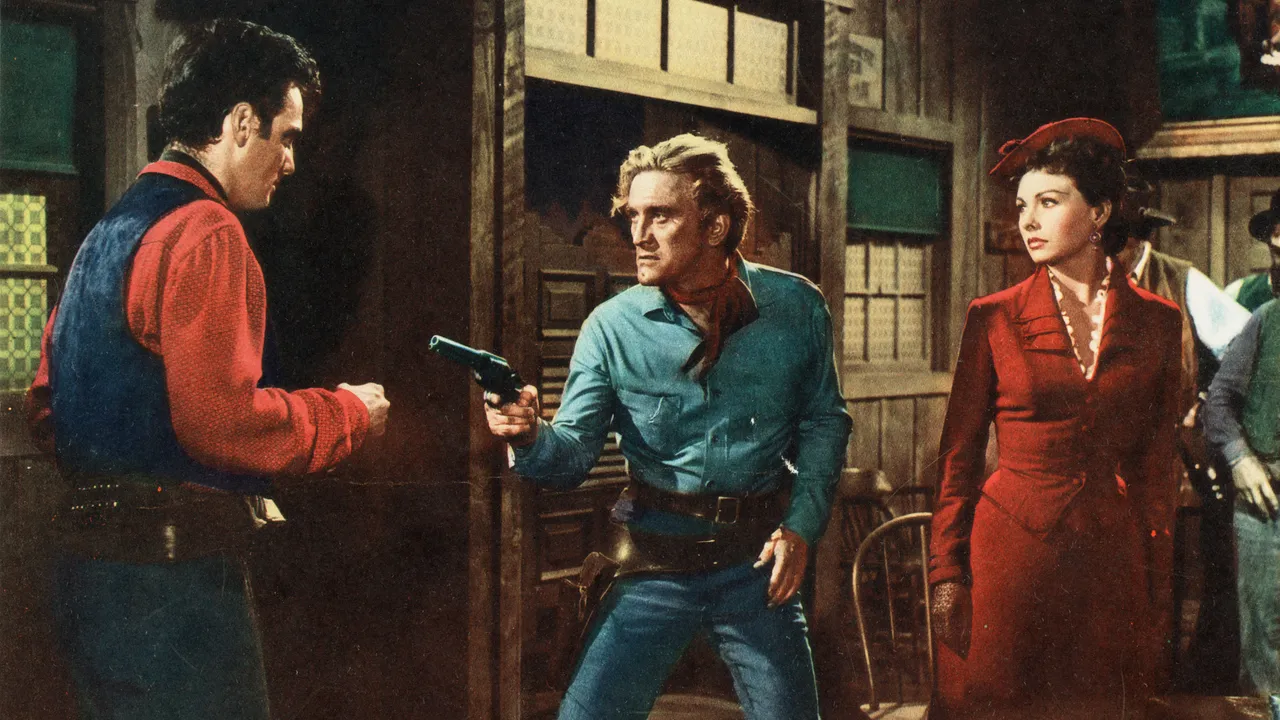
The series “Universal Westerns,” at MOMA through July 3, reveals the fruitful cinematic idiosyncrasies that Universal Pictures, founded in 1912, fostered in its heyday. John Ford, the supreme director of the Western, got his start there, at age twenty-four; in his first feature, “Straight Shooting” (screening June 6 and June 16), from 1917, his artistic personality is already on sharp display. The story involves a family of homesteaders—small-time farmers portrayed as peaceful and law-abiding—facing the hired guns of a cattle rancher who wants their land for grazing. The lead gunman (Harry Carey) grows disgusted and changes sides, as does a young cowboy, resulting in romantic complications with a farmer’s daughter. Ford, a moralist of high principle, creates an instant legend with his lofty depictions of righteous violence—yet with his next film he quickly punctured the pomp of crowd-pleasing heroism. “Hell Bent” (June 6 and June 16), from 1918, starts with a Western novelist getting a letter from his publisher requesting realistic characters with mixed motives. The rest of the movie involves the novelist’s imaginings, featuring Carey as a gunman whose actions again—and even more ambiguously—veer between noble and ignoble.
Read more What Did “Lady Chatterley” Liberate?
In “Trail of the Vigilantes” (June 8 and July 2), from 1940, the freewheelingly inventive director Allan Dwan turns an intricate drama into a hectic comedy, starring the urbane Franchot Tone, as an upper-crust special investigator who heads West, from Kansas City, and awkwardly poses as a cowpuncher in order to find a journalist’s killer. The action, both loopy and violent, features breathtaking rooftop stunt work framed in starkly graphic images; again, the villains are cattlemen seeking to monopolize land.
King Vidor, who, in 1949, had filmed Ayn Rand’s “The Fountainhead,” both flaunts and questions his libertarian bona fides in “Man Without a Star” (June 12 and June 28), from 1955. It’s a dashingly flamboyant Technicolor tale of a wandering gunslinger (Kirk Douglas) who heads to Wyoming in search of wide-open spaces and gets embroiled in a range war between a big-time rancher and small cattlemen who fence out big herds—and in the schemes of two powerful women (Jeanne Crain and Claire Trevor). An odd subplot of bathroom humor, involving the invention of indoor facilities, symbolizes the changing times. Vidor envisions irreconcilable conflicts of freedom and order, and shrugs.—Richard Brody
About Town
The third wave of emo music was in full swing at the turn of the millenium, but the dam preventing its complete cultural penetration wasn’t broken until the Arizona band Jimmy Eat World’s bittersweet single, “The Middle,” from its self-titled 2001 album, also known as “Bleed American,” came flooding onto radio. The band’s previous LP, “Clarity” (1999), was a curious, intricate cult classic that got it dropped from its label; taking note, the follow-up’s more straightforward pop songcraft was generational in its articulation of youthful disillusionment. Proving it really wasn’t just a phase, the band celebrates the album’s twenty-fifth anniversary with compatriots from the heyday of the emo stable Vagrant Records: the Get Up Kids and Hey Mercedes.—Sheldon Pearce (Brooklyn Paramount; June 16.)
“Small” is a one-man show about Robert Montano’s brief, blazing, and painful adolescent career as a jockey. It’s also a nifty showcase for the resilience of its star, who, with tiny shifts of his spine and eyebrows, embodies each role, mincing flirtatiously as his Puerto Rican mother and adopting a matador’s hauteur as his mentor at the Belmont Raceway. The show begins as a corny boomer bildungsroman, but Montano’s athleticism and the show’s clever staging transform it into something cooler, capturing the high of the ride and the horror of “the monster”—racetrack slang for the scale. As Montano strokes an invisible horse’s snout, then crouches as we hear the hammer of hooves, the crowd is catapulted toward the finish line.—Emily Nussbaum (Pershing Square Signature Center; through July 24.)
The carbonated, TikTokified modern adaptation of Jean Genet’s 1947 play “The Maids” is set in an influencer’s aerie draped in chiffon, with screens as literal walls and iPhones as metaphorical windows. The Australian director Kip Williams recasts Genet’s sister-maids (a rock-solid Phia Saban and Lydia Wilson) as seething Gen Z underlings, pressed beneath the thumb of the awful Madame (Yerin Ha). The original was a shocker, a fable of class warfare that jump-started absurdist theatre; the new production, reusing the tools of Williams’s superior staging of “The Picture of Dorian Gray,” feels less novel, but still has a mesmeric kick. As the maids kinkily cosplay as—and scheme to poison—their boss, you cheer for them, if only to kill the algorithm at its source.—E.N. (St. Ann’s Warehouse; through June 14.)
Read more The Changing Face of “Authenticity” in Politics
There’s something scrumptious about Jessi Reaves’s work, but it’s not ornate. She has a fondness for the theatrical—cushioned platforms that act as beds and stages, both the place of fantasy, of desire—which plays beautifully in her display space, a vaulted classical room. Reaves gives a lot of thought to how the artist reuses materials in order to give them a second or third life. It’s refreshing to observe how she uses objects—water bottles, an old vanity—not to denigrate consumerism but to show how consumerist goods are aspirational objects, and what happens to us, the viewer, when we remake the ordinary into the shape of a dream. You can relax in Reaves’s installation because she wants you to live in the universe she’s created—and enjoy.—Hilton Als (American Academy of Arts and Letters; through July 3.)
This year, Lincoln Center’s Summer for the City is the Summer of Dance. In addition to the usual social-dance occasions on the outdoor dance floor, there’s a brand-new contemporary-dance festival (June 18-July 5) that features a strong lineup of international companies, including those of Rachid Ouramdane and Akram Khan. Before that, on June 10, comes “Rhapsody,” one of Larry Keigwin’s fun mass orchestrations of community members, and a swing-dance party with Caleb Teicher and the Eyal Vilner Big Band. “Inayat: A Duet for Four,” starring the kathak dancer Tarini Tripathi, runs June 10-12. It’s all free or choose-what-you-pay.—Brian Seibert (Lincoln Center; June 10-Aug. 8.)
The stress of a double life weighs heavily on a French teen-ager in Hafsia Herzi’s drama “The Little Sister,” based on an autofictional novel by Fatima Daas. The energetic and pensive Nadia Melliti, in her first movie role, plays Fatima, a high-school senior of Algerian descent, who lives in a suburb of Paris. A good student and an athlete, Fatima is attracted to women and begins to act on her desires, keeping her private life a secret: she’s surrounded by homophobic discourse and, as a practicing Muslim, is aware that her conduct is forbidden. Herzi subtly conveys the tension of Fatima’s furtive silence while emphasizing the public systems—educational, medical, religious—that shape her inner life and spark her literary ambitions.—Richard Brody (Film at Lincoln Center; opening June 5.)
On and Off the Avenue
Rachel Syme slips back into summer’s favorite shoes.
The shoe of the summer, like the song of the summer, is a soggy superlative—it shifts with the breeze, depending on where you are and whom you ask. But the fashion world—and those who stand to profit off of it—love a consensus, if only to sell the idea of an unmissable trend. A few years back, the chatter was all about Birkenstocks and the granola-core aesthetic. Then, attention shifted to puffy foam slides—essentially orthopedic pool noodles—which leapt from their traditional use as dorm shower gear to legitimate streetwear. (I am still haunted by the flatulent sound they make while squishing against concrete.) In 2025, it was the mesh ballet flat, spotted on celebrities from Nicole Kidman to Gigi Hadid (it’s not too late to try them; Loeffler Randall still sells a demure, cream-colored version for $250). This summer, the hot footwear du jour is, somehow, the reliable old flip-flop, a shoe that has been kicking around since 4000 B.C. and comes roaring back every few years like El Niño. The modern flip-flop—with its polyurethane body, thong shape, and signature heel thwack—dates to the nineteen-fifties and sixties, when companies began adapting traditional Japanese zōri sandals for beachgoing consumers. Now, the flop has gone high fashion. The Row’s coveted Beach Flip Flop Sport 2 retails for $920. A pair of sunny yellow Miu Miu thongs will set you back $795, while a pair of YSL Pool Flip-Flops go for $690. But fret not; cheaper varietals are also trending. Flops from Rainbow, a California purveyor launched in the seventies, are allegedly all the rage with Gen Z (a pair of their popular Flirty Braidy style goes for $71). You can also find fresh-looking flops at the Gap ($34.95), Madewell ($98), and, of course, at the Brazilian juggernaut Havaianas, whose new collaboration with designer Isabel Marant yielded a handsome ikat pair ($120) and another studded with silver balls ($190). Enjoy your flop era.
P.S. Good stuff on the internet:
- A summer salad
- The best of “Moby-Dick”
- The fight to save Ben & Jerry’s