 By admin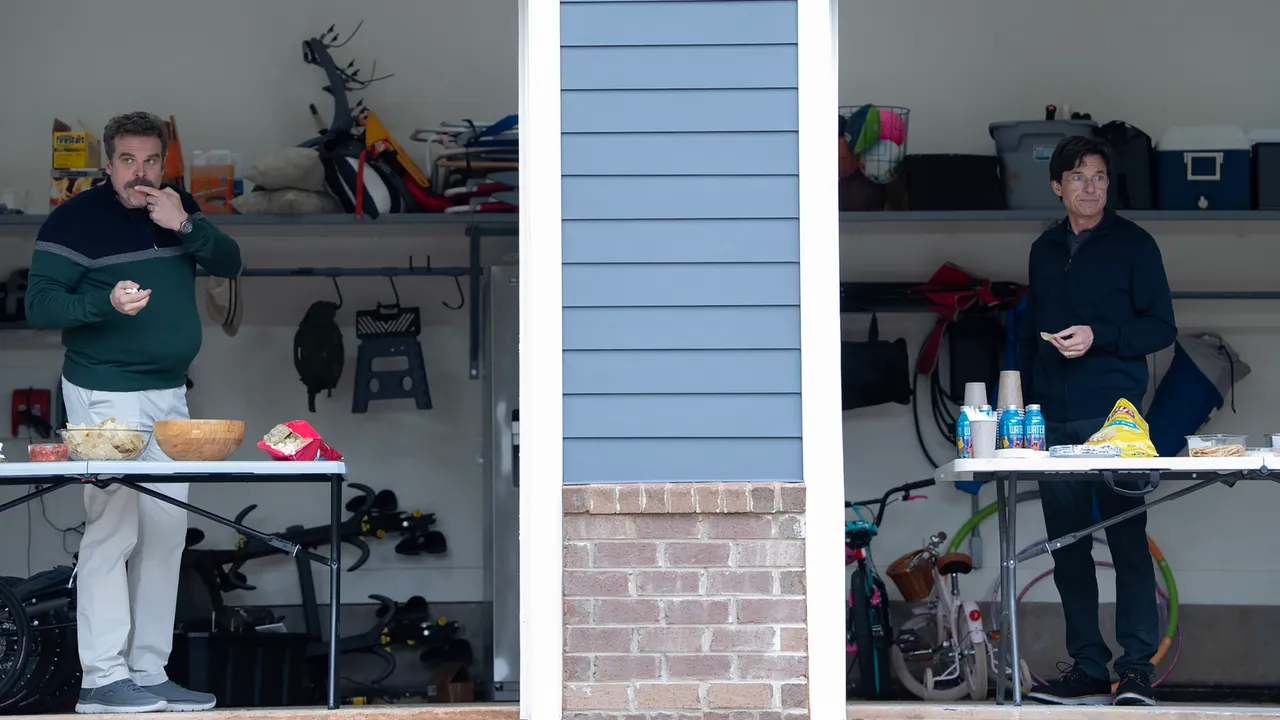
The FX drama “The Bear,” which began with the chef Carmy Berzatto’s dream of transforming his late brother’s sandwich shop into a fine-dining destination, has always been concerned with the precarity of the restaurant business. But in its final season, which aired last month, it dialled up the financial pressure as never before, leaving characters scrambling for solvency both in and out of the kitchen. They reduce portion sizes, retool menu items using cheaper substitutes, and commit to staying open despite a burst pipe, multiple equipment failures, and a massive storm, all on the same day. When the restaurant’s patron reveals a major downturn in his investment portfolio, the frenetic urgency that’s long defined the show is joined by the despondency of a sinking ship. One of the chefs overhears the sommelier begging for another job over the phone: “I’ll sweep up, work nights, whatever.”
Read more Steve Lacy’s Modern Love Songs
When “The Bear” premièred, in 2022, it was something of an anomaly—a prestige series about the economy’s striving losers rather than its sore winners. Television has historically presented affluence as the norm, but recent shows like “Succession,” “The White Lotus,” and any number of “Big Little Lies” wannabes have taken the tendency further, trading the tasteful homes of the working rich for the frigid mansions of the generationally wealthy. For years, such shows effectively channelled both the populist anger and the wealth worship of the past two decades, inviting audiences to hate the élite while coveting their five-star amenities and their cashmere baseball caps. But jaundiced observations about the haves and the have-nots eventually reached a point of diminishing returns.
A fresh batch of shows has met the moment by focussing on the other side of the K-shaped economy: the downwardly mobile middle class. “DTF St. Louis,” “Beef,” and “The Comeback” feel tailor-made for an era marred by inflation anxiety, affordability crises, and fiscal doomerism; they’re also the best series of the year thus far. Where the seminal nineties sitcom “Roseanne” (still the gold standard for working-class stories onscreen) treated low expectations as both a way of life and a source of self-deprecating humor, these new programs capture the perspectives of those who fundamentally believe they should have more—and might in fact have more, in a fairer system. Though centered on society’s sinking middle, they spotlight an arguably universal experience: the emotional cost of living in a broken world.
The HBO drama “DTF St. Louis,” about the unusually tender bond between two suburban men, is particularly attuned to the way rocky finances can warp relationships. Clark Forrest is a local weatherman who becomes absorbed in the crises engulfing his new friend Floyd Smernitch, the station’s sign-language interpreter. Floyd is no longer attracted to his wife, has trouble connecting with his teen-age stepson, and owes tens of thousands in taxes—a set of stressors that are ruining his health. Even still, Clark is convinced that Floyd is extraordinary, comparing him to the sun. One night, the friends strip down to their underwear, dance side by side, and compliment each other on their bodies.
Hours later, Floyd turns up dead. “DTF St. Louis” unfurls as a murder mystery, but it’s most compelling as a portrait of a life in arrears. The Smernitches’ finances are so strapped that, when Floyd purchases a seventeen-dollar board game at a hobby store, he asks to spread the cost between two cards. He and his wife, Carol, are bombarded with calls and letters from creditors that remind them daily of their inability to claw their way up to zero. The possible seizure of their house hangs over them like a sword of Damocles. Floyd confides in Clark that his debts have left him with a fluttery “bird heart”; he’d love to have “a man heart again.” But with so little money to go around the amount that he owes keeps growing.
Naturally, his marriage takes a hit. After Carol, an accounting clerk, takes on a second job as an umpire, they stop having sex; he can’t stop picturing her in her bulky safety gear, a symbol of his inability to provide. Carol is alternately enchanted and frustrated by her husband’s innocence and altruism, which led him to his not particularly remunerative career as an interpreter. As much as she adores his softness, she has to harden herself to keep their household afloat. It’s no wonder that she pursues an affair with Clark, who passes himself off as a savvy entrepreneur during their initial encounter. And it doesn’t help that money would buy the Smernitches happiness, not least by getting Carol’s impulse-impaired son to a school that can meet his needs.
The erosion of romance by financial woes, a common plight in life, is surprisingly hard to find on TV—perhaps precisely because executives are skittish about hitting viewers too close to home. A scene in which Carol refuses Floyd’s gift of a pair of earrings, opting to spend the money on their bills instead, is especially brutal, and especially relatable. The show’s depiction of the suburbs—the stocky, beige-box houses; the stolen trysts in featureless motel rooms; the stultifying family time—feels refreshingly real. It’s also the diametric opposite of what many viewers seek from entertainment. Hence the popularity of a comparatively glossy series like “Margo’s Got Money Troubles,” about a college dropout and new mother who vanquishes all her worries with one weird trick: joining OnlyFans.
But “DTF St. Louis” proves hypnotic in its own way, as the Smernitches’ money troubles seep into husband and wife’s increasingly tangled relations with Clark. Carol persuades Clark to take out a life-insurance policy on her husband—an unusual request outside of a film noir, though not such a departure from the annals of heterosexuality, in which women have depended on men for security for millennia. Clark’s later offer to pay for their son’s private-school tuition is a more complicated largesse. Even for Floyd, who’s immune to so many traditional gender norms, the gift is an emasculating reminder of all he gave up when he ceased to be the breadwinner. On “DTF St. Louis,” emotions grow in unpredictable directions, but love seldom beats out shame.
Read more Christopher Nolan’s Plot to Change the Way We Watch Movies
The despair and helplessness are a lot less hushed on the second season of Netflix’s feud-based anthology series, “Beef.” A country-club manager and his wife are caught at home in the midst of a vicious argument by two members of his staff, who record the screaming match on a cellphone. A tug-of-war ensues over the footage, which the drudges see as leverage to secure better-paying jobs, and which their boss, Josh, fears is gnarly enough to get him fired if released. But yelling at his wife, Lindsay, is the least of his sins: to maintain their life style, Josh has been overdrawing an account that belonged to his dead mother, and he soon resorts to embezzlement. When he reveals the plot to Lindsay, she’s straightforwardly delighted. Her anger that Josh has left her too broke to even divorce him dissipates with his promise that they’ll “get back on track.”
The country club—a celebrity-studded establishment in Ojai—is an inspired setting for the season. It’s built on an upstairs-downstairs divide, but there’s no “White Lotus”-style churn of the guests; instead, the expectation of chummy vibes and the presence of regulars allow Josh and Lindsay to imagine themselves as the friends or peers of the patrons. While earlier class-conscious shows such as “The Wire” and “Maid” painstakingly explained institutional failures, “Beef” ’s character-driven approach illuminates a system’s flaws through the pathologies it produces. Josh, a perpetual self-optimizer, is convinced that an upswing is just around the corner. But his attempts to fraternize with club members have the opposite effect, as when he loses ten thousand dollars to Michael Phelps in a single round of poker. In the end, being around rich people costs Josh far more than it earns him.
Most of the American middle class isn’t hobnobbing with the likes of Phelps or Benny Blanco, but Josh’s risky wishful thinking—that some combination of “investing” in one’s network and spending one’s way to the top will inevitably pay off—is the kind that can take root more readily when no other paths are available. The delusion is painful to watch, but the greater tragedy is that his proximity to this staggering wealth insures his and Lindsay’s misery. The fact that their happiness is so dependent on success means they’ve practically set themselves up for marital collapse. Perennially being reminded of their place fuels the couple’s status anxiety, which in turn stirs up a tempest at home. Theirs is a relationship built on shared hopes for the future—and on the reflex to turn on each other when those dreams fail to materialize.
If “Beef” and “DTF” are focussed on the most intimate site of financial tension—marriage—“The Comeback” takes a more panoramic view. The third and final season of the HBO series opens with its heroine, an aging sitcom actress named Valerie Cherish, receiving an offer to star in a new multi-cam. This being “The Comeback,” a Hollywood satire whose protagonist pays for opportunities via novel forms of humiliation, there’s a very big catch: the multi-cam is to be written by artificial intelligence. As insulting as the role is, the rest of the industry doesn’t look much better: unemployment is rampant, and some of Valerie’s onetime colleagues have been forced to leave the business behind. (Jane, the reality-TV producer who trailed her in the first two seasons, is found working at Trader Joe’s.) For Valerie, who has downsized from a house in Brentwood to a condo in West Hollywood—and swapped her signature Birkin for a Tod’s tote—the choice is between working on an A.I. production and not working at all.
“The Comeback” dramatizes the more subtle human cost of tech-induced scarcity: not just the elimination of a vast sector of formerly reliable, union-strengthened jobs but the breakdown of vital collaborative structures and the sense of community that came with them. Not that the show is particularly nostalgic for the industry of yore, which was similarly rife with exploitation. No one is better versed in, say, the dysfunctions of the writer-actress relationship than Valerie, who, in previous seasons, suffered endlessly at the hands of a misogynistic showrunner. But, on her new sitcom, that relationship is severed altogether. The nominal showrunners have no incentive to punch up the lines that the A.I. churns out, which would be tantamount to training the machine designed to replace them. Neither they nor the A.I. are able to pull off the magic that successful multi-cams have relied on for decades: that of writers observing actors and playing to their strengths.
If A.I. discourse often revolves around jobs lost, “The Comeback” explores what it’s like to live and work amid the ensuing distrust, anger, and panic. Valerie is asked to speak out against her own show for the sake of human dignity—an act that seems noble on paper but risks putting two hundred or so of her crew members out on the street. When they discover that they’ve been duped into working on an A.I. production, morale plummets. They’re not the only ones to fall victim to a contractual bait and switch; in the end, the streamer replaces both Valerie and her castmates with digital scans of themselves.
“The Comeback” is an insider’s parody: the show is co-created by and stars the “Friends” alum Lisa Kudrow, who’s intimately familiar with the arduous work of making people laugh, and with the way an actor’s career can wax and wane over time. But this season feels much more expansive than its predecessors, warning of the personal and professional diminishment that may lie ahead in the increasingly insecure future that tech moguls have promised. Valerie, the consummate survivor, will doubtless find a way to keep her head above water, even if Hollywood goes down in an A.I.-pocalypse. The pessimism that tugs at the rest of us is best encapsulated by the contraceptive pills that Josh’s wife, Lindsay, takes with resigned practicality on “Beef.” The couple have had numerous conversations about starting a family, but, like many real-life millennials, they’ve responded to their circumstances by hedging their bets. There never seems to be a “right time” in an age of decline. ♦