 By admin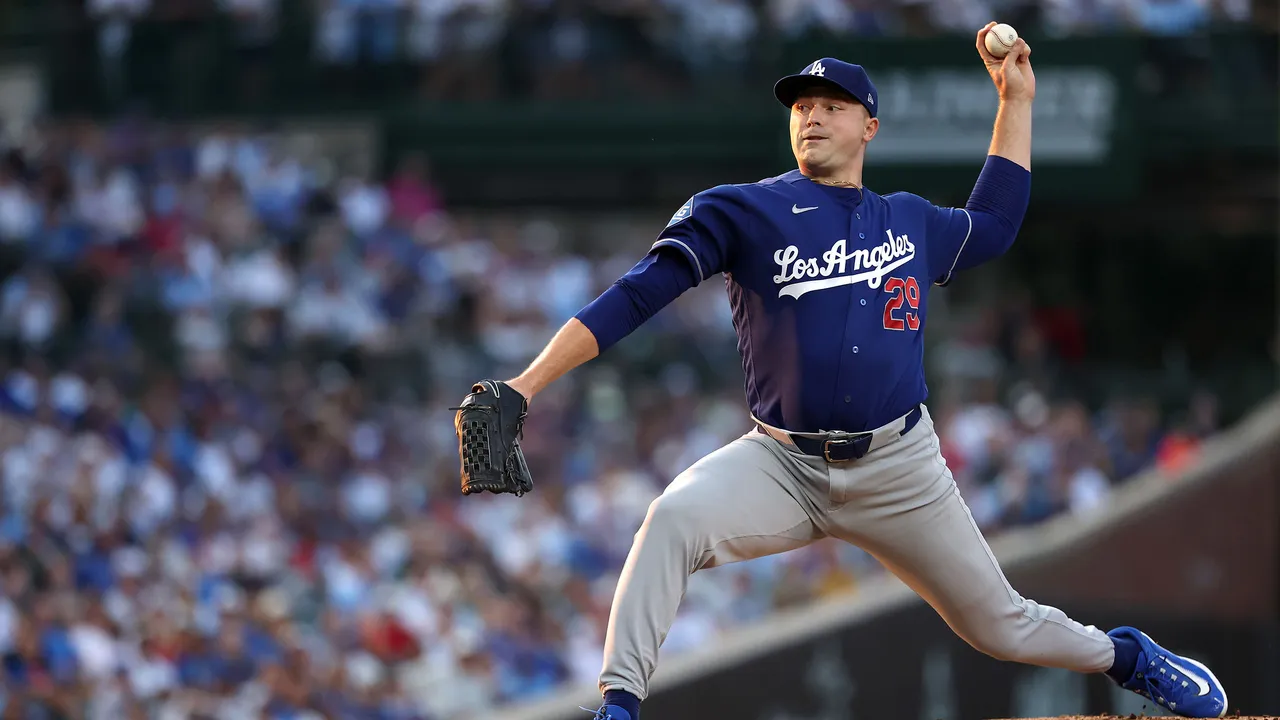
This past Tuesday, Tarik Skubal, the reigning back-to-back American League Cy Young Award winner, took the mound at Wrigley Field for his first start as a member of his new team, the Los Angeles Dodgers. Skubal throws hard, with a moderately ostentatious windup: his right leg kicks up high before stretching out in front of him, shifting his six-foot-three, two-hundred-and-forty-pound frame forward and creating the necessary momentum for his powerful fling. (He has thrown the five fastest pitches by a left-handed starter in the pitch-tracking era.) The first batter he saw on Tuesday was Pete Crow-Armstrong, the Cubs center fielder, who’s had one of the hottest bats in baseball this season and is currently the betting favorite for National League M.V.P. (The second-best odds belong to Skubal’s teammate Shohei Ohtani.) Skubal dispatched him with seeming ease. On the final pitch of the at-bat, a nasty ninety-nine-m.p.h. sinker, Armstrong just looked on as it whipped through the strike zone. Meanwhile, a plane flew over Wrigley, bearing a banner that read “THE DODGERS RUINED BASEBALL.”
Read more A.I. Is Now a Major Election Issue
Did they? The arrival of Skubal in Los Angeles seems to have convinced some portion of fans and the baseball commentariat that they have. The Dodgers won the World Series last year and the year before that; they also won it in 2020. During this six-year stretch, the team has systematically acquired baseball’s top talent: its roster now boasts three M.V.P.s (including Ohtani, who’s won the award, unanimously, four times), and, cumulatively, current Dodger players boast forty-nine All-Star nods, nineteen Silver Slugger titles, nine Golden Gloves, four Cy Young Awards, and three Reliever of the Year awards. L.A. acquired Skubal by sending three of its top prospects to the Detroit Tigers—a relatively modest price for arguably the best pitcher in baseball. Two days later, Andrew Friedman, the Dodgers’ president of baseball operations, traded for Kris Bubic, a lefty from Kansas City, who made the All-Star Game last season.
Prior to this year’s trade deadline, the Dodgers were already title favorites—they’ve had one of the best run differentials in the league all season—and the consensus after the Skubal trade is that a three-peat is practically a lock. “Tarik Skubal trade brings Dodgers hate, envy . . . and another championship,” the Los Angeles Times declared, a bit prematurely. An A.P. headline named the Dodgers “Public Enemy No. 1.” It’s not just that the Dodgers are dominating; it’s how they’ve done so—they are spending more money than any other team this year, in some cases, many times over. Skubal joins what is perhaps the most élite pitching lineup in baseball history, with fellow All-Stars Ohtani, Yoshinobu Yamamoto, Blake Snell, Edwin Díaz, and Tyler Glasnow. Those six pitchers, together, will make a hundred and fifty-eight million dollars this year, a figure greater than what thirteen M.L.B. teams are paying for their entire rosters. Then there are the team’s sluggers—Mookie Betts, Teoscar Hernández, Kyle Tucker, Freddie Freeman, and Max Muncy—who, alongside the two-way superstar Ohtani, have given the Dodgers what has statistically been the best offense in the league this season. The Dodgers’ payroll this year, post-Skubal acquisition, is roughly four hundred and thirty million dollars, or about seventy million more than the second most expensive team (Steve Cohen’s Mets), with another hundred and eighty million dollars estimated in tax penalties for spending so much more than other franchises.
So it’s understandable that some fans, post-Skubal trade, have adopted an “Occupy Dodger Stadium” mentality. It doesn’t help that the Dodgers were able to trade for Skubal for a package of prospects, without attaching any big-league talent: Skubal was an expiring contract, and it had been rumored that he would be leaving Detroit to sign with L.A. after the season, trade or not. The Dodgers may have felt more comfortable than other teams going after him, confident that he’d stick around, but the Tigers were motivated to deal, so that they would get something, at least, in return. (In an interview after the trade, Skubal said that he still hoped Detroit would make him an offer in the off-season. “Hopefully those negotiations pick back up in November,” he said, adding, diplomatically, “I would love to return.”) In this way, the Dodgers’ dominance is compounding. With every superstar the Dodgers add, the more attractive they become to other superstars. Put another way, the Dodgers may have become too big to fail. And the real ramifications of this, some have suggested, will arrive not in October, when the world expects the Dodgers to hoist another World Series trophy, but later in the year, when the owners of other teams, dissatisfied with the current arrangement of things, insist on changes that the players can’t abide, causing all baseball to stop for the foreseeable future.
The league’s current collective-bargaining agreement—the bylaws that set guidelines for payroll, player movement, and the on-field rules—is set to expire just before midnight on December 1st. The contract is negotiated between the league and the players, via their union. By all reports, the process has not been going well. The majority of owners are evidently frustrated at a handful of big-market teams spending so much more than their competition, demanding a salary cap, or a hard limit on how much a team can spend on their roster, with the league floating a $245.3-million figure that is just more than half of what the Dodgers are paying their players this season.
Among fans, much of the reaction to the Dodgers’ dominance has boiled down to a need for “parity”—a word that brings to mind values like fairness and egalitarianism—and a resentment of the team’s owner, Mark Walter, and his deep pockets. One can, of course, connect the Dodger discourse to the broader political moment; a popular internet comedian attempted to channel the D.S.A.-mentum of the recent Democratic primaries into a critique of the team, going viral for comparing the need for a salary cap with Mayor Zohran Mamdani’s attempts to pass a wealth tax in New York City. (“How are the little guys supposed to compete with the Dodgers?”) But this framing, in which a salary cap is a tool in the fight against the M.L.B.’s ruling class, doesn’t quite fit the actual situation. The main obstacle is the players.
Read more How Golden Is Silence, Actually?
Owners pitched a salary cap once before, in the summer of 1994. In response, the players went on strike, deriding the proposal as anti-labor. The strike ended the season and cancelled the World Series (the first time since 1904 that no world champion was crowned). That strike lasted two hundred and thirty-two days, and plans for a cap were eventually abandoned. A similar reaction is expected this winter. “Our union has never been broken, and never will be,” Bruce Meyer, the interim director of the Major League Baseball Players Association, said in June. And the rank-and-file, which contains a significant number of millionaires, are not afraid to employ the language of class struggle. “If the billionaires are wanting it, they’re billionaires for a reason,” Cody Bellinger, the Yankees All-Star outfielder, said last month. “They want to continue to enhance their portfolio as much as possible. Us players understand that.” Owners have proposed including a salary floor, in addition to a cap, insuring greater upward mobility for the league’s least-paid players. The players have supported something similar, a “Competitive Integrity Tax,” which would penalize teams spending less than a hundred and fifty million dollars on their roster, but have refused to consider a salary cap.
The league could make some smaller changes. Another C.B.A. proposal by owners is the complete elimination of deferred payments to players—a measure that would also impact the Dodgers. That hundred-and-eighty-million-dollar tax bill the Dodgers owe this year is actually far smaller than it probably should be, because the Dodgers’ front office deferred some of their largest contracts to the far-off future—the M.L.B. equivalent of a creative offshore tax shelter. Ohtani, for instance, is set to make only two million dollars a year for the rest of his contract, which expires at the end of 2033. But, from 2034 to 2043, he will make six hundred and eighty million, filling out the rest of his seven-hundred-million-dollar contract. That salary doesn’t count toward this year’s penalties. In one of the Dodgers’ most egregious uses of this tactic, they’ll be paying Diaz, who is already in his thirties, for the next twenty-one years. Altogether, the team has $1.1 billion tied up in deferred contracts.
Whether smaller changes like that one can serve as the basis for a new C.B.A. remains to be seen. But a work stoppage, which M.L.B. insiders say could potentially last an entire season, would almost certainly be a significant blow to a league that, lately, seems to have got its groove back. Games are shorter than they used to be and attendance is up; ratings have bounced back from a post-COVID slump. For all the complaints about the Dodgers, they are a major factor in driving new fans to the game: Skubal’s Dodgers début was one of the most-watched regular-season games in years. Historically, moments of peak enthusiasm for sports in the U.S. have been associated with all-time great dynasties: think Michael Jordan and the Bulls or Tom Brady and the Patriots. There is an excitement in witnessing history, and there’s also a thrill in rooting for an underdog who might challenge a great team’s dominance. The Dodgers, to their credit, have built a great team—not only by doling out huge salaries but by building an élite development program. (As the flailing Mets emphatically prove, money alone is not enough.) And the Dodgers could absolutely lose a seven-game series, when the vagaries of chance always have their say. After all, going into Saturday night’s game against Arizona, L.A. had lost seven games in a row, their worst stretch in years. And, as the longtime small-market general manager Billy Beane once said, “My job is to get us to the playoffs. What happens after that is fucking luck.”
So, no, the Dodgers haven’t ruined baseball. But the league probably does need both a salary cap and a salary floor, and it definitely doesn’t need another breakdown in C.B.A. negotiations. Also, I can’t blame anyone for hating Los Angeles. Who wants to root for those guys? After posting six strikeouts in his début, Skubal rebuffed talk that his new team had unfair advantages. “Every team could make that acquisition,” he said. “And I don’t really sympathize with people that blame the Dodgers for anything they’ve done.” ♦
Read more The American Art of Blowing Stuff Up