 By admin
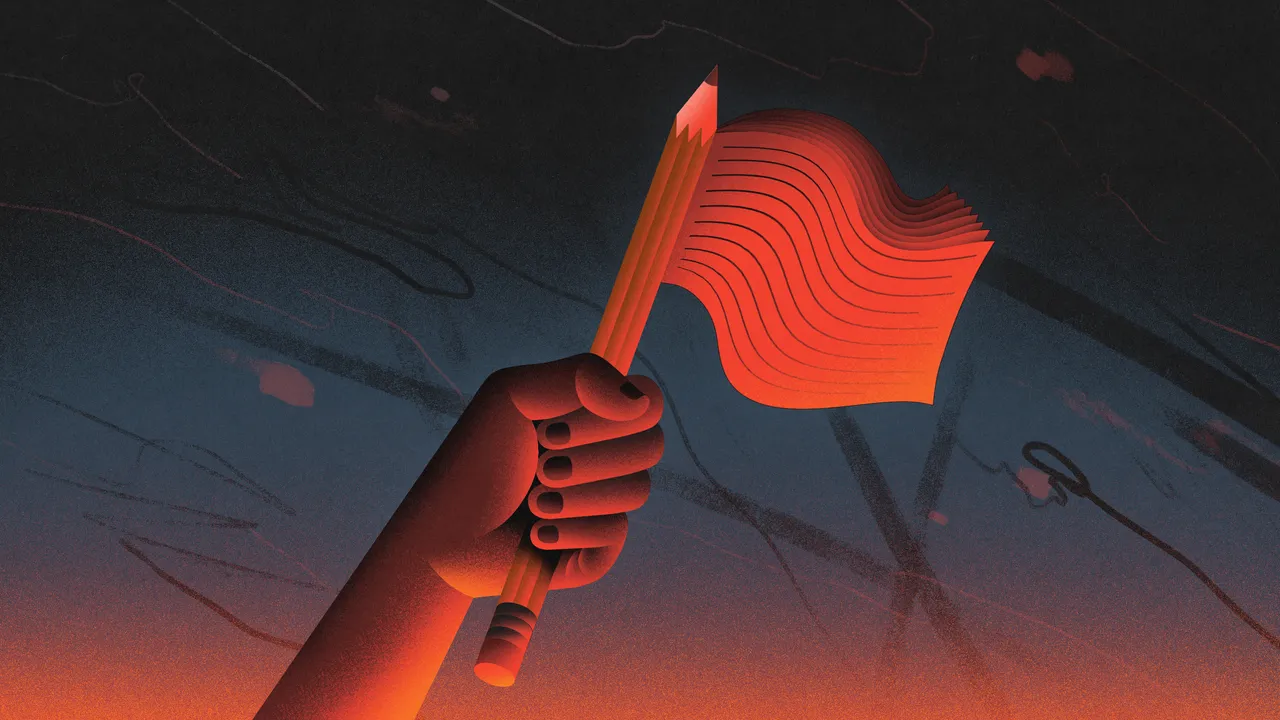
The question of how to survive as a writer is only slightly older than the impulse to be one in the first place. How to express yourself freely but also to be valued for said expression? Historically, strategies for making ends meet have included seeking religious or royal patronage; producing printed books; serializing your work in publications; and hustling to sell your own subscriptions, as Alexander Pope did when he funded his eighteenth-century translation of the Iliad. The investigative journalist I. F. Stone had his own printed-and-mailed newsletter I.F. Stone’s Weekly, which cost five dollars a year and ran from 1953 to 1971, reaching some seventy thousand subscribers. In more recent years, the go-to option for an aspiring writer has been starting a newsletter of her own, often on Substack, a digital platform that launched in 2017 to allow writers to charge money for their writing. Hamish McKenzie, Substack’s co-founder, argues in a new book (that venerable format!), “How to Save the Media,” that Substack’s ecosystem of individual authors behind personal paywalls has solved the problem of cutting through the social-media cacophony and fulfilled writers’ quest for a livelihood. In McKenzie’s estimation, Substack represents “a better system design that distributes rather than concentrates both power and responsibility.”
Read more Charles Kushner and the MAGA Ambassador’s Playbook
McKenzie is a journalist by trade, who spent much of his career covering tech startups. With “How to Save the Media,” he has published something between a memoir and a manifesto, delivered in the quippy tone of twenty-tens blogging. He breezily recounts his life in the media industry, which began when he escaped his youth in small-town New Zealand to study journalism in Canada. After finding fecund ground in the Hong Kong tech scene, he landed in San Francisco during Silicon Valley boom times. He endured stints at such niche publications as PandoDaily before working at Tesla (and, after leaving, wrote a book about the company, leading to clashes with Elon Musk). While working at the messaging app Kik, he met Chris Best, Kik’s chief technology officer and his future Substack co-founder. The two saw that media companies were overly reliant on social media for distribution, and that profits were flowing to the likes of Facebook rather than to the creators of content. They wanted to build “a game where people would happily pay for good media,” scaling up the preëxisting achievements of writers such as Andrew Sullivan and Ben Thompson, whose small digital publications thrived on a subscription model. Substack would help writers publish their content and charge their readers while managing the messy back-end business, in exchange for ten per cent of writers’ revenue.
McKenzie courts for Substack such writerly talents as Bill Bishop, Matthew Yglesias, and Bari Weiss, whose publication The Free Press remains among the most popular and best-earning offerings on the platform. He recounts a boozy literary party sponsored by his company and quotes liberally, and redundantly, from his own old speeches and blog posts. The Substack team fends off acquisition offers from Jack Dorsey’s Twitter and Musk’s X, choosing to prioritize their independence. They also navigate debates over free speech from critics who complain that Substack hosts, and thus profits from, hateful content including pro-Nazi newsletters. McKenzie’s justification is ultimately the same as that of the social networks that he argues against: Substack is a neutral platform empowering its users, not an arbiter of truth. He writes, “When a platform decides what its uses are and aren’t allowed to see, it effectively positions itself as a centralized police force with the moral authority to decide what’s good and what’s bad.”
Such big-tent branding has helped Substack to become an unqualified success, at least in the eyes of its investors, and has made “Substacking” a cultural buzzword, much as “tweeting” dominated the early twenty-tens. It’s not just reporters who have Substacks now; celebrities (Pamela Anderson), musicians (Patti Smith), and traditional publications (including The New Yorker) do, too. (I, full disclosure, have my own accounts.) The rescued “media” of McKenzie’s title encompasses not just journalism but a broader realm of entertainment, with Substack providing a monetizable layer between creators and their fans. The company is, in essence, a crowdfunding e-commerce site, belonging to the same category as Kickstarter, Patreon, Gumroad, and OnlyFans. But it has out-evolved its ancestors and bested its competitors in its relevance to public discourse and in its direct commodification of online parasocial relationships. McKenzie predicts that “new companies will emerge” from such subscription platforms, but thus far Substack has only encouraged further atomization as audiences gravitate toward the loudest, most charismatic voices. The result is not a revived traditional media industry—few Substacks employ editors, for example—so much as a new form of public square in which anyone can shout.
“How to Save the Media” belongs to the genre of instructive founder’s autobiography, in which the heroic entrepreneur inevitably endures some brief trials on his path to power and riches, and offers the business lessons learned along the way. If mass social platforms driven by advertising are what’s wrong with the internet, McKenzie argues, then a platform driven by subscriptions can save it. Substack does allow thousands more writers (and podcasters and miscellaneous creators) to sustain careers in an otherwise barren industry landscape; it is now considered normal to charge your followers’ credit cards the cost of a fancy caffeinated beverage each month for the privilege of receiving your reporting, recipes, or ramblings. Yet as the company has grown, Substack has also come to look more like its stated enemies: it added a Twitter-esque feed of algorithmically recommended short posts, called Notes; its app has become a multimedia hub. McKenzie criticizes social media for how it “turns publishers into digital characters who compete for attention on crowded feeds,” but aspiring writers now hustle to make themselves known as characters on Substack, too. The writer Emily Sundberg, whose newsletter “Feed Me” is one of McKenzie’s highlighted triumphs, observed, in an influential 2024 essay, that “if you blacked out the names of many of the writers I come across on Substack today, I wouldn’t be able to tell them apart.” She went on to pinpoint the Substack generic style: “lists, random thoughts, and (easy to write) roundups of ‘what I’ve been doing’ do really well on this site.”
Another new book, “Content Machines,” by the Carleton University professor Sarah Brouillette, is less optimistic than McKenzie’s about digital platforms’ influence on publishing. In the online marketplace, Brouillette argues that writers have become mercenaries, “a node in a network of needy users” who must “invest their own time and money in design and sales if they want to succeed.” The book proceeds through chapters on such phenomena as the user-generated fiction platform Wattpad, BookTok and the popularity of the romance genre, Audible’s many algorithm-gaming offerings, self-publishing advice gurus, and autofiction’s relationship to social media. In each case, she analyzes how the structures and forces of the various internet platforms shape the style of the writing hosted on them. A roving analyst in addition to a well-read academic, Brouillette pays close attention to the trappings of Wattpad conventions (known as WattCon) and to such textual specimens as “How to Write a Book in 48 Hours,” by the self-publishing coach Dale L. Roberts, which suggests such hacks as using talk-to-text programs or “outsourcing” work to others. She concludes that writing on the internet, particularly in spaces where it’s simple to charge money for it, tends to push writers toward the confessional, the self-helpy, and the soothing.
Though Substack is not one of Brouillette’s subjects, much of what she describes applies equally to the platform—like, say, “a new kind of labor regime that turns people’s daily online creativity into an agglomerated mass of possibly monetizable material.” As content creators struggle to compete for attention and subscription dollars, they end up finding their way to the same solutions, relying on “established patterns,” Brouillette writes, echoing Sundberg’s observation; the goal is less to produce great writing than to “maximize your work’s efficiency.” Social media is blamed for raising a generation of self-promoting narcissists and fuelling a precipitous decline in attention spans and intellectual engagement. But in the new writer economy a “desperation for attention” is practically “an industry command,” Brouillette writes. The platform may not save journalism as a whole, but it certainly helps prolong the careers of those willing to play the “game,” as McKenzie put it, of cultivating their personal brands. ♦
Read more The Political Upstarts That May Decide Israel’s Election