 By admin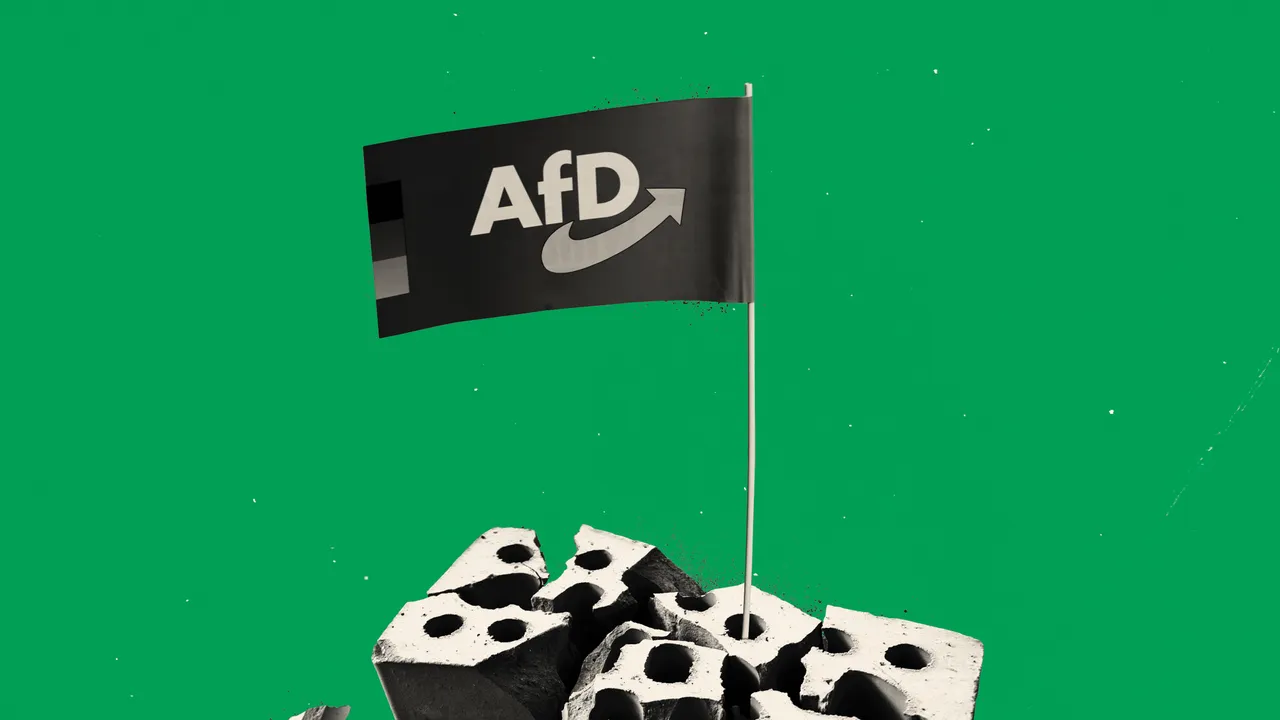
The Brandmauer, or firewall, was meant to protect German democracy. The principle arose in the mid-twenty-tens, in response to the rise of Alternative für Deutschland, or the AfD, a right-wing populist party known for its ethnonationalism, hard-line anti-immigration platform, and pro-Russian foreign policy. Germany’s traditional parties agreed to refrain from any sort of political coöperation: they would neither form coalitions with the AfD nor rely on its votes for governing majorities.
Read more Is Zionism’s Moral Crisis About Roads Not Taken—or Original Sin?
Now the Brandmauer, long under pressure, may be facing collapse. This month, in Saxony-Anhalt, a small German state of slightly more than two million people in the east, the AfD won a plurality of votes: nearly forty-four per cent. Without an outright majority, the Party can’t govern on its own, but that number is more than double the AfD’s share of the vote in Saxony-Anhalt just five years ago. And it’s the first time in Germany’s postwar history that a far-right party has come this close to governing a state.
The emergence of the AfD as a political force represents one of democracy’s oldest dilemmas: how to respond to anti-democratic movements that have a democratic base of support. A century ago, conservative politicians in the Weimar Republic made the fateful, and tragic, choice to appoint Adolf Hitler as Chancellor and to name other Nazi figures to ministerial posts, believing that they could control them by absorbing them into the governing apparatus. That turned out, well, as it turned out. In 1949, in order to prevent such a disaster from ever occurring again, Basic Law, the country’s modern constitution, enshrined a set of principles known as wehrhafte Demokratie, or militant democracy, which call on state institutions to mobilize against those who seek to undermine democracy from within. The Brandmauer is an informal compact, but it’s certainly within the spirit of that political culture.
This postwar consensus has found an antagonist worthy of concern in the AfD. The Holocaust, one Party leader said, was a mere “speck of bird shit” on a thousand years of German history; another described Berlin’s Holocaust Memorial as a “monument of shame.” A Party policy calling for “remigration” is vague yet tinged with menace; in 2023, senior AfD figures attended a secret conference in Potsdam to discuss mass deportations of immigrants, including what one participant deemed “non-assimilated citizens.” Whereas other European right-wing populist parties (such as the National Rally, in France) and leaders (like the Italian Prime Minister, Giorgia Meloni) have drifted toward the center in an effort to make their positions more palatable, the AfD has remained resolutely illiberal. Germany’s domestic-intelligence service has classified some local branches of the Party as extremist organizations.
The Brandmauer, then, may have been a necessary instrument, but it allowed establishment parties to focus on the mechanics of defense rather than on offense—that is, on articulating a program that will win over voters. The region of the former East Germany, for example, is facing deindustrialization and demographic decline; voters there, who tend to be poorer than those in the west and feel alienated and excluded, provide the AfD with its highest levels of support.
Jana Hensel, a journalist born in East Germany, published a book this year subtitled “Why the East Is Turning Away from Democracy.” She said, “By spending all this time thinking about how to maintain the firewall, we managed to forget the voters on the other side—how they live, their feelings, their problems.” The Brandmauer allowed the AfD to enjoy the image of the disruptive outsider, the one who really feels your pain, without the responsibility of having to do anything about it.
Read more Ben Shelton Comes Into Full Focus
In Saxony-Anhalt, the AfD’s strong showing came at the expense of the Christian Democratic Union, the center-right party of Angela Merkel and of the current Chancellor, Friedrich Merz. The AfD hopes to persuade a handful of C.D.U. members to break from their firewall pledge and enable a governing majority; AfD leaders are also courting a far-left party that shares their hostility toward immigration and current policy on Russia and Ukraine. Perhaps more likely is a political stasis, in which neither the AfD nor the forces opposed to it take charge outright. That’s hardly a victory for those seen as the protectors of Germany’s normality.
In truth, no mainstream German party has figured out a formula for slowing the AfD’s electoral march. Merz has periodically flirted with adopting part of its agenda, specifically on immigration. Last year, in a controversial vote in the Bundestag, the C.D.U. pushed through a resolution on stricter migration rules which it knew would gain a majority only with AfD support. But one study after another shows that, when established parties take on the policies of the insurgent right, they end up just shedding more votes to it. In recent days, some C.D.U. members have renewed talk of a legal ban of the AfD. None of these stopgap measures deal with the real problem: like much of Europe, Germany is changing—economically, culturally, politically—and, in a sizable part of the population, that is stoking a desire for radical solutions. “Even if the AfD won’t fix the problems of its supporters,” Hensel said, “it will destroy the system under which they think they have suffered.”
Two other German states have elections later this month, and in 2029 the country will hold federal elections that will seat a new Bundestag and, perhaps, a new Chancellor. The AfD is rising in the west, too—for example, in Baden-Württemberg, a wealthy state home to much of the country’s automotive industry. In a sign of Germany’s greater manufacturing decline, the auto sector lost more than forty thousand jobs last year. The VW Group recently announced plans for fifty thousand additional phased layoffs and the end of production at four plants. That sort of malaise may lead to support for the AfD, even as it struggles with a solution. The Party’s co-chair Alice Weidel recently stumbled on television when asked to explain how German car producers could compete with growing demand for Chinese electric vehicles.
For years, the Brandmauer freed the AfD from such expectations. Yet competence at institutional defense is no substitute for an affirmative vision of governance. That’s also a lesson for other European democracies, from Austria to France, where mainstream parties have struggled to keep far-right challengers from power. A firewall can protect a political system, at least for a while, but it cannot explain what that system is for, or why its citizens should care. ♦