 By admin
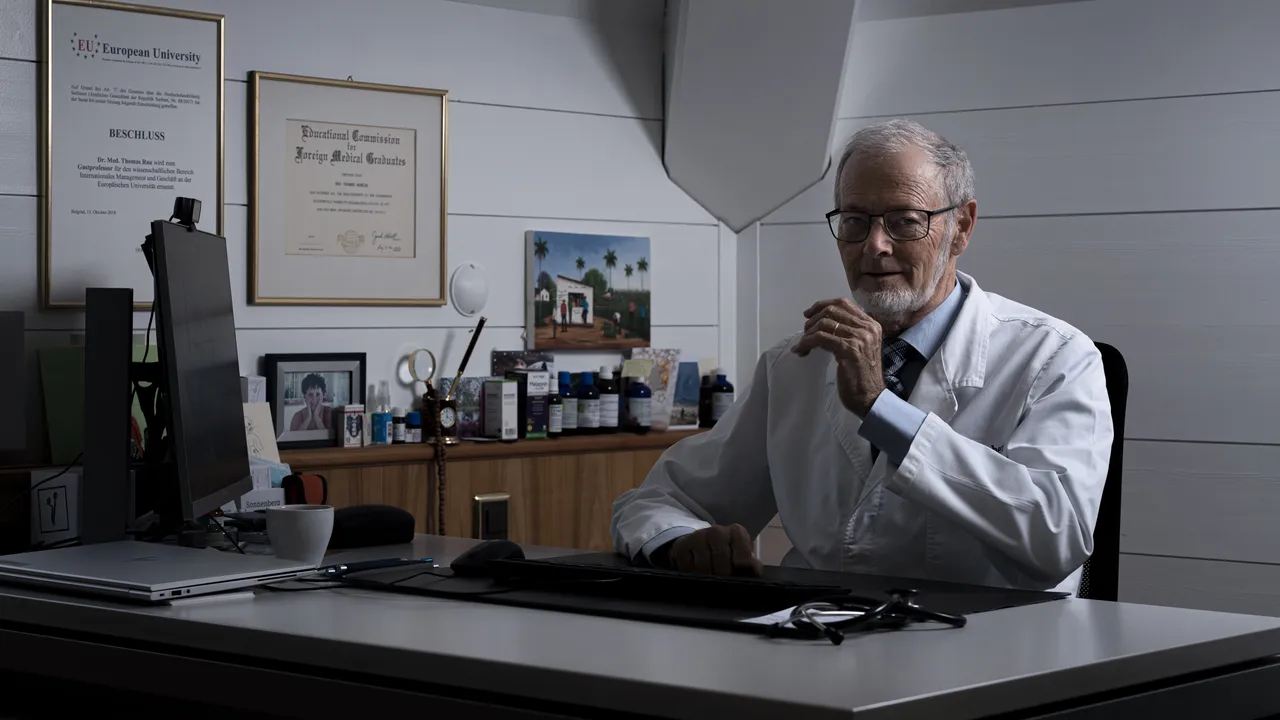
Thomas Rau is a prominent Swiss doctor of alternative—or, as he calls it, “biological”—medicine. He believes that in most cases the best way to cure disease is not to attack the ailment directly but, rather, to boost the body’s natural defense systems. In his eyes, most conventional medical practitioners are timid and overly literal-minded. (A patient of Rau’s remembers him calling specialist doctors “narrowists.”) Whereas most doctors give a standard battery of CT scans and MRIs, Rau uses a technique called dark-field microscopy. He takes a dab of a patient’s blood, places it on a slide, and observes the cells’ behavior over time. Do they clump up, or are they motile? The presence of toxins or inflammation—indicated, Rau told me, by irregular formations or “stacked rings” of cells—dictates specific treatment protocols, often including a change of diet. He has written, of dark-field microscopy, “Hardly any other examination leads so quickly to conclusions about dynamic processes in the body.” He performs the test at BioMed, a clinic that he owns, along with an adjoining hotel, in the picturesque town of Schwellbrunn, Switzerland. Guests often stay for several weeks and spend tens of thousands of dollars.
Read more The World Series No One Wanted
Rau believes that virtually anyone can benefit from his interventions, many of which he defines as preventive. But he told me that his specialty is treating people with what he calls “unclear” conditions. He estimates that eighty per cent of such patients—principally, sufferers of long COVID or chronic-fatigue syndrome—go home from his clinic “massively improved.” In 2024, he spoke at an event in Brooklyn called “The Future of Medicine,” in which he described himself as “the master in rebuilding cellular function.”
Rau’s tool kit includes colon hydrotherapy (irrigating the bowels with warm water), ozone treatments (infusing the blood with the gas), and hyperthermia therapy (placing a patient on a bed heated by infrared-A radiation to mimic a fever, which supposedly shrinks tumors). He isn’t concerned by the absence of studies confirming that the treatments performed at BioMed work. “I pay a lot of taxes,” he told me when I visited him in Switzerland, in 2024. “I pay scientists’ salaries.”
Rau, a licensed doctor in Switzerland, says that he doesn’t reject mainstream medicine. But he certainly seems skeptical of its efficacy. He has said, “You give anti-inflammatories, you give anti-immune drugs—you give anti, anti, anti.” Although he’s not always opposed to conventional treatments, he often modifies the typical approach to fit his theories. For instance, he sometimes injects a chemotherapy drug directly into a tumor site—a nonstandard application. (He boasted to me, “This is a treatment I developed!”) A key goal of his cancer-treatment protocol is to lower inflammation throughout a patient’s body by removing gluten from her diet. Good health, he likes to say, comes from harmonizing the patient’s “inner milieu.”
Rau, who is seventy-six, has been practicing for forty-four years, mostly in the northeastern canton of Appenzell Ausserrhoden, which includes Schwellbrunn. He estimates that he’s seen more than ten thousand patients. The back cover of his book “The Swiss Secret to Optimal Health,” which was published in English in 2007, touts him as the “Mozart of medicine.” He has taught hundreds of other doctors, naturopaths, and healers his techniques.
Traditional doctors do not generally rate the kinds of treatments given by Rau highly. American health authorities, for example, do not consider live-blood analysis to be a reliable diagnostic tool. The F.D.A. regards ozone as having no “known useful medical application in specific, adjunctive, or preventive therapy.” The distribution of ozone machines for medical treatment is prohibited in this country—at least for now. Robert F. Kennedy, Jr., who currently leads the Department of Health and Human Services, is a champion of alternative treatments. (Rau told me that he approves of Kennedy’s push to “really evaluate vaccinations” and his efforts to study alternative techniques.)
In February, 2021, Rau, who had run a clinic in another Swiss town for more than twenty-five years, opened BioMed with Alexandra Kotthaus, a German doctor. Kotthaus, who is fifty, had been working with Rau for several years. She became interested in practicing alternative medicine because of a metabolic condition related to her liver. She also considers herself unusually sensitive to medication. “It took me a lot of time, power, and investigation to heal myself,” she told me.
That March, a seventy-year-old patient from a wealthy Cypriot family, Evie Lanitis, arrived at BioMed, complaining of a host of minor maladies, including bursitis in her toes, dental pain, and digestive issues. She was the sort of person who often finds her way to Rau. Many of his patients are well-to-do women. (Women are generally more likely than men to see doctors when they don’t feel well, and the gaps in research on how illnesses affect women leave an opening for alternative practitioners.) Alexandra Manglis, Lanitis’s daughter, told me that her mother “erred on the side of hypochondriac.” Lanitis told Kotthaus that she wanted to improve her stamina so that she could be a good grandmother—in three months, Manglis’s first child was due.
Lanitis’s treatment began, in part, with a yarrow compress placed over her abdomen, to soothe her liver. The next day, she got a ginger wrap for her kidney area. She was also prescribed the hyperthermia treatment, followed by a “restorative infusion” and then a colon cleanse. Rau wrote in Lanitis’s medical log, “Healthy! Really has mostly stomach symptoms and sleep problems.”
After a week or so at BioMed, Lanitis was given an I.V. infusion of alpha-lipoic acid. The substance has long been available as a pill; health-food stores often market it as an antioxidant supplement that can help alleviate nerve pain, among other benefits. In pill form, alpha-lipoic acid may ease symptoms, cause mild harm, or do nothing. But an intravenous dose reaches the bloodstream more thoroughly. In the U.S., the F.D.A. has not approved the use of alpha-lipoic acid as a treatment for any condition. Nevertheless, some alternative-medicine doctors give these infusions to their patients. This can be risky, in part because high-dose intravenous use of the acid has been associated with reduced levels of blood platelets, which play a key role in clotting.
Rau told me that he has given patients the infusion hundreds of times. But Lanitis began experiencing severe pain in her upper abdomen within a few hours of being administered the acid. She rested in her hotel room for a while, then managed to get downstairs to an examining room, where Rau tested her platelet count. He found it abnormally low. Within the next two hours, the count plummeted even further, to seventy-nine billion platelets per litre of blood. (Normal platelet counts vary from a hundred and fifty billion to four hundred billion per litre.) Rau and Kotthaus drove her to a hospital in the nearby town of Herisau. The doctors, seeing her platelet count, suspected liver failure and concluded that a better-equipped hospital should treat her. As her condition worsened, she was transferred by ambulance to a hospital in St. Gallen, the largest city in the area, where she threw up blood.
All the while, Lanitis was texting her sister in Cyprus, who was, in turn, updating Manglis and the rest of the family. As things turned worrisome, Manglis, who lives in Massachusetts, texted a sibling that she’d spoken with doctors at the St. Gallen hospital, who told her that BioMed had treated their mother with, as she put it, “some half-baked alternative shit.”
Lanitis told her sister that her vomit was almost black—usually a sign of bleeding in the gastrointestinal tract. Manglis called the hospital and was put through to her mother, who described her sudden decline as “the strangest thing.” After they hung up, Manglis sent her mother a text telling her not to worry—both Lanitis and her future grandchild would be O.K. When a WhatsApp message reaches the recipient’s phone, two small ticks appear next to it on the sender’s screen. “That second little tick never appeared,” Manglis told me. During the crisis, Lanitis’s phone battery had apparently run down.
That night, the doctors in St. Gallen intubated Lanitis. She died the next day. Kotthaus was holding her hand as she passed away.
The Swiss have a long history of support for alternative medicine, and many of the clinics dedicated to it are based in Appenzell Ausserrhoden. In the early eighteenth century, the village of Gais started attracting swarms of visitors, many from abroad, who wanted to sample Gaisschottenkur, a treatment featuring goat’s whey. Locals claimed that drinking it was helpful for a variety of respiratory and digestive problems. One Herr Steinbrüchel, of Zurich, was said to have been miraculously cured of his chest disease, and before long preparations of Gaisschottenkur were being used to combat everything from dysentery to gonorrhea. A bustling spa in Gais accommodated four hundred visitors at a time. In 1791, a local pastor noted, of the inn’s restaurant, “One was allowed to sit with a sleeping cap, a nightgown, and slippers at the table.”
There was no proof that goat’s whey actually worked. In 1869, a German physician named Hermann Lebert lamented, “One may well ask whether an era can truly be considered enlightened when such unclear physical-chemical views on whey prevail among the thousands of doctors who prescribe.”
The development of the railroad helped to end the goat’s-whey craze. By the end of the nineteenth century, health tourists could easily travel to Davos, in the east of Switzerland, where the mountain vistas were more dramatic and newer treatments, such as chest rubs with marmot fat, awaited. Davos is the setting for Thomas Mann’s masterpiece “The Magic Mountain,” which centers on a sanatorium that caters to an international cohort of tuberculosis patients, in part through a daily regimen of extended sunbathing. In the book, the clinic has recently acquired an X-ray machine, and these “internal portraits,” Mann suggests, signal an epochal shift in medicine toward technological tools—and away from charismatic quacks. But spas in the vein of “The Magic Mountain” still dot the Alps, and they often attract people who aren’t satisfied with conventional methods of healing. Evie Lanitis, for instance, was devoted to Qigong, the traditional Chinese practice that combines movement, meditation, and intentional breathing.
Although Lanitis did not know it, a BioMed patient had unexpectedly died about a week before she arrived. Doris Ammann, who was in her mid-seventies and lived in Zurich, was a regular visitor to Rau’s clinics. Whereas Lanitis was just well-to-do, Ammann was enormously rich—she was a famous art dealer. After her death, her gallery sold Andy Warhol’s “Shot Sage Blue Marilyn” for a hundred and ninety-five million dollars, then the highest price ever paid for a twentieth-century work of art at auction.
Rau, who is an art aficionado, had met Ammann at Art Basel. “Doris was really important to me,” he recalled, in a hearing about her death. Ammann’s partner, Georg Frei, an art historian and dealer, later testified, “We went to the clinic happy and healthy, having meditated and swum together beforehand.” Frei said that Ammann underwent Rau’s treatments “not for an ailment but for prevention.”
When Ammann visited BioMed on March 18, 2021, however, she did have a physical complaint—a tremor on her left side. Rau wrote that she had “unclear neuropathy,” and that her lab results showed the presence of “neurotrophic viruses.” She had a colonic irrigation before joining Rau and Frei for a private vegan lunch. Afterward, Ammann got an alpha-lipoic-acid infusion—the same treatment that Lanitis would soon be given—followed by an infusion of mugwort.
At first, Ammann felt fine, but by the time she got into her car to return to Zurich, a few hours later, she had developed intense abdominal pain. Frei, in later testimony, remembered that, as Ammann’s chauffeur was loading bags into the car, Ammann began “screaming like crazy, like an animal, from all the pain.” Rau took her back into an examining room to try to pinpoint the source of her stomach discomfort. (One suspect was the lunch they had been served.) Kotthaus performed an ultrasound on Ammann, which did not appear abnormal. Rau gave her a small amount of morphine. She was also given an anti-spasmodic. At some point that night, Ammann vomited black fluid, Frei later testified. He recalled asking if they should go to the hospital, and Rau telling him that the hospital “always makes a fuss.” They decided that Ammann should remain at the hotel, where Rau could watch over her. (Rau told me that he would not have spoken that way, and that if he’d seen black vomit it would have been “an alarm sign.”)
Ammann slept through the night. In the morning, she told Rau that she wanted to go home, and he approved. Around this time, he noted in her patient log, “SEPSIS is possible, even though she is feeling much better now.” Ammann ate breakfast at the hotel and had a massage before Kotthaus did another ultrasound, which again wasn’t concerning. Ammann shook Rau’s hand, and her chauffeur drove her and Frei home.
But that afternoon she began vomiting again. Rau soon reviewed a blood-work report showing that Ammann had a low platelet count and a high white-blood-cell count—a possible sign of infection. He remembers suggesting to Frei that he take Ammann to a hospital but Frei saying that she didn’t want to go and was eager to sleep. (Frei testified that if he’d been told about her blood work he likely would’ve taken her to the hospital.) He had been waking Ammann up every hour and giving her some water. At around 3:30 a.m., he tried to check in with Rau, and then with Rau’s wife, Elizabeth—but nobody picked up. (He tried Rau four more times that night.) Just after 6 a.m., Frei texted Rau that Ammann was apathetic and confused. “She falls asleep again while drinking,” he wrote.
Not long afterward, Rau finally got in touch and told Frei to call an ambulance. She was admitted to University Hospital, in Zurich, where she died the next day. A postmortem report attributed her death to cardiovascular failure and septic shock.
Soon after the Ammann and Lanitis incidents, Appenzell Ausserrhoden prosecutors began investigating their deaths. But the clinic remained open for business, and reports of the inquiry did not go beyond Swiss news outlets. This meant that Rau’s foreign clientele—a significant portion of his business—had no idea that some of his methods had fallen under suspicion.
I first met Rau in 2024, at the “Future of Medicine” event in Brooklyn. It had been a pleasant evening—patients offered tributes to Rau while attendees enjoyed wine and vegan hors d’œuvres. It felt transgressive to ask him about the two deaths in front of so many admirers, but when I did so he did not miss a beat. “They came super sick to us,” he told me. “I sent them to the hospital, and then they died in the hospital.” He quickly clarified: “But not because of me—in spite of me.”
In a conversation the next day in an Upper East Side apartment—a patient was hosting him—Rau said that he could not talk about the specifics of the two cases because they were under investigation. He expressed confidence that he would be vindicated and urged me to visit him in Schwellbrunn to see him at work.
Rau’s clinic is about an hour east of Zurich. I travelled there in May, 2024. BioMed and the Sonnenberg Health Hotel lie just off the main street of Schwellbrunn, a hilltop village with about fifteen hundred residents. In town, an austere Reformed church is flanked by houses featuring the round shingles and steep gabled roofs typical of the region. Most of the area’s rolling hills remain pastureland, and during the day the loudest sound is the jangling of cowbells. In the distance looms Mt. Säntis, which, when I visited, was still topped with snow.
Switzerland makes a huge amount of money from rich foreigners seeking better health, and spas and alternative-healing resorts are often built to cater to voguish international tastes. But the Sonnenberg—a balconied building of four stories—is not a showy facility. When I visited, there were flowerpots and tables with umbrellas out front, and if you drove by you’d think you were passing one more comfortable hotel in a comfortable country. The only obvious sign of luxury was Rau’s silver Porsche 911 parked out front.
The Sonnenberg had been a medical facility long before Rau bought it. For decades, it was a “cure house”—a place where ill Swiss citizens could spend weeks, or months, getting fresh air and taking restorative walks. In Switzerland, someone with a cold might still address it by pouring a homeopathic liquid onto sugar cubes and then ingesting them. In a 2009 referendum, sixty-seven per cent of Swiss voters supported integrating nonconventional medicine into the country’s health-care system. But the practice of long rest cures had waned in Switzerland in the nineteen-nineties, in part because health insurers stopped fully covering extended stays at spas and wellness centers. Despite this shift, Rau, when buying the Sonnenberg, was confident that he had built a reputation strong enough to insure BioMed’s success. When the hotel and clinic opened, he had just turned seventy. “Technically, I shouldn’t be practicing anymore,” he told a Swiss radio station. “But this is an absolute passion for me—it’s my life.”
Although you can book a room in the Sonnenberg on the usual travel apps, it’s not a typical hotel. There’s a dedicated room for blood infusions on the main floor, and a pharmacy on the fifth. In 2022, a man from Hungary named András, who had stayed at the hotel, reported on Booking.com that “some of the patients in the ‘hotel’ has terminal illnesses—which is normal part of life, but if you are arriving to holiday with your family you might find it quite embarrassing.”
When I entered the lobby of the Sonnenberg, a woman from Palm Beach was chatting with the clinic receptionist, who sits next to the hotel receptionist, fretting over the timing of an appointment in which some of her teeth that had silver-amalgam fillings would be pulled out. (Dental amalgam contains mercury, and many alternative doctors believe that certain health problems, including chronic fatigue, can be caused by mercury “off-gassing.” The F.D.A. considers the removal of such fillings to be unnecessary.) The woman wanted the procedure done at the start of her stay, not near the end. She said, of Rau, “The original idea was I do this and then he treats me.”
A moment later, I saw someone I thought I knew—and in a sense I did. It was a very well-known American actress, dressed in loose clothes in preparation for a day of treatments. (She asked me not to use her name.) She told me that this was her eighth visit to see Rau, and that she has previously brought along her husband and her daughter.
The actress, who is in her seventies, said that she undergoes an annual “liver cleanse” with Rau. This involves five liver poultices (in which a castor-oil-soaked cloth is placed on the abdomen) and two colon-hydrotherapy sessions, and ends with “a strange night where you drink a combination of Epsom salts and grapefruit juice and, I think, olive oil.” The procedure leaves her better able to meet the demands of her gruelling schedule, she told me: “You really need a lot of stamina, and your body is your instrument.” She said, of the cleanse, “It’s about taking the toxic load off the liver so it can do its job, which is breaking down cells or rebuilding them.” (According to the American Liver Foundation, a liver cleanse is an unnecessary procedure.)
Soon afterward, Rau greeted me. With short gray hair and a trimmed beard, he looked like a kindly owl. As with doctors everywhere, he was a celebrity in his own facility—while we spoke, patients and nurses circled around him, trying to get his attention. We eventually moved into the dining room and had a delicious vegan lunch of lentil-cabbage-turnip soup and baked potatoes with leeks and mushrooms. He took off a white coat, revealing a Mr. Rogers-style cardigan, the cuffs folded back. Several patients were eating alone. Lunch is not a social meal at the hotel, as patients are often in the midst of treatments, many of which can be exhausting. Dinner is more convivial; patients plan trips to nearby towns or ascents of local hills together.
Rau told me that he had started the day by treating a retired doctor who struggled with an autoimmune condition and had come to BioMed after “seeing forty-eight doctors.” He’d also met with a European academic who had salivary-gland cancer and had stopped traditional treatment. “He has no more pain,” Rau said, adding that the tumor was “really much smaller.” After lunch, Rau was seeing a woman from California with multiple myeloma. Next would be another American woman, whom Rau had named the “queen of colonics.” This woman had booked an appointment with him at the end of his workday. (She told me that she had chronic-fatigue syndrome and was also “slowly dying of heavy-metal poisoning.”)
Rau didn’t think that the criminal investigation had hurt his business. And it certainly hadn’t sapped his energy or made him doubt his skills. He recounted how he had turned to alternative medicine. He graduated from the University of Bern’s medical school in the late seventies, with a specialty in rheumatology. For a few years, he treated patients using conventional techniques, prescribing anti-inflammatory and anti-rheumatic drugs. “My patients did not get better,” he said, adding that he was the only doctor who seemed to notice. Soon he was integrating holistic medicine and investigating nonconventional methods, such as dark-field microscopy. Not that he particularly needed that tool these days, he said: “I feel from the patient if they have a toxic load.”
Rau likes to flip the logic of the phrase “alternative medicine.” In his view, what he practices at BioMed should be “the fundamental form of medicine,” and “only when that proves unsuccessful should conventional medical measures be employed.”
Lanitis’s and Ammann’s deaths were not Rau’s first brush with legal problems. In 2014, the Swiss national regulator, Swissmedic, determined that Rau’s former clinic, the Paracelsus, was distributing prohibited medications. “One day, unexpected, unannounced, the police came,” Rau told me. The clinic successfully filed an appeal. But, in 2003, Rau had been accused of something far more serious—being connected to the death of Prince Sadruddin Aga Khan, the seventy-year-old uncle of the Aga Khan, the Muslim spiritual leader. From 1966 to 1977, the Prince had been the High Commissioner for Refugees at the United Nations, and he had gone on to become an environmental activist.
Rau and the Prince were friends—alternative medicine seems to depend on personal relationships as much as the art world does. Sadruddin had survived mucinous colloid adenocarcinoma, an unusual form of breast cancer, and had become a devotee of Rau’s at the Paracelsus clinic. A local paper quoted him enthusing that its holistic treatments were the best he’d ever had; Sadruddin particularly appreciated the combination of familial hospitality and modern technology provided by Rau.
On one visit, Rau injected the Prince’s chest with a mixture of selenium and mistletoe extract, which he believes stimulates an anti-cancer response in the body. By the end of the day, Sadruddin was suffering from chest pain and a fever; he returned to Bellerive Castle, his residence in Geneva, in distress. He soon had a serious infection in his chest area. He died in Boston, at Massachusetts General Hospital, some nine months later.
An obituary in the Times stated that Sadruddin’s family members provided “no cause of death,” but they seem to have had no doubt about who was at fault. Sadruddin himself had clearly blamed Rau for the infection, which, he believed, originated with the subcutaneous chest injection. In a letter to Rau written in January, 2003, excerpts of which were eventually published in a Swiss newspaper, Sadruddin accused him of “brash arrogance and unprofessional behavior.”
Before the Prince died, he asked his family to sue Rau and the Paracelsus clinic. Two months after Sadruddin’s death, the family’s lawyer filed a complaint with the canton’s health authority, calling for an investigation into whether Rau had violated his duty of care. In another letter that the Swiss newspaper quoted from, the Prince explained that he hoped a lawsuit would enlighten “others who remain dependent on this disastrous individual.” The health authorities investigated the complaint. A former chief physician at the St. Gallen hospital presented an expert opinion stating that the Prince’s health crisis had begun with an infection that the Prince got under Rau’s care, adding that Rau had “regularly used medications that were not approved” and that it was ill-advised “to repeatedly breach the protective skin barrier and administer subcutaneous injections in an area of the body weakened by radiation therapy,” according to Swiss news reports. (In a recent conversation with me, the physician reiterated his assessment that, though the ultimate cause of the Prince’s death was uncertain, his infection was “very likely” caused by Rau’s injections.)
A prolonged legal battle followed. Rau filed a civil suit against Sadruddin’s family to clear his name, and blamed the Prince’s death on the doctors who had later treated him. Sadruddin’s family countersued, seeking about $1.4 million in damages. The family’s complaint eventually expired under the Swiss statute of limitations. When I asked Rau about the case, he told me that he still held the doctors who had seen Sadruddin after him responsible.
The day after my arrival, Rau’s son Felix, who is the C.E.O. of BioMed, took me for a tour. (Rau has four children. One son, Milo, is a well-known theatre director in Europe.) Felix told me that many of BioMed’s machines were originally developed to address the needs of high-level athletes. “We want to have the same benefit as sports medicine,” he explained.
Read more Gina Hinojosa’s Populism for Democrats
On the first floor, there were private spaces for medical-massage therapists, who were doing acupuncture, cupping, lymphatic-drainage massages, and “everything else.” Elsewhere, a team of nurses administered detoxifying infusions. (Alpha-lipoic acid was no longer an option, I was told.)
I was astonished at the high-tech equipment at this otherwise unassuming facility. There was a large, pulsating magnetic-field-therapy machine. “You just put your head in here,” Felix explained. The device, he said, helps regulate “cell-membrane potential”—the difference in voltage between the interior and exterior of cells. In another room was a machine for intermittent hypoxic-hyperoxic training. You sat on a couch and put on a face mask that delivered fluctuating levels of oxygen. “You go up the mountain, and then after a few minutes you come down,” Felix said. “It’s like a mitochondria treatment.”
Next, we visited a red-light-therapy suite. There was a narrow bed and, above it, a row of light bulbs that emitted infrared beams. Its purpose, Felix explained, was to heal both physical and psychic wounds. It was one of the facility’s most requested treatments. Because each machine took up its own room, patients tended to spend a lot of time alone. This reminded me of a Swiss treatment for tuberculosis from the nineteenth century: patients were instructed to spend long stretches in a cowshed, to inhale ammonia from bovine urine.
In a consulting room, Rau was seeing the patient from California. The setup was, at first glance, like any doctor’s: medical degrees on the wall, an examination table at the center. But I also noticed a small silver machine in a corner, called a Vegatest II, which measures changes in a patient’s electromagnetic fields, purportedly to ascertain sensitivity to certain toxins. It had knobs—one was marked “Provokation”—and a display with a needle that went from zero to one hundred, like an old-fashioned laugh-o-meter. Rau explained that he had just used the Vegatest II to investigate the harm done by toxins that had “leached” from the patient’s silver-amalgam fillings. In a 2018 documentary about the alleged dangers of root canals, “Root Cause,” Rau was quoted as saying that ninety-seven per cent of his breast-cancer patients between the ages of thirty and seventy had had “a root canal or toxic situation in the teeth.” (The film received fierce criticism from the American Dental Association, and Netflix, which had been streaming the documentary, pulled it.)
The Californian had short dark hair and carried a thermos from the luxury spa Canyon Ranch. I was invited in after she’d finished a colonic irrigation. (“I draw the line at that one,” she told me.) The patient, who was in her early fifties, told me that she’d developed multiple myeloma in her early forties. She’d had two bone-marrow transplants and was advised to undergo maintenance chemotherapy. She refused and instead began treatment under Rau, who focussed on ozone therapy and on removing gluten from her diet. Her multiple myeloma did not recur. “It sounds so kitschy,” she said. “But he’s basically saved me.” She now made a yearly visit to BioMed, where her regimen included multiple injections. “Only two today?” she asked, surprised. (She once received twenty-seven injections in a single session, she recalled.) She said, of one admixture, “They call it the tumor infusion—it’s specifically for people with cancer. Don’t ask me to tell you what’s in it. The ampules are always in German.”
Rau also gave her a dark-field-microscopy screening. “Look at all the rouleaux,” the Californian said, clearly upset. Rouleaux, in the vocabulary of dark-field microscopy, are blood cells that are stacked like pancakes. In theory, such an arrangement diminishes the cells’ ability to transport oxygen from the lungs. But Rau was preoccupied with another problem: images from the screening indicated that she was in a state of “hyper-proteinization.” The Californian was contrite. “We went to Italy for four days, and I wasn’t vegan or gluten-free,” she confessed. “But I’m back on it. I bet it will improve.”
“Look here—it’s not so bad,” Rau said, consolingly. “The cells, they move.”
On April 13, 2021—the day after Lanitis died—the Appenzell Ausserrhoden prosecutor’s office ordered the seizure of relevant records and called for an autopsy, which revealed that Lanitis had died of multiple organ failure.
Around this time, Kotthaus, Rau’s colleague, wrote to Lanitis’s daughter, Manglis, saying that she was “heartbroken.” Manglis asked what, exactly, had caused her mother’s organs to fail. Kotthaus answered that it was disseminated intravascular coagulation—a blood-clotting disorder. Manglis told me that her family secured a lawyer “pretty fast.”
The Lanitis family was warned that a toxicology report might be slow in arriving—the substances in Lanitis’s body were not the sort that the canton’s forensic scientists typically evaluated. After nearly a year, a report on Lanitis’s death was finally released to the family. It noted that the clinic had used alpha-lipoic acid in an off-label manner, and possibly without providing adequate information to the patient, which is required in Switzerland. By then, prosecutors had raised the possibility that the infusions had been contaminated. They were sent off for special testing at the hospital in St. Gallen. Nothing was found. This meant that the pharmacist who had prepared the I.V.s was not at fault—and that Rau and Kotthaus remained the main figures of judicial interest.
Manglis had started Googling Rau to see if he had a history of problematic outcomes. She eventually found Swiss newspaper articles, in German, about Sadruddin Aga Khan. Suddenly, Manglis said, she was confronting “the possibility that this doctor has been losing patients for a long time under suspicious circumstances.” She added, “I felt like I bore some responsibility for not vetting my mother’s medical choices.”
Before the two doctors were scheduled to testify in the inquiry, the prosecutor’s office called in a woman named Vera Torosian, who had been a naturopath at BioMed during the period in question. Torosian had been working in the United States, and Rau hired her in the hope that she would attract American patients to the clinic. She had no animus toward Rau, she testified, but from the beginning she was skeptical of many of the techniques she observed at BioMed. For instance, she saw patients being sent to the hyperthermia machine even though they seemed too weak to endure extreme heat. A few days after Lanitis’s death, Torosian called the police. (In her testimony, she recalled struggling “for a long time beforehand about whether to do it.”) She was directed to the prosecutor’s office, where she laid out her concerns—including an incident that she found alarming. Torosian, who left BioMed soon afterward, claimed that she’d seen a Swiss patient in the waiting room who was so weak that she could barely stand. The woman had been getting various treatments, including repeated sessions with a papimi—a device, not approved by the F.D.A., that applies high-intensity, short-duration electromagnetic pulses to the body. The woman ultimately died of advanced cancer.
One patient that Torosian had introduced to Rau was a friend named Mary Anne Hawrylak, an American who owned a medical-services company. Hawrylak was not a hard-core believer in alternative medicine, but she prided herself on keeping an open mind. She had suffered from an excruciating autoimmune disorder decades earlier, and she wanted to take steps to prevent its recurrence. “I’m interested in things beyond standard of care, because standard of care doesn’t always address things beyond just the symptoms,” she told me. After discussing her condition with Rau, she signed up for a three-week stay at BioMed.
Her visit overlapped with Lanitis’s, and they became friendly. They had meals together and chatted about their children and grandchildren. They planned an excursion to St. Gallen.
On April 9th, a few hours before Lanitis received her infusion, Hawrylak herself underwent an alpha-lipoic-acid treatment. When I asked her about the various infusions she received at BioMed, she said that she had asked Rau about them, and that he had said very little. “He never told me the ingredients,” she said. “And, had he told me the ingredients, I might not have known what that meant, anyway, unless he said, ‘Here are the potential side effects.’ ” (Rau says that all of his patients are given consent forms.)
After receiving the alpha-lipoic acid, Hawrylak felt confused and dizzy. She went to her hotel room to lie down. “Honestly, I thought I was going to die,” Hawrylak remembered. Torosian encouraged her to go to the hospital, but Hawrylak refused: COVID rules were in force, and Hawrylak, who doesn’t speak German, was scared that she would have to enter the emergency room alone. A while later, Rau tested Hawrylak’s platelets and found that they were slightly reduced.
In the meantime, Lanitis had fallen seriously ill. After Jeff Höseler, the hotel manager, told Hawrylak that her friend had been taken to the hospital, Hawrylak asked Rau, “Is she going to die?” Rau said that it didn’t look good.
Rau, wondering if his patients had been poisoned somehow, had his staff check the kitchen for contamination. He went to the infusion room and found the used ampules of alpha-lipoic acid in a biohazard-waste container. He tested some remaining drops and found no problems. Rau wondered whether the women’s COVID vaccines had caused them to have adverse reactions to the acid. A month before Lanitis died, she had received the AstraZeneca vaccine, which has been linked to problems with blood clotting at a rate of one case in every hundred thousand. Hawrylak, however, had been given the Pfizer vaccine, which has not been strongly implicated in any blood-clotting issues.
Rau called the hotel’s guests to a wood-panelled library where copies of “The Swiss Secret” were on display. He announced that a patient had been given an infusion and subsequently died. There would be no more such treatments until he could rule out the infusion as the cause. The guests seemed less upset by the death than by the news that their infusions would be halted. Hawrylak remembers their response as “We paid so much money—we want these infusions.” She told me, “I thought I was in ‘The Twilight Zone.’ ”
Hawrylak was shocked when Rau told the guests that other patients had been given the same treatment and had not been harmed. “I looked at him and he gave me a weird look,” she told me. (Rau disputes this.) She was so angry that she took a walk in the snow to gather her emotions.
Hawrylak soon left. She said goodbye to another friend she’d made at BioMed, a British woman with cancer. She did not warn the woman that Rau was untrustworthy. “I didn’t want to talk to her about it, because she had just complete faith in this,” Hawrylak told me. “And the last thing I want to do is shake somebody’s faith.”
Torosian’s testimony stunned Manglis and her family. “It’s the first time I’m understanding the extent of what’s happening,” Manglis told me. She now knew that her mother and Hawrylak had been given the same infusion on the same day and that both had appeared to have had strong adverse reactions. A possible reason that Hawrylak had survived was that she was physically larger than Manglis’s mother, who was petite. The earlier death of Ammann—who weighed little more than a hundred pounds upon her final arrival at BioMed—was consistent with this hypothesis.
Gossip was swirling at the clinic. Torosian had told the prosecutor’s office that an undernourished, severely disabled girl who was receiving treatment at BioMed was subsisting entirely on spinach—on Kotthaus’s orders. After learning of this and other allegations, Rau and Kotthaus each sued Torosian for defamation. (They lost these suits, but Kotthaus told me that the accusation about the disabled girl was “bullshit.”)
Eventually, Höseler was contacted by the police, and afterward he began exchanging texts on WhatsApp with Zacharie Tachi, an employee at the hotel’s restaurant.
“This is getting tight for Dr. Rau,” Tachi texted.
“I can’t really remember who all died, names and number of deceased, do you still have them in your head?” Höseler wrote.
Tachi said that he couldn’t remember any names.
Höseler speculated about several such deaths. There was “the Zurich woman”—Ammann. “The lady from Cyprus”—Lanitis. A “lady from Germany.” A “lady from Slovenia.” Rau told me that these texts reflected medical ignorance: the last two women had come to him terminally ill. (The prosecutor’s office opened a separate investigation into allegations of mistreatment and additional deaths at the clinic and identified no criminal misconduct. The case against Rau has remained limited to Lanitis and Ammann.)
Like Torosian, Höseler left his job, and he later shared his texts and other evidence with prosecutors. The restaurant in the Sonnenberg, he told them, was meant to be a place of “joie de vivre.” But Rau’s arrangement was “a money-making machine with the potential to save lives but not to bring joy.”
In May, 2023, the prosecutors finally interrogated Kotthaus and Rau. Kotthaus attended the hearing but declined to answer most questions. Rau spoke more freely. He said that he didn’t remember much about Lanitis—Kotthaus had been the doctor in charge and had done most of the interfacing. But, to indicate how seriously he had taken the incident, he noted that this was “the first time in my life” that he had driven a patient to a hospital himself. He did not deny that Lanitis’s death might have been related to the alpha-lipoic-acid infusion or to other treatments she’d received, though he cautioned that “the causal connection seems to have been drawn a bit too hastily.”
On November 18, 2023, the Sunday edition of the Swiss newspaper Neue Zürcher Zeitung published an investigation into the deaths at BioMed, written by a reporter named Leo Eiholzer. It laid the blame mostly on Rau, who brought legal action against the paper, demanding to be allowed to publish a rebuttal in its pages. (A judge denied his suit.) After the article ran, canton officials invited Hawrylak to fly to Switzerland and recount her experience to prosecutors.
Rau, in his first round of testimony, seemed to acknowledge having used alpha-lipoic acid off-label. And he entertained the notion that he should more explicitly inform patients about the potential risks of such treatments. “That has nothing to do with the causality with the tragical cases,” he said. “But I can see the point.” In his second round of testimony, he took a tougher tack. He insisted that the infusion was completely appropriate. Lanitis’s toe bursitis had been accompanied by “subtle neurological problems,” and to him this seemed to be “a classic indication for the infusion.” He said, “It’s too narrow to say that just because she hasn’t had diabetes it’s not indicated.”
Later in this testimony, Rau claimed that it was unreasonable to expect him to inform patients “about complications that practically never occur.” All the same, he emphasized, he did take his duty of care very seriously, especially when using medicines off-label. Indeed, he had personally reported Lanitis’s death to the canton. “If I had wanted to cover something up, I certainly wouldn’t have done that,” he said.
The prosecutor then turned to the death of Ammann. Both sides dug in hard here. The postmortem report, which was conducted by an expert at the Zurich hospital, found that Rau had mishandled Ammann’s case from the start. He had missed clear signs of intestinal paralysis, which can lead to sepsis, and had failed to respond to severe gastrointestinal bleeding, which can occur in someone with an abnormally low platelet count. Rau should have sent her to a surgical clinic; cases like hers have “an excellent success rate and survival prognosis.” The report called BioMed’s diagnostic efforts “incomprehensible.” It concluded that Rau had breached “the doctor’s duty of care.” (Rau disputes this report and commissioned a counter-expert opinion that challenged the report’s assessment about the cause of Ammann’s death.)
Rau called the allegation that he’d missed an intestinal issue “nonsense”—the day after he gave Ammann the infusion, he’d placed a stethoscope on her abdomen and heard normal digestive activity, and he was further reassured when she ate and didn’t vomit. In addition, he said that Ammann had nerve inflammation, which in his view was more or less peripheral neuropathy—a condition for which alpha-lipoic acid is approved in Germany. The question of whether the infusion caused Ammann’s death was more complex than in Lanitis’s case, because none of the acid remained in Ammann’s blood at the time of her death, nearly three days after the treatment. (Melissa Gittinger, a medical toxicologist, told me that the substance passes through the system “in hours.”) But the fact that Ammann’s platelet count, like Lanitis’s and Hawrylak’s, had been impacted after the alpha-lipoic- acid infusion suggested that Ammann, too, might have had an adverse response.
Rau testified, of Ammann’s case, “In our opinion, this death is still completely unclear.” His late friend, he said, had had various problems with her inner milieu, including a history of “heavy-metal contaminations.” Rau said that he doubted Ammann had screamed in pain—the Doris he knew was too suave for such an outburst. The prosecutor later asked him why her partner would make such a detail up. Rau couldn’t say.
As to why it had taken so long for Ammann to be sent to a hospital, Rau said, it was in part because she was famous in Switzerland and shy of publicity. Moreover, he added, “trying to prove whether time was lost here is just a matter of finding someone to blame.” At one point, he protested, “I’m a good internist.” The charge of “negligence,” he went on, “hurts me. I’m not a negligent doctor. That’s why I have many patients from all over the world.”
In January, 2025, Rau gave prosecutors a written defense of his actions. He insisted that the Swiss woman whom Torosian had found in the waiting room had not been mistreated, pointing out that her family had thanked him in the woman’s obituary in the St. Gallen newspaper. The woman, whose family did not want her to be named, had died of advanced cancer. But, when I reached the woman’s husband, he said that Rau “didn’t act as a doctor but as a business partner.” Although he said that Rau had given his wife a good final month, he wondered if she might have lived longer if she hadn’t left standard care: “She simply blocked conventional medicine, and that’s actually Rau’s business model—he grabs her and says, ‘Yes, come to me.’ ”
Rau told me with pride that many of his patients came back more than once—he affectionately called them “repeaters.” Manglis saw this differently. “Part of the grift is to keep you coming back,” she said. But others I spoke with insisted that Rau was a master diagnostician. Xenia Lehner, a nursing specialist in St. Gallen who worked at BioMed for a year, and at Paracelsus before that, wrote to me, of Rau, “Both he and Dr. Kotthaus were providing much care and quality in their treatment—probably the main reason why patients follow them.”
In October, 2022, Ammann’s sisters filed a criminal complaint accusing Georg Frei of failing to get her to a hospital promptly. “This situation should have filled a life partner with great fear,” it said. Rau’s lawyer has noted that Frei stood to inherit two properties and nearly fifty million dollars upon Ammann’s death. This past March, a prosecutor dismissed the complaint, finding that Frei had acted in a sufficiently “timely manner” and had taken “the measures that could reasonably be expected of him.”
When Torosian, the naturopath, testified for a second time, in February, 2025, Rau’s attorney made a shocking insinuation. After questioning Torosian about an F.B.I. course in criminal investigative analysis she had taken, he implied that she might have poisoned the victims with arsenic. This stratagem went nowhere: when he asked her to confirm that a person with her expertise would know how to disguise arsenic poisoning, there was “tumult” in the courtroom and the question was declared inadmissible. Moreover, Torosian claimed that she had never administered any substances at BioMed. All the same, prosecutors requested an expert report on arsenic poisoning, which caused further delay.
This past March, the Appenzell Ausserrhoden prosecutors finally charged Rau and Kotthaus with two counts of negligent homicide and sent the case to a judge for a trial. In Switzerland, a trial is a much smaller, more compact affair than in the United States. The proceeding often takes place in a single day. But it has still not been scheduled and may not happen for many months.
Earlier this year, after the prosecutor signalled that he intended to stop collecting evidence and file charges, Rau’s lawyer demanded that the prosecutor recuse himself, claiming that he was “trampling on Dr. Rau’s right to evidence.” Rau plans to submit his counter-expert report on Ammann’s death for the trial, and continues to plead his case—he recently produced an annotated hundred-and-fifty-page chronology of events relating to her case, in which he describes her having various maladies, including a hormonal imbalance and chronic inflammatory-bowel disease. He also sent me a shorter document about the death of Lanitis, saying that he didn’t know why she died and calling for the case to “be assessed by a truly independent, interdisciplinary expert review.”
The prosecutor has asked for a suspended fourteen-month prison sentence for Rau and a ten-month one for Kotthaus. A licensed psychiatrist, Kotthaus has started her own practice in the nearby town of Herisau, focussing on “body/mind” medicine. Kotthaus feels that she and Rau are being scapegoated for practicing alternative medicine: “The things the emergency-room doctors wrote down in Herisau, in St. Gallen . . . it’s, like, prejudiced. Since we don’t do mainstream medicine, we do harm. We do not know what we are doing.”
Whatever happens in court, the canton could try to prohibit the two doctors from practicing medicine. But Rau is an eminent figure in the area, and Andreas Dudli, a lawyer for the Lanitis family, told me, “I’m not sure if they have the courage to take away his license in this tiny canton.” Rau’s lawyer told me he was prepared to appeal the case all the way to the European Court of Human Rights.
Manglis hopes for a guilty verdict, in part, to warn patients away from BioMed. She said recently, “I think a lot about how, when I spoke to my mother the day before she died, she was so confused about what was happening to her.” It still made no sense to her that her mother’s visit to a serene alpine retreat had ended in painful sudden death. “It feels like I’m often occupying that same state—the state of ‘What the fuck happened?’ ” ♦
An earlier version of this article misstated Evie Lanitis’s age when she arrived at BioMed and mischaracterized Thomas Rau’s remarks about the other doctors who treated Prince Sadruddin Aga Khan before his death.
Read more For Bob Iger, That’s the Way It Is