 By admin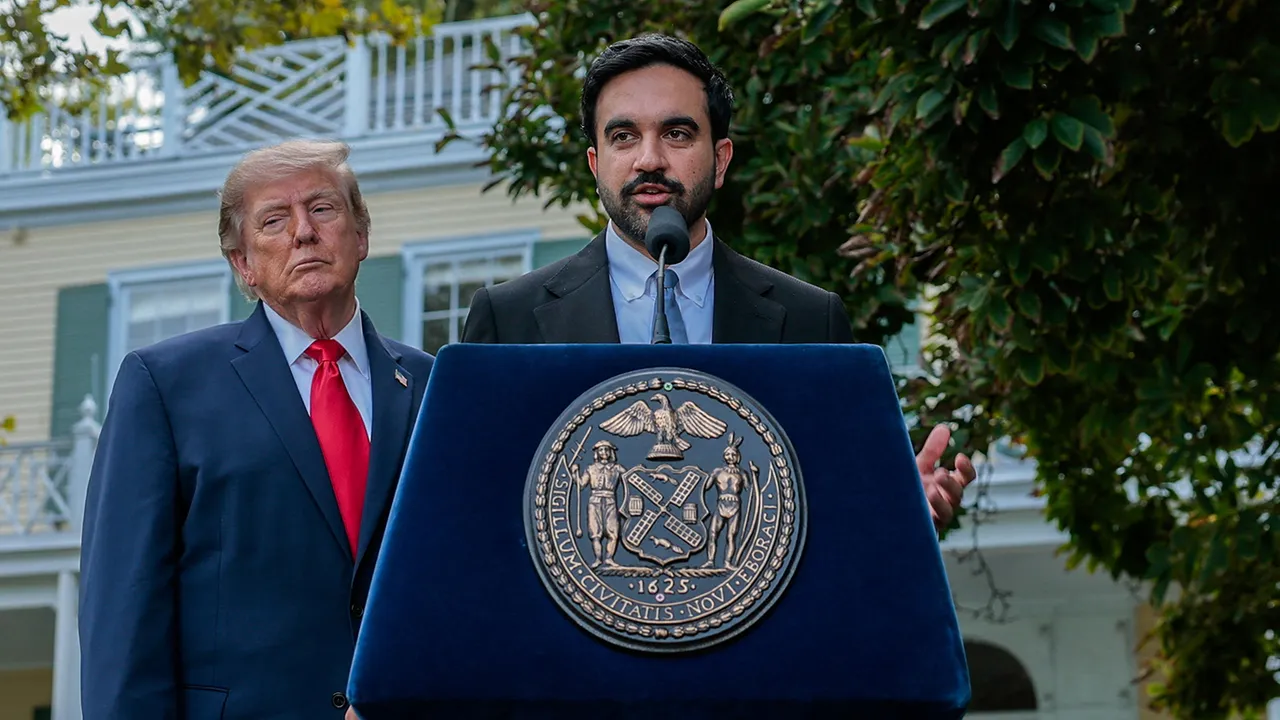
The political theorist Benjamin R. Barber, in the final years of his life, championed cities as the polities that could fix the world’s problems. Barber’s most famous contribution to the public discourse had been his 1995 book, “Jihad vs. McWorld,” which looked at the acceleration of post-Cold War globalization and a tribalism that grew in response. It anticipated, to a remarkable extent, the political ruptures and the socioeconomic forces that would shape the first decades of the twenty-first century. The work earned Barber the admiration of President Bill Clinton and became a best-seller in paperback following the 9/11 attacks. Barber argued that unfettered capitalism and the backlash to it, which was increasingly expressed through forms of fundamentalist extremism, although in contest with each other, were both a danger to democracies. The destructive tensions that they unleashed, he told the Washington Post in November, 2001, could only be addressed by some sort of “international civic infrastructure” that would think beyond the interests of nation-states and take on, at its heart, an understanding of the interdependence of our societies. By 2013, Barber seemed to have arrived at an answer for what that structure could be: in another book, “If Mayors Ruled the World,” he cast cities as the building blocks of democracy and their elected mayors as more effective, pragmatic executives than the heads of nations. He called for a Global Parliament of Mayors, where the leaders of cities could collaborate on addressing some of the world’s biggest challenges, including climate change, crime, terrorism, migration, and much else. (An actual entity with that name later emerged and was first formally convened in 2016, in The Hague, bringing together mayors from around the world.) “We have come full circle in the city’s epic history. Humankind began its march to politics and civilization in the township—it was democracy’s original incubator,” Barber wrote in Politico. “Once our origin, the city now appears to be our destiny. It is where creativity is unleashed, community solidified and citizenship realized.”
Read more Hockey Dads and Hockey Sons
I checked in with Barber in the weeks after Donald Trump’s shock electoral victory in November, 2016, which was being celebrated by a decidedly anti-cosmopolitan crowd in the United States and Europe. Barber died half a year later, of pancreatic cancer, but he was still buoyant and optimistic when we spoke, his idealism intact. “These reactionaries are the last wave in a series of political attempts to pretend that sovereign states still work,” he told me, adding that “the right-wing nationalism of the Trumps will become not so much toxic obstacles to history but an increasingly obsolete expression.” It’s taking a while for him to be proved right. Far from obsolete, right-wing nationalism is ubiquitous on the global scene; in many places, it is on the ascendance. Trump may be in his final years in office, but “America First” is stamped all over international politics: European leaders extoll the need to build up national militaries; industrial policy and tariffs are the order of the day; countries everywhere are finding their interdependencies—their reliance on global supply chains, their exposure to powerful neighbors—to be a source of vulnerability, not strength. In Europe, multiethnic capitals are pilloried by the far right as demographic time bombs, ground zero for invasions of unwanted foreigners. In the United States, meanwhile, cities have come under siege by federal authorities carrying out sweeping anti-migrant raids.
If cities aren’t universally seen as the engines of progress that Barber believed them to be, they are, in an angry age, bastions of defiance. Mayors may not be close to “ruling” the world, but they are often defending and defining a liberal version of it. After Minneapolis withstood and, in large part, rallied against a major incursion by ICE and other federal agencies, the city’s mayor, Jacob Frey, hailed a spirit of resistance that he saw reinforcing a civic ideal. “Some would like to define America as a nation that is made possible by the people who we keep out,” he said earlier this year, at an event in Washington, D.C., where he received an award from the nonprofit group Refugees International. But, he insisted, “America is made possible by the people we invite in.” Other mayors, including some far from the United States, have echoed that sentiment. Henriette Reker, who served two terms as the mayor of Cologne, Germany, until last year, survived an assassination attempt, in 2015, by a far-right assailant angry about migration. Reker spent years in her role thereafter enduring death threats for her support of asylum seekers. “Cologne has been accepting people who have come to the city for thousands of years,” Reker recently told the PBS show “Open Mind,” which is running a series on mayors from across the globe. “People from all over the world come here to trade and stay here. This is a coöperation that has worked well and will continue to work well in the future.”
Two of the other mayors interviewed for “Open Mind”—New York City’s Zohran Mamdani and Toronto’s Olivia Chow—met earlier this month in Manhattan, as more than two dozen municipal leaders convened for a summit called the Urban20, which was staged in parallel to the high-level meetings at the United Nations General Assembly. Mamdani and Chow swapped notes on dealing with the constraints placed on them by their state and provincial governors, and on their respective battles over renters’ rights and the high costs of living in their cities. “Sometimes the relationship between our national governments is a little more complicated than we like,” Chow said, referring to the ongoing dispute between Trump and the Canadian Prime Minister, Mark Carney. “But friendship between cities doesn’t need permission from our capitals. We can just do it.”
Mamdani pointed to a burgeoning solidarity. “Global challenges cannot be faced in isolation,” he said during closing remarks for the summit. “The vision of coexistence that our cities so proudly model is evidence of that very point.” He also gave the mayors of Barcelona, Helsinki, and Rome a tour of a wastewater-treatment plant in the Bronx, insisting on the importance of delivering good governance and getting basic things done. Mamdani has described his approach as “sewer socialism,” using the resources and the tools he has to improve public infrastructure and the conditions of the city. He believes mayors, whatever their politics, have to identify and focus attention on what they can tangibly make better. Otherwise, speaking for his own part and referring to how his Republican opponents tend to talk about the failings of cities run by Democrats, he said, “If you are staring at an example of social disorder or social inefficiency, and the left refuses to explain either why it has happened or how they will fix it, then the right gets to point at someone in the immediate area and say, ‘That’s who did it.’ ”
Read more New Kinds of Trad Wife I Could Be
New York City’s mayor may be America’s most obvious example of a metropolitan leader who stands in contrast to his country’s nationalist politics, but he’s hardly alone. Last week, even as Germany’s far right racked up new successes in state elections, voters in Berlin delivered victory to the leftist Die Linke party, led by Elif Eralp, a forty-five-year-old lawyer of Turkish descent whom many are already calling “Germany’s Mamdani.” She’s now the top contender to lead the city’s government, pending coalition talks, and has centered her campaign on making the German capital more affordable, including through a controversial scheme to expropriate tens of thousands of apartments from private real-estate companies seen as responsible for Berlin’s high rents. “This city belongs to all of us, not to the speculators,” Eralp said in a recent speech. Her designs may set up a showdown with the German Chancellor, the center-right Friedrich Merz, who opposes the plan to socialize housing.
Mayors are, of course, limited in what they can do. They can speak in transcendent terms, but they can’t transcend the checks of state and federal power, or the budgetary controls that, in many instances, narrow their scope for action. But their ability to competently run a city, connecting directly with local needs, often sets them up for national politics. The new British Prime Minister, the Labour politician Andy Burnham, honed a sunny, folksy brand of center-left politics for almost a decade as the mayor of Manchester; supporters hope that his broadly successful legacy there can help revive his floundering party. To date, the most serious challenge to Turkish President Recep Tayyip Erdoğan’s increasingly autocratic tenure came from Ekrem İmamoğlu, the popular mayor of Istanbul. But İmamoğlu has been detained, since 2025, on a string of charges of corruption and bribery which are widely believed to be trumped up and designed to bar him from ever competing against Erdoğan nationally.
An alphabet soup of networks and alliances brings together scores of cities into various political campaigns—these include entities such as the C40, which involves dozens of mayors from around the world acting together on climate policies, and the urban alliance for gun safety set up by the former New York City mayor Michael Bloomberg which coördinates anti-gun policy among hundreds of U.S. cities, and the Mayors Migration Council, which brings together Western mayors reckoning with influxes of undocumented migrants alongside mayors in the developing world who administer cities overwhelmed by internal displacements and climate refugees. The Pact of Free Cities, founded in 2019, began with four members—the capital cities of Hungary, Poland, the Czech Republic, and Slovakia—and styled itself in deliberate opposition to the illiberal populists who held national power in Central Europe. There are now forty-five members, including ten American cities. Last year, I spoke with one of the group’s leaders, Gergely Karácsony, the left-leaning mayor of Budapest, who was elected in 2019, and often came into conflict with Hungary’s then Prime Minister, the right-wing nationalist Viktor Orbán. “Thirty years ago, when our countries cast off communist dictatorship, we hoped that a new era had dawned for the peoples of Europe—an era of freedom, peace, rationality, and cooperation. Today, those ideals are being upheld by cities, as islands in a political climate that seeks once again to concentrate all power at the center,” Karácsony told me, talking about the ways that Budapest was trying to buttress civil society, defending the city’s L.G.B.T.Q.+ community and Hungary’s beleaguered independent media.
This spring, those efforts bore indirect fruit. Orbán was finally defeated, in a landslide, by a united opposition, which is in the process of rehabilitating democratic institutions that were warped by almost two decades that he was in power. “I believe Budapest was necessary for all of this,” Káracsony told a journalist in Slovakia, explaining that “the democratic commitments of society, the belief in social cohesion, were able to survive and return to national politics” because they had endured in the capital. In the same interview, though, he acknowledged that alliances of mayors may not be able to thwart the rise of the far right in many Western democracies. “Something has gone off the rails, and the current form of globalization is devouring democracy,” he said, in language Barber would have found familiar. “Either democracy will humanize globalization, or globalization will destroy democracy.” ♦
Read more Min Jin Lee on “American Hagwon,” Her First Novel After the Phenomenon of “Pachinko”