 By admin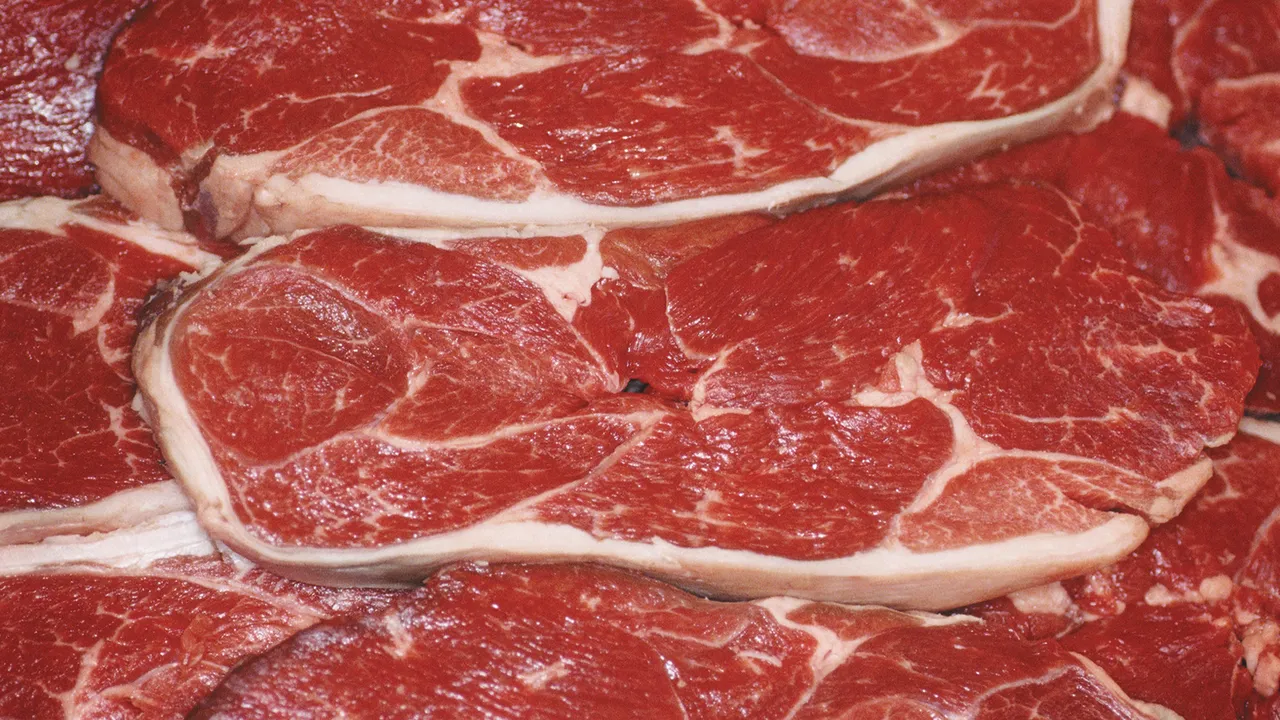
Until recently, beef was considered aggressively normal. In 1992, after all, when the National Live Stock and Meat Board launched an advertising campaign, the slogan it chose was “Beef: It’s What for Dinner,” which is a bit like the Council of Fashion Designers of America proclaiming, “Clothes: They Cover Your Body,” or the National Association of Home Builders announcing, “Roofs: They’re What Keeps Rain from Falling on You While You Sleep.” All of a sudden, though, this particular protein is a star: our nation’s chief health officer, Robert F. Kennedy, Jr., put a fatty cut of beef near the top of the newly revised, inverted food pyramid, and told an interviewer that he usually eats beef twice daily; his preferred cut is a grass-fed strip steak. Indeed, he said, a “large number” of the President’s Cabinet is on a “meat and ferments” diet, meaning that they take their prime rib with some sauerkraut on the side. Sean O’Mara, the physician who has reportedly been advising several of these leaders on their diets, explained to the Times that eating this way eliminates the need to wipe after defecating, and that on such a diet bowel movements become “nearly orgasmic.”
Read more Your Parents’ Fall TV Preview
Yet, despite that ringing endorsement, there seems at least a chance that this moment might also be the high-water mark for cut-up cattle. In the same way that, around the world, internal-combustion cars are suddenly, and rapidly, giving way to electric vehicles, it’s possible that a combination of technological, economic, ecological, and cultural factors might be lining up to challenge the hold of beef. If so, it would be a big deal: beef cattle use something like sixty per cent of the planet’s agricultural land, even while they provide just two per cent of its calories.
Right now, the cost of beef is soaring, with hamburger meat nearing seven dollars a pound nationally and exceeding that in many places. Part of that rise may be due to demand from legions of bro-sphere podcasters chugging down beef smoothies. (Erewhon offered one made with raw milk and “powdered” beef organs, for just nineteen dollars.) But a larger factor is drought. As the advocacy group Food Animal Concerns Trust (FACT) put it recently:
Multi-year dry conditions across the Great Plains, especially in Texas, Nebraska, and Oklahoma, the heart of American cattle country, have limited grazing and shrunk the grass and hay supply ranchers depend on. Less forage means smaller herds and fewer calves. When ranchers can’t afford to keep feeding animals through a drought, they’re forced to cull early, including breeding cows that would otherwise produce next year’s calf crop.
As of January, the country’s total cattle herd was smaller than it had been since 1951, three years before the birth of Burger King. Even if the El Niño now developing were to drench the Southwest, it will be years before the herd rebuilds: a cow takes nine months to gestate a calf, and then it’s seventeen months before that calf is large enough to slaughter for beef.
It’s not just drought. “Input” prices are also climbing steadily. Farmers use a lot of diesel, which is now approaching six dollars a gallon. Fertilizer costs are also up sharply—there’s a lot of sulfur, a key component, backed up in the Strait of Hormuz—and the war in Ukraine has helped push feed prices to three-year highs. This means that the price of finishing a steer on grain has gone up considerably. Then there’s the screwworm fly, a flesh-eating parasite that likes to lay its eggs in the open wounds of warm-blooded animals, so that the larvae can feed off living tissue; if the condition is left untreated it can prove fatal to livestock. According to Politico, the Trump Administration’s drastic spending cuts hampered monitoring programs; the flies crossed the border from Mexico and infected some cattle in Texas. Now, after the release of hundreds of millions of sterile flies, which interfere with the reproductive cycle of the insect, the U.S. Department of Agriculture says that the number of cases has dropped sharply, but biologists remain wary. (Perhaps, some say, the video cameras being used to monitor cattle for wounds aren’t up to the task.) In any event, the price of beef seems likely to remain high, and without an obvious end in sight; the average age of a cattle rancher in America is fifty-eight, and, FACT notes, “as older ranchers retire and downsize their herds, there simply aren’t enough younger farmers stepping in to replace them.”
The Trump Administration’s plan to combat the rise in beef prices is marked, perhaps not shockingly, by its short-term nature, air of corruption, and general grossness. The President, who likes his steak well done and slathered in ketchup, met with a Brazilian beef magnate named Joesley Batista, who in the past had admitted to making large payments to public officials and was briefly jailed. As Maggie Haberman and Jonathan Swan recount in their recent book, “Regime Change,” Batista met with the President after a U.S.-based subsidiary of his company donated five million dollars to Trump’s second Inauguration. (He has also served as an emissary between the Administration and the interim President of Venezuela, and has invested in that country’s oil production.) Now, just days after the European Union suspended imports of Brazilian beef for failing to meet its safety standards on antibiotics, Trump has announced that large quantities of it will be permitted to enter the United States, in hopes of lowering prices before the midterm elections. The imported meat, which will also come from Argentina and other, unnamed countries, is not exactly the kind of stuff you’d imagine at the top of the food pyramid; as the veteran industry watcher Eric Schlosser explained in the Times, it’s “beef trimmings that will be added to fattier American cuts to make ground beef. They’re small chunks of frozen meat that could have been kept in cold storage overseas for years. They are the quintessence of generic industrial meat.” And they probably won’t drive the price down very much—NPR quoted a University of Tennessee professor of livestock economics who said, of a possible reduction, “I don’t think it’s going to be $1.50” less. “We might see a quarter to 35 cents.”
So, just as the war in Iran, by causing gasoline prices to rise, provided a sudden opening for the E.V. industry across the world, this confluence of events might give alternatives to beef a moment of opportunity. Those alternatives include, of course, various forms of lab-grown meat. The first generations, kind of like the first E.V.s, have not really found a home; sales, never robust, have fallen during the past two years, in part because, though the flavor has got closer to beef, the price has remained high. But, as with many iterative technologies, the next generation might be cheaper: in the Netherlands, a recent survey found that prices for “alt meat” were thirty per cent below those of conventional meat and dairy. Bruce Friedrich, the head of the Good Food Institute, a nonprofit think tank that advocates for alternative meats, said recently that Asia is starting to take the lead in developing the technology, and that soon “I think we could be at taste parity with a lot of plant-based products. I think we can see the cultivated-meat cost of production really falling, and I think we could see production infrastructure across both technologies scaling up.” Last weekend, he launched a Substack newsletter devoted to the topic, and in the first edition he quotes a scientist who says that “current cell line and media performance, if produced in commercial-scale facilities, could reach cost parity or cost advantage compared to their animal meat benchmark.”
Read more That Back-to-School Feeling
Another possibility is that people might decide to eat other dead animals, instead. We already do, of course, and in large numbers, but we tend to think of eating beef and pork and chicken as more or less the same—you’re a vegetarian or you’re not. (Mostly not—only four per cent of Americans identify as vegetarian, and just one per cent as vegan.) But, at least in environmental terms, all meat is not, in fact, the same, and we may be getting to the point where the distinctions are important. Earlier this month, when the United Nations Environment Programme (UNEP) published a major report on the climate future, most of the news coverage focussed on its conclusion that we’d missed the goal set in Paris of limiting temperature rise to 1.5 degrees; we need, the report says, to dramatically scale up the pace of building renewable energy, and also get more serious about figuring out ways to scrub carbon from the air. But the report also included some pointed pages about the world’s agricultural system, which, depending on how you do the numbers, accounts for at least a fifth of the emissions driving the climate crisis. In the truly generic prose that the U.N., for some reason, insists upon, it said:
Further reductions of residual methane beyond mid-century must increasingly target agriculture and waste, since fossil fuel emissions can be largely eliminated at relatively low cost by 2050 already under stringent policies. Agriculture and waste present greater technical, cultural and social challenges and have received relatively little targeted mitigation policy. Dietary shifts could significantly cut emissions and free land for carbon sequestration although implementation must consider nutritional, cultural and livelihood constraints. Societal preferences can also evolve in response to changing contexts and sociocultural narratives.
The report didn’t single out cows, but it surely should have. In environmental terms, they are the problem. In part, that’s because they’re wildly inefficient at converting grain to protein—it takes six or seven pounds of corn to produce a pound of beef. (Among other things, that means, to compensate, that we’re cutting down lots of rain forest to grow more soybeans for them.) And in part it’s because they’re ruminants, which means that they belch methane, a potent heat-trapping gas. (Some scientists have been at work on supplementing cattle feed with seaweed to reduce the problem, but at least one recent study describes the effort as “challenging” and unlikely to “single-handedly deliver transformative climate benefits.”) The numbers are really very stark: a chart from Project Drawdown shows the greenhouse-gas emissions of various livestock, and a pound of beef produces up to a hundred pounds of “co2-equivalent.” Lamb, the other ruminant-sourced meat on the chart, produces about a third as much. You can eat pork eight nights a week and do less damage to the environment than you would with one steak dinner. Chicken causes less than that. Tofu causes less still, but the margins at this point are tiny—if you cross beef off the menu, you cross off most of the climate damage.
That’s not the only kind of damage from meat production, of course. Big swine farms produce huge amounts of solid waste, which piles up in lagoons until a flood can wash them into rivers. If you have moral qualms about killing animals, moving to chicken means you have to kill quite a few more to feed the same number of people. And so on. These points remind me of the ones that people make when they dismiss the shift from conventional cars to E.V.s as insignificant: you still have traffic congestion, and the rubber dust from tires causes its own forms of pollution, and we’d be better off on buses and bikes. And we would be. But the cultural shifts required to get us from a car-based society to a bike-based one are large: at the moment, according to the League of American Bicyclists, about one per cent of American trips—to school, to work, to the store—take place on two wheels. So, while we’re working toward that new world, the E.V. is pretty useful. Similarly, even if veganism is optimal, it’s easier to imagine people discovering that ground turkey, or lab-grown meatballs, fits in reasonably well with their idea of what dinner should entail.
I don’t think that environmental concerns alone are enough to drive large numbers of people in this direction. But August tied for the hottest month in recorded history. It looks like 2026 will probably be the hottest year ever recorded, and 2027 will likely smash that record, as the El Niño now aborning in the Pacific is expected to produce higher temperatures than any human has ever experienced. By this time next year, we may be in a place where we’re thinking a little harder about our ecological future. And if beef is still seven dollars a pound—or if severe weather has driven it higher still—cultural norms may start to shift. If steak-eating MAHA followers start suffering from higher cholesterol levels and cardiovascular disease, they, too, may rethink the ideal diet.
Since March, following the start of the war on Iran, global E.V. sales have surged thirty-five per cent; some analysts are suggesting they’ll be outselling conventional cars by 2030. Just because something’s been normal for a very long time doesn’t mean it’s a lock to stay that way. ♦
Read more Donald Trump Returns to the U.N. Amid the Collapse of the Old Order