 By admin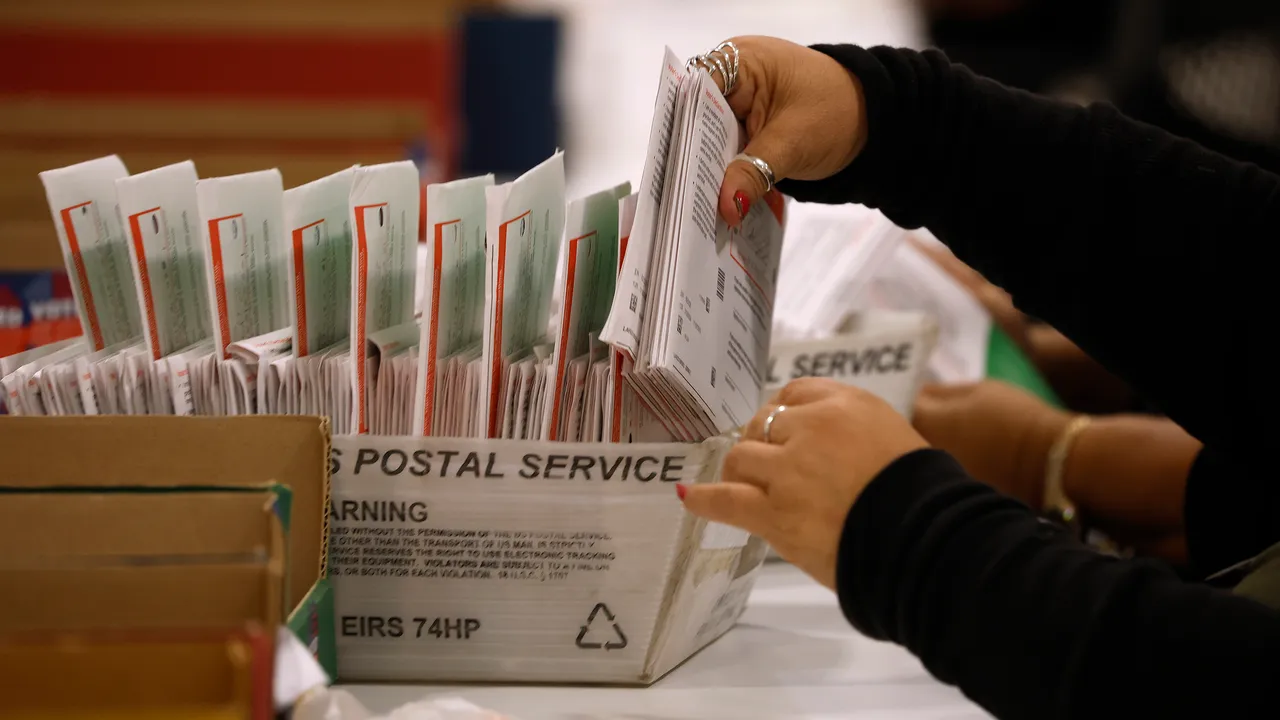
With three bland, technocratic sentences, the Supreme Court saved the midterm elections. In an unsigned order issued on Monday evening, the Court rebuffed the Trump Administration’s bid to impose new rules on voting by mail, restrictions that the Administration claimed were necessary to prevent the phantom menace of voter fraud. Only the two most conservative Justices—Samuel Alito and Clarence Thomas—noted their dissent. Justice Brett Kavanaugh said that he believed the mail-in ballot requirements would eventually pass muster, but that it was too late for state and local officials to implement them for the midterms, now less than fifty days away. The order said that the Administration had failed to show it was entitled to “emergency relief” from the Court after a series of losses in the lower courts. Even more stinging, the Justices concluded that the Administration was “unlikely to succeed” in defending the legality of its rule—a welcome but not definitive indication that this assault on mail-in voting may be dead beyond this year’s elections.
Read more The 2026 National Book Awards Longlist
Fuelled in part by the pandemic, mail-in voting has evolved from exception to norm, much to the displeasure of President Donald Trump, who has asserted that “Democrats are virtually Unelectable without using this completely disproven Mail-In SCAM.” Nearly one in three voters now casts their ballot by mail; some states have virtually eliminated in-person voting. As even Kavanaugh recognized, upending this system so late in the election cycle would have had catastrophic results. Still, just three weeks ago, the Court decided in the Administration’s favor in an earlier phase of the case. That ruling involved a challenge to Trump’s executive order on mail-in voting, which, in the name of “election integrity,” called for the federal government to, among other things, assemble a list of voting-age citizens in each state and develop procedures for delivering ballots in special bar-coded envelopes. The Court found that lawsuit was premature because the order itself did not impose any requirements on those outside the federal government.
Monday’s case concerned a U.S. Postal Service regulation implementing the order, which was issued late last month. Under the regulation, states, some of which have already begun mailing ballots, would have had to create the new envelopes with barcodes tracking individual voters and upload lists of eligible voters and their addresses to an online federal-government portal. That site is not yet operational, but the regulation bars the Postal Service from delivering ballots to addressees whose names do not appear there. In a brief to the Court, two dozen states challenging the regulation offered a stark assessment of the problems that would ensue if the rule were allowed to take effect. In some states, compliance “would be impossible ahead of the midterms, meaning that millions of voters would be unable to vote by mail and some would not be able to vote at all,” the brief said. “In the remaining States, there would be chaos—and a significant risk that millions more voters would be denied the ability to vote.”
Imminent chaos aside, the Administration’s claim that the Postal Service has authority to regulate mail-in ballots is questionable at best. The Constitution entrusts the conduct of elections to the states and Congress, if it wishes; the executive branch has no assigned role. The Administration attempted to discern authority over mail-in ballots in 1970 legislation authorizing the modern Postal Service, a stretch worthy of Spider-Man. The law permits the Postal Service “to provide for the collection, handling, transportation, delivery, forwarding, returning, and holding of mail, and for the disposition of undeliverable mail.” It is difficult to see how those powers can be leveraged to justify telling state election officials what they must do before the Postal Service will deliver their ballots.
The asserted justification for the rule—that it was necessary to prevent the “federal mails” from being “used to perpetrate voter fraud”—was even flimsier. The federal district judge who heard the case wrote, “The record continues to lack any evidence regarding fraudulent absentee or mail-in voting.” Indeed, even if such fraud were rampant, it is difficult to see how the Postal Service rule would stop or expose it. As the Washington lawyer Adam Unikowsky wrote on Substack, “The Postal Service insists it’s trying to combat fraud, but precisely how the requirement of checking the envelopes against the state-provided lists would achieve that goal is quite obscure. The Postal Service isn’t checking the validity of the names on the state-provided lists. So if the states send the Postal Service a list that includes deceased felon illegal immigrants, the Postal Service will duly send the ballots to the deceased felon illegal immigrants.”
Read more Arrangements I Would Accept
Alito, in a dissent joined by Thomas, cited the federal government’s “strong interest in enforcing the rule” without explaining how it would address the purported election fraud. At the same time, he discounted the potential harm to states. “The plaintiff States invoke the practical effects of implementing the rule close to the midterm elections,” Alito wrote. “I take that problem very seriously, but it is not enough to convince me to deny the application.” Alito said that the complaining states were to blame for the fact that the election is now imminent. “The plaintiff States cannot claim the timing of the rule tilts the equities in their favor when they, and courts hearing their claims, are responsible for so much of the delay,” he wrote. This is a bit hard to take, given that the states, along with voter groups, immediately challenged the executive order and, after it was issued, the regulation itself.
Court watching these days can be a vertiginous enterprise. Just two weeks ago, the Court backed away from a confrontation with Trump over his efforts to construct the White House ballroom. “Today, we do not pass upon the legality of the government’s East Wing project,” the conservative majority claimed, even as its refusal to halt construction made the ninety-thousand-square-foot ballroom a fait accompli. (Chief Justice John Roberts dissented, along with the three liberals.) Last week, the Court, with no noted dissents and despite the urging of the Trump Administration, refused to intervene in the case of a newly gerrymandered district map in Missouri that would have benefited Republicans. Without the Court weighing in, the existing district lines will stand.
The President’s bid to rewrite election rules was more audacious even than his ballroom project. Once again, we have learned that some Trump measures—eliminating birthright citizenship, imposing emergency tariffs—go too far for this Court. The Court’s red lines would not be mine, but it has them nonetheless. Trump finds that intolerable. In a Truth Social post Tuesday morning that ran close to five hundred words, he denounced “this horrible, highly political, ruling,” adding that this Court “will go down as having rendered some of the most destructive, hurtful, and damaging decisions in our Country’s history.” Trump lamented that the three Justices he appointed, all of whom voted against him Monday, “are merely a shell of their original selves.” Nothing will satisfy this President short of a total capitulation by the Justices. Others of us will have to comfort ourselves with a more mixed record. ♦