 By admin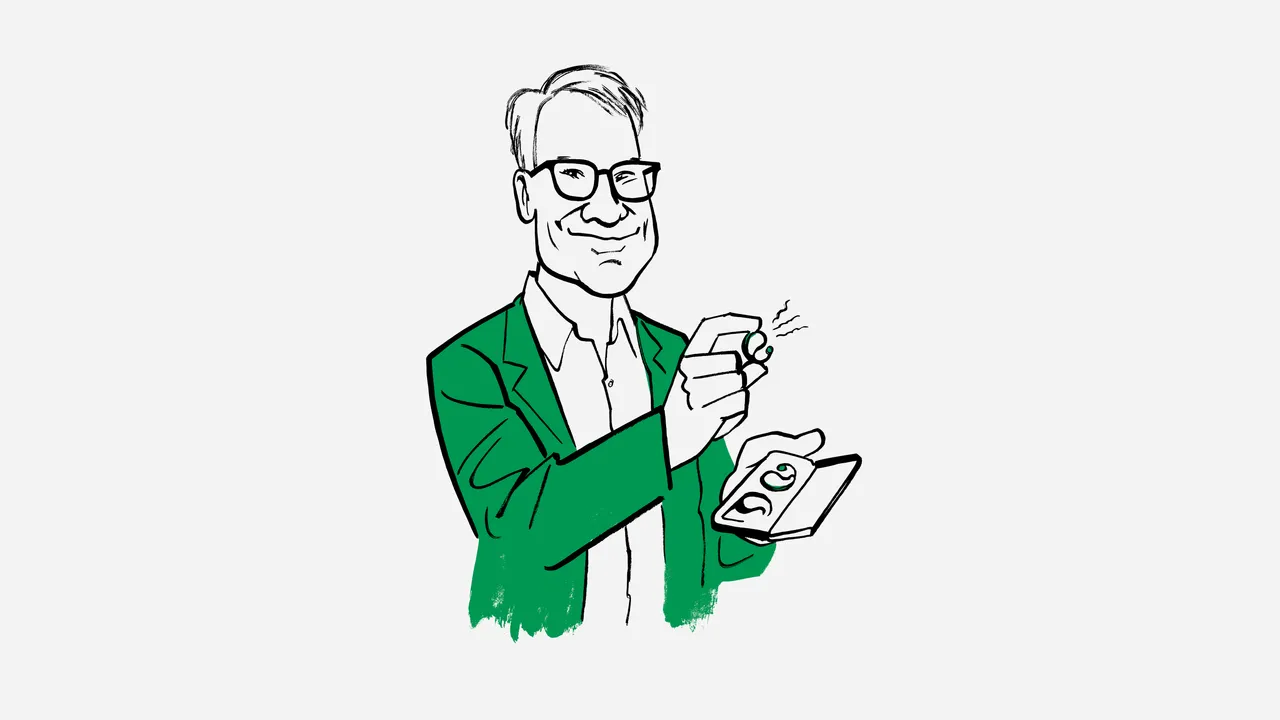
In 2023, the comedian, actor, writer, and banjo virtuoso Steve Martin was walking through SoHo, followed closely by two men holding a laptop. The laptop was connected by an Ethernet cable to a 3-D-printed plastic box, and the box was connected by wires to Martin’s head. A passerby recognized him and asked whether the benefits of celebrity included having assistants literally tethered to him. But the men with the laptop weren’t working for Martin. They were engineers, and Martin was serving as a beta tester for an invention of theirs, a new kind of hearing aid. The men referred to the laptop as the “diesel-powered” version of their device, which they were hoping to refine, then shrink. Late last year, with continuing help from Martin and others, they succeeded. Their company is called Fortell. Its inaugural hearing-aid-fitting clinic is at Sixty-first and Park. Their waiting room is decorated with paintings that Martin (without assistance) brought from his collection.
Read more Paula Cole Doesn’t Want to Wait
“We started crude and got better,” Matthew de Jonge, one of Fortell’s four co-founders, said not long ago, in the waiting area. “The thing that’s novel about our hearing aid is that it filters out sound that, in our estimation, is unimportant and thus distracting, and it does it in real time.”
In bars, clubs, and other loud, crowded places, young people almost always hear better than old people. One reason is that the un-degraded auditory circuitry in their heads is able to zero in on the people they’re trying to hook up with while blocking out everyone else, a minor superpower known as the cocktail-party effect. “As people lose hearing, they also become less capable of listening selectively,” Cole Morris, another Fortell co-founder, said. Modern hearing aids have some ability to compensate, by using directional microphones and conventional noise cancellation. “They’re pretty good at dialling down so-called stationary sounds, like the hum of an air-conditioner,” de Jonge said. “What they have never been able to do is to separate speech you want to hear from speech you don’t, and to do it even if the speech you don’t want to hear is louder than the speech you do.”
Fun, fizzy dispatches from the city and beyond

De Jonge and Morris were roommates at Princeton, and later de Jonge was among the creators of Butterfly iQ, an A.I.-enhanced handheld medical-imaging device that is now one of the best-selling sonogram systems in the world. (It was used on the International Space Station to evaluate an astronaut who was later evacuated, and it has appeared in a supporting role in episodes of “The Pitt.”) Early in the Butterfly project, the team received an e-mail from a professor at Harvard, who told de Jonge that he was working with the best physics-Ph.D. student he’d ever had. “He said the guy’s field was quantum optics, whatever that is, but that what he really wanted to do was A.I. for health care,” de Jonge recalled. “He said the guy had no experience in either A.I. or health care but asked if I would hire him. I said yes.”
Read more Ke Huy Quan Keeps Smiling
The physics Ph.D. was Igor Lovchinsky, a Russian émigré. “There are special Russian music schools, and I was admitted to one of them when I was four,” he said. He moved to the United States with his family, won a scholarship to Juilliard, and became a celebrated concert pianist, before switching to physics. He designed Butterfly’s neural networks, then did the same for Fortell, of which he is also a co-founder. The fourth co-founder, Andrew Casper, designed the custom chips used in both projects. Fortell’s hearing aids sell for sixty-eight hundred dollars per pair, about average for the top of the line.
Paul Krawitz is a sixty-seven-year-old retired ophthalmic surgeon in Cold Spring Harbor, on Long Island. He first realized he had a hearing problem ten years ago. “When my bedroom windows were open, I could hear the crickets in my yard if my right ear was on the pillow, but not when I rolled over,” he said. He tried six different hearing aids, but wasn’t happy with any of them. “I was a pain in the ass as an audiology patient,” he said. “I wanted cognitively transparent improvement in my hearing, not just an increase in volume.”
He made an appointment at Fortell on a whim. “A typical audiologist will sit on the other side of the room and ask, ‘How do I sound?,’ ” he said. “But the Fortell audiologist said she was going to take me on a field trip.” They conversed out on the sidewalk, with Manhattan traffic in the background, then visited an espresso bar. “I heard beautifully,” he said. “You know, the ability to pass naturally in conversation is not a luxury. It’s fundamental to human connection.” Krawitz noticed another difference at home, while listening to Rachmaninoff’s Second Symphony. “People who love music sometimes refer to hearing the ‘air’ between the players, and for the first time in many years I heard it again,” he said. “My wife goes, ‘Why are you crying?’ ” ♦
Read more Is Will Power Overrated?