 By admin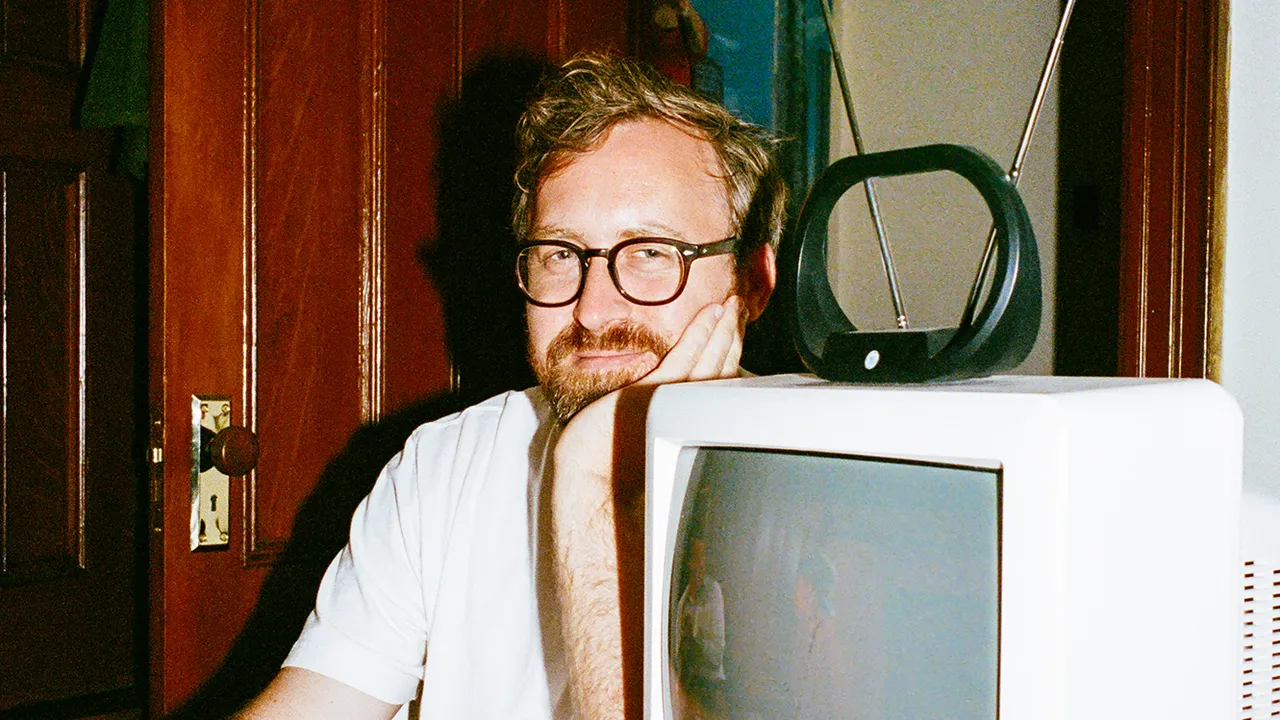
Is John Wilson famous? In his new movie, “The History of Concrete,” Wilson explores this question the way he explores everything around him: through video footage, most of it captured by his own unsteady hand, cut into sequences that can be jarring, self-deprecating, lo-fi punny, or sneakily hilarious. He is famous enough to be invited to an intimate banquet honoring Kim Kardashian, among others, but enough of an outsider to spend the whole dinner surreptitiously filming from his seat. He is famous enough that his face has appeared on a billboard in Times Square, but enough of a rube to point this out to a Times Square public-safety officer, who seems unimpressed. The most succinct answer takes the form of a clip from “Jeopardy!,” edited with expert comedic timing: John Wilson is exactly famous enough to be a “Jeopardy!” question in the category “Celebs”—but only at the bottom, worth a thousand dollars—and for no one to buzz in.
Read more My Surefire, Can’t-Lose Polymarket Bets
For three seasons, Wilson had an HBO show called “How To with John Wilson.” He walked around New York, filming fire hydrants and soccer referees and public toilets, narrating over the footage in a halting, ingenuous register: part Nathan Fielder (who was an executive producer on the show), part Frederick Wiseman, part Mitch Hedberg, part Joe Gould. It was the weirdest, scrappiest show in HBO’s lineup; it was also, for an eccentric video artist from Queens, a pinnacle of commercial success. But the pinnacle turned out to be only so lofty: after Wilson left the show, he had a hard time getting funding for his next project (which was, in fairness to the recalcitrant producers, a feature-length documentary about concrete).
Wilson lives in Ridgewood, Queens, where he is a co-owner of Low Cinema, a micro-theatre with some forty seats. When I visited one morning, he was behind the concession stand, preparing to work a shift that night. We spent a few minutes chatting in the lobby, which is decorated with a John Waters vomit bag, posters for “Taxi Driver” and “The Matrix,” and a framed promotional flyswatter from Intercourse, Pennsylvania; a French bootleg of “The Odyssey,” on VHS, was playing in a corner. Then we took our seats in the theatre, facing a blank screen, and talked while angling toward each other, somewhat awkwardly, across the aisle—a two-shot that John Wilson could surely have turned into some kind of unflattering visual joke, but luckily he was otherwise occupied. Our conversation has been edited and condensed.
We’re sitting in your movie theatre right now. Are you one of these people who is a cinema completist? The type of person who would say, “Yes, I like every movie”?
I think pretty much all movies are good, in a way, even if not for the reasons they were intended to be good. Every movie is of value to somebody or someone, whether it’s in the costume design or the locations. And I think that trying to find value in films that you may have forgotten about is a cool challenge.
Did you ever see “The Flick,” by Annie Baker?
No.
It’s a play that’s set in a movie theatre like this. You would love it. She’s one of my favorite playwrights—and actually, like you, she’s someone whose work I often have trouble explaining. I just tell people to go see it. Similarly, when I heard that you had a new movie, I didn’t need to be pitched on it. And then I watched it, and a lot of the movie is about you struggling to pitch the movie to funders.
I still don’t really know how to pitch this film. I usually start with a title, and “The History of Concrete” really stuck with me. I felt like it had some gravity to it—
No pun intended.
I’m dodging puns left and right with this movie. I mean, I came up with the title because I was genuinely interested in the material, and I did want to make the definitive film about it, you know? But I also like to make comedies, and I knew that it would be the hardest thing to make funny. And there was something about that that really excited me, even though it was agonizing at points to get it made.
Is it true that you looked up the title on Amazon?
When I first came up with the title, I looked on the internet to see if it already existed, and found one book on Amazon called “The History of Concrete,” which turned out to be just an empty book that was a place to store your valuables. I thought that was really funny—not even the most determined thief would have the courage to open a book with a title that boring.
And then you thought, “The movie industry is dying. There’s no more funding. Let me go try to get funding for a movie called ‘The History of Concrete.’ ”
I think I understood the absurdity of trying to pitch a concept like this in 2024. But it was what I consider a fun challenge. It’s hard, especially in nonfiction, to get people to come on a journey with you where there’s no beginning, middle, or end, and you just have a broad idea. And, with financiers, even if you had a successful project beforehand, you still need to prove yourself and start from scratch, in a way, with each concept, because the world is constantly changing and the appetite—or the perceived appetite—of the crowd is constantly changing.
To me, one of the interesting questions about your work has to do with genre. You’ve mentioned comedy, you’ve mentioned nonfiction. People sometimes say “video art.” I think all of those could apply—and I do think it has to be seen as art, on some level, for it to make sense—but I’m curious about when you first started to think about the genre of the stuff that you make.
I feel like I never really know what I’m making or why I’m filming certain things. But once you have enough of it, you can then begin to kind of shape it into something. Like, I think it’s good to start with an idea. Then you begin to make that thing, and you leave a huge part of it empty, and you allow the world to kind of fill the rest of that in, whatever shape that takes. By the end, you have this strange hybrid of what you intended to make versus what the world delivered to you.
As I was driving over here, I felt like I was seeing the world through John Wilson B-roll—some of the stuff I saw was just weird enough or inexplicable enough that I thought, if I were you, I would definitely have filmed it and marked it as something to use. Is that kind of how it works?
I start the day by going out and filming potholes. I know that there’s a pothole somewhere about to give any day now, so I’ll go and do that. But then I’ll probably get bored, so I’ll go into a store nearby and see what’s going on there. And then I’ll tell them what I’m doing and see if they have anything to add. A lot of the time, the farther away you get from the subject matter, and the more you have someone from outside of that universe talk about it, the more interesting it gets, and the more illuminated the metaphor becomes.
When did you start picking up a video camera?
I was born in Queens, and then I moved out to Long Island for elementary school, so I mostly grew up there. I picked up my dad’s movie camera, a Hi8, when he got it for his fortieth birthday, I think. And I kind of never gave it back to him. I was probably twelve or thirteen. I would make a movie every single day, and I haven’t really stopped—it almost feels like it’s the only thing I’ve ever done.
When did you start to think about what you were making in any kind of serious way?
We had a little filmmaking collective in high school. We would sell DVDs out of the back of our trunk and try to organize screenings with the school. We dealt with some censorship there—they wouldn’t show some of our work.
Was it very risqué?
The principal, who was very conservative, thought that this movie we wanted to show was glorifying bullying—which, if he had finished the film, he would’ve seen was actually an anti-bullying movie.
The movie was called “Layup,” and it was about a janitor who teaches a kid how to play basketball, but then the janitor turns out to be a ghost.
Classic. It seems like, throughout, you never quite respected the boundary between comedy and quote-unquote serious filmmaking.
Playing with genre is a really good way to begin because, once you know all the rules, then you know how to break them and make things interesting again.
One thing that makes your sensibility hard to categorize is that there will be material that seems like it’s there purely because it’s funny—and sometimes even slapstick, gross-out funny, like fart jokes—but then a few seconds later there will be a sequence or a tableau that’s sort of poetic, or even profound, and I think you manage to do a lot with those little juxtapositions. Not to be pretentious, but it makes me think of James Joyce and his idea of “epiphanies”—these glimmers of divinity being found in the smallest, most mundane things that he observes out in the world and then records and collects in his journals, like someone tripping over a tree root.
I really connect with that. It is those mundane moments that I find really exhilarating to capture. I feel like there is a lack of representation of the mundane a lot of the time, but that’s also what people connect with the most intimately, because it’s so relatable. I feel like watching someone rub someone else’s back can really transmit more, emotionally, than an entire twenty-minute sequence in a film. And I want to get to the most distilled kind of versions of these emotional notes.
I think you can watch an entire feature sometimes, and then by the end be, like, “Oh, that was the message,” or, “Oh, it was all about this one scene.” I want to make the work as dense as possible with these moments that you don’t really see very often but are recognizable to any human. I also think there’s something really primal about the way that we receive imagery. We just like to watch other people, you know?
What you’re saying about revealing real, human, mundane life—in a way, the antithesis of that is the Hallmark movie. Which, for those who haven’t seen “The History of Concrete,” is what it starts with: you thinking about Hallmark movies, which kind of become a foil for the film you’re trying to make. Why was that a springboard for you?
I think, post the HBO show, I was struggling with self-discipline and trying to figure out where to begin, just given this abyss of stuff to choose from. At that point, I kind of wanted to enter the world of feature filmmaking, because it always felt a bit random that I ended up in television. I really always thought about the work as cinema.
This may be too grubby and pragmatic a question, but I’m sure you had some people in your life being, like, “John, you have the only job. Please don’t give it up.”
[Laughs.] Um, yeah. I don’t know. I wasn’t making this work for money. It was nice that we had a budget from HBO and I could, like, pay all my friends. But I am mostly just driven by the subject matter a lot of the time—whether it’s, like, an internal struggle or an external catastrophe.
The last time we saw each other, I was writing a Talk of the Town piece about the making of the show, and we went to a sewage-treatment plant together in Hoboken. I haven’t smelled the same since. But one thing I remember from that day was that before we left for the shoot, we went to your office, and it seemed to me like this amazing collaborative luxury to have this sort of army of people going out and shooting stuff in your style. Like, someone came back with this amazing shot of a guy on top of a moving subway.
It was a dream team. It was amazing to have these resources, and for all of it to serve this larger vision. But I don’t know. I’ve lived in places before where I didn’t have to pay rent—but you have to move out sometimes. No matter how easy or nice it gets, I think you need to reactivate the struggle, just to shock yourself into a new way of living.
That’s definitely a New Yorker’s way of thinking about it.
Someone with a salary and a nice job and whatever else may not feel the same way. But I think that, with making art, you do need to interrogate why you’re doing something and what it’s bringing you and whether or not it can evolve. And I didn’t want people to begin to see what was coming around the corner.
Not to keep coming back to James Joyce—it’s not a comparison I would put too much weight on—but there was a time when everyone wanted him to just keep writing “Dubliners,” and instead he wrote “Ulysses.” And then he didn’t even do that again—then he moved on to “Finnegans Wake.”
I didn’t really know what the film was going to be at first, but I’m part of the Writers Guild, and I was invited, as a member, to go to this class on how to write and sell a Hallmark movie. I didn’t have anything to do, so I went. I learned a lot, though I had no idea how it would fit into anything. But I got a set of rules from the class, like: You can’t have Jesus in your Christmas movie. You can’t interrupt a kiss with a phone call. Beat by beat, this is a proven formula. So I kind of wanted to use that as a springboard to think about cliché, and whether or not cliché is something that is naturally occurring, that humans like to see and create, or whether or not cliché is imposed on us by larger market forces. If you read “The Elements of Style” or something like that, it’s very clear: no cliché allowed. But I think it’s also really fun to lean as heavily as you can into cliché. Like a really colorful sunset or a sunflower—certain kinds of imagery and certain themes are really fun to lean into, as long as you understand how to offset them with the reality of our world.
Read more The Hearing Aid That Plays It by Ear
Another person I wanted to talk about with you is Joe Gould, this eccentric who became sort of famous for trying to collect what he called “The Oral History of Our Time.” He would go around writing down everything—everything he heard, everything he saw—and he claimed that he was going to create the greatest, most comprehensive document of what it was like to be alive in the United States in the twentieth century. So that gets me to this question of how do you decide, if you’re recording footage all the time, when and how to stop recording and to start shaping that into something?
When I’m working by myself, I usually just take the day’s footage and cut it up into ten-second pieces. Just my favorite bits of each clip.
And favorite meaning what? That it makes you feel something? That you think it’s funny?
Yeah, it’s either a beautiful sunset or the name of a funny tree-stump-removal company or something like that. I take these and mix them into the same soup. And then, when I’m trying to edit, I will often just have these interviews that act as a very basic skeletal system. And then, in between, I will populate it with interesting B-roll where I try to create some transitional poem out of imagery that I write over. When I’m looking for footage, I just scrub quickly back and forth through this sequence that has no organization, and it’s usually just whatever grabs me in that moment.
There are certain images that will immediately make people feel things—like, if you have a dog leashed up in the rain, you know, you could say anything over that, and that will make people feel sad. There are shortcuts like that, but I like experimenting. I’m inspired by a lot of street photographers. I think it’s some of my favorite work because you feel like you’re seeing something that you feel like you shouldn’t be seeing.
I think people might be surprised by how much you actually set out to learn—about concrete or about public toilets or about scaffolding—when you’re shooting one of these projects. When I saw you interviewing people at a sewage-treatment plant, you were really trying to obtain knowledge. But a lot of that doesn’t end up in the final cut.
I try to do as little research as possible before going to a shoot because then, when I interact with people who explain something to me, I don’t have to pretend. In terms of what I leave out—I want the vegetables to be in there, and I want you to get some information, but I don’t want to give you easy answers. I may receive the answer during my exploration, but I often don’t put it in.
This movie deals with political questions. There’s a lot of affordable-housing politics, there’s climate politics. You’re not on a soapbox, but you’re not shying away from these questions.
The movie started a bit more climate-focussed, but, you know, I did not want this to be like an Al Gore project. No offense, Al. But there are other movies out there like that.
The first version of the movie was very climate-heavy. I wanted to talk about sand, and rusting rebar, and how frail a lot of the concrete around the city is, and how much concrete contributes to climate change over all. And that’s in there, but I didn’t really want to shove things down anyone’s throat.
When I went to a concrete convention, every single person there proudly told me that concrete is the second most used substance on the planet. I found that really interesting—that there is this disconnect, where people aren’t really thinking about the impact. I was looking around, and I didn’t know who was thinking critically about this material. And I thought it was a fun springboard to have an anti-concrete position—which is such a ludicrous political position to have right now.
A lot of what I like to do is to interrogate things that we don’t often question—to think about why we don’t question them, and whether or not it’s just because we as a species love cyclical things. Whether it’s the cyclical renewal of this concrete or the cyclical behavior of watching the same Hallmark movie over and over again. I watch a lot of the same stuff that has a very rhythmic quality to it, like reality TV.
Maybe it’s a bit of a stretch, I don’t know. But to me, the way that most concrete is only meant to last, like, forty-something years, the fact that we need to dig it up and put it down again—that somehow mirrors the kind of cyclical nature of media-making. All cultures and religions have ways of, if not accepting, then dealing with impermanence. And it seems like the American way is to lean into planned obsolescence and planned renewal, instead of just building with stuff that lasts a long time. You could interpret that as a way to read film as well.
In the film, you seem to be sort of caught between the artist’s vantage—which is, like, Wouldn’t it be interesting if everything washed away like a sand mandala—and the more immediate political position, which is, We should fix the fucking B.Q.E. before it collapses.
Yeah, the B.Q.E. is, like, such a third rail for so many people, because once you touch the B.Q.E. and say that you are going to fix it, then it becomes your problem. [A week after Wilson and I spoke, Mayor Zohran Mamdani announced a four-billion-dollar plan to repair the “triple-cantilever” section of the Brooklyn-Queens Expressway, drawing mixed reactions.] And you have the NIMBYs within the area that are impossible to please, and the high-rise building people that want to build on the waterfront, and the transit people who understand the importance of the artery.
On that point, do you identify yourself as either a YIMBY or a NIMBY?
I feel caught in between. I don’t know. I really had to do a lot of soul-searching in this movie to decide where I stood.
I did wanna make, like, the most NIMBY movie ever made, to begin with—to include their opinions and give their argument a platform. It’s really unpopular to elevate NIMBY voices, and I wanted to see what was going on there and try to let that guide the film a bit. I obviously believe in affordable housing, and I’m actively trying to make a small dent there in my own way. But it’s also, like, a lot of the YIMBY people are also strange bedfellows with the people within the construction industry.
It’s so funny to me that you have interviewed this huge range of people—people who are cryogenically freezing themselves, people who are castrating themselves—yet the hardest voice for you to platform is NIMBYs.
O.K., one other thing I wanted you to get into—when I was doing that Talk piece, this whole Burning Man thing had just happened, but you weren’t allowed to talk about it on the record yet. Can you talk about that now?
So, I was making an episode about rest rooms for “How To” when I met someone who was taking an R.V. to Burning Man, and she let me hitch a ride.
This is something you’re incredibly good at—someone being, like, “I can’t talk ’cause I’m on my way to this place.” And you’ll say, “Oh, can I come?” And then we see a smash cut to you at that place. Is this literally what happened?
Well, I met her in Bushwick. Then my crew and I travelled together, but I met up with her back in, like—where the hell is Burning Man?
Nevada. So you get to Burning Man, but you’re there as an observer. You weren’t, like, raving in the desert.
Yeah, I was at work. Which is probably what contributed to this sadness I felt while I was there. I was filming every day, every night, and it was agony. I was filming in these porta-potties—they would have these big, long rows of them for all the Burners to use, and I was basically spending time with the septic team there as they try to remove all of the feces from not only the porta-potties but also the R.V.s that people were using on the grounds.
If only you had been working on an episode called “How to Appreciate Art” or “How to Do the Most Fun Drugs” . . .
I mean, I’m a sucker for punishment. I think there’s something masochistic about everything that I do.
So, you’re filming in hot, disgusting porta-potties for a week. Are you getting good stuff?
I thought it was pretty good. The most interesting footage was the infrastructure stuff, like the cops—which, everyone’s like a little cop at Burning Man. That’s something they don’t talk about. I’ve never been reprimanded so many times by civilians as I have in Black Rock City.
For, like, putting something in the wrong place, or—?
Just everything. It’s so annoying. Putting something in the wrong place, being out of line in some way—it felt like I was in a police-training academy.
One thing that really interested me was the lost and found. They have an endless photo grid of the lock screens of all the cellphones that have been lost there, and if you lose yours you have to use this computer to scroll through them all to find your lock screen. There’s a bunch of really interesting stuff like that. But there was this other documentary series filming there that had negotiated for exclusive rights to film at Burning Man for, like, two or three years. And I ended up spending a lot of time there talking to officials and trying to get in touch with the other documentary team to explain that our project was different from theirs and to get them to give us their blessing. This was in hundred-degree heat, in my worst nightmare of an environment—just, like, sand everywhere, no water. And none of it worked. It just made me furious, ’cause we couldn’t use it. It’s a real gut punch to take a loss like that when you’ve put so much work into something that you really dislike doing.
But, now that Burning Man doc seems to be out—I’m not sure if that means the embargo has lifted or not, whether the footage that I shot is airable now.
I’m gonna hereby declare that it’s lifted, and you should make that film.
Yeah?
You should make a bootleg. You should make your long-lost Burning Man film and show it here.
O.K. Yeah, maybe we’ll list the screening as some nineties movie, but then we’ll actually show that. ♦
Read more Paula Cole Doesn’t Want to Wait